Home
Class 12
PHYSICS
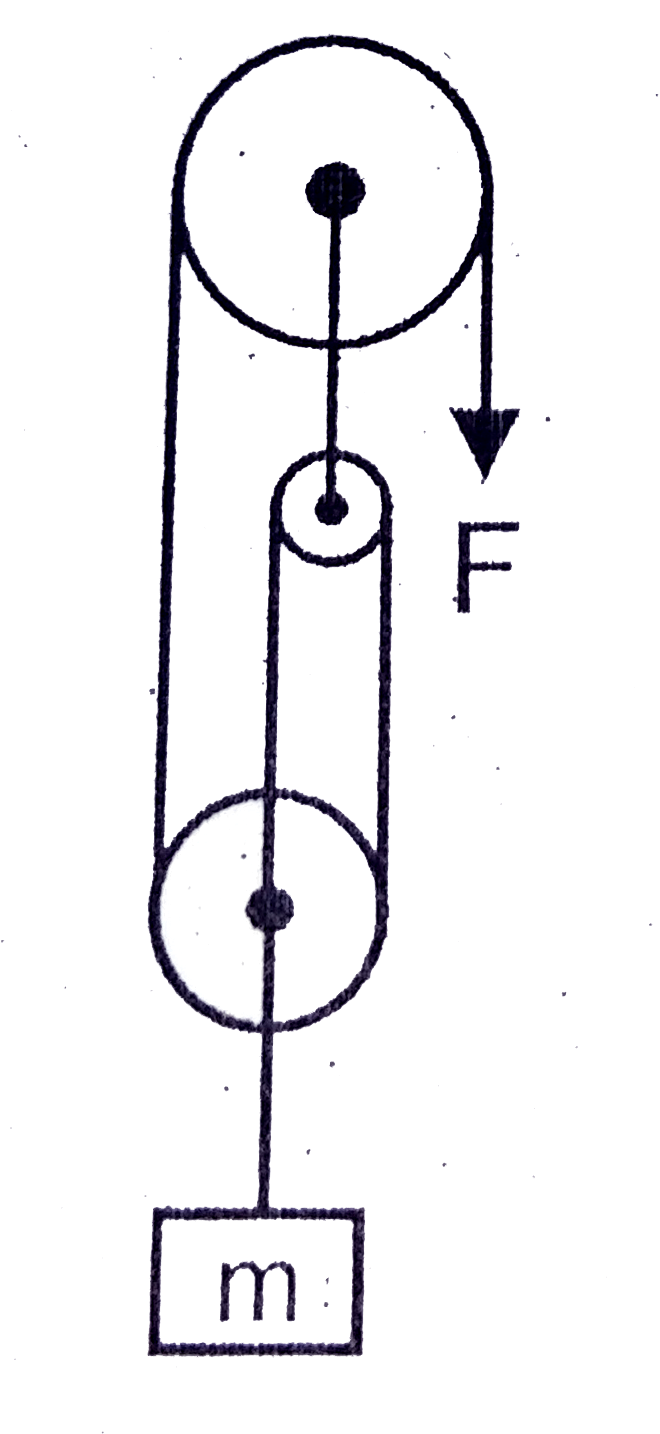
In the block moves up with constant velo...

In the block moves up with constant velocity v m/s. Find F

A

`F=(mg)/(2)`

B

`F=(2mg)/(3)`

C

`F=(mg)/(3)`

D

`F=(m)/(3)`

Text Solution

Verified by Experts

The correct Answer is:
C

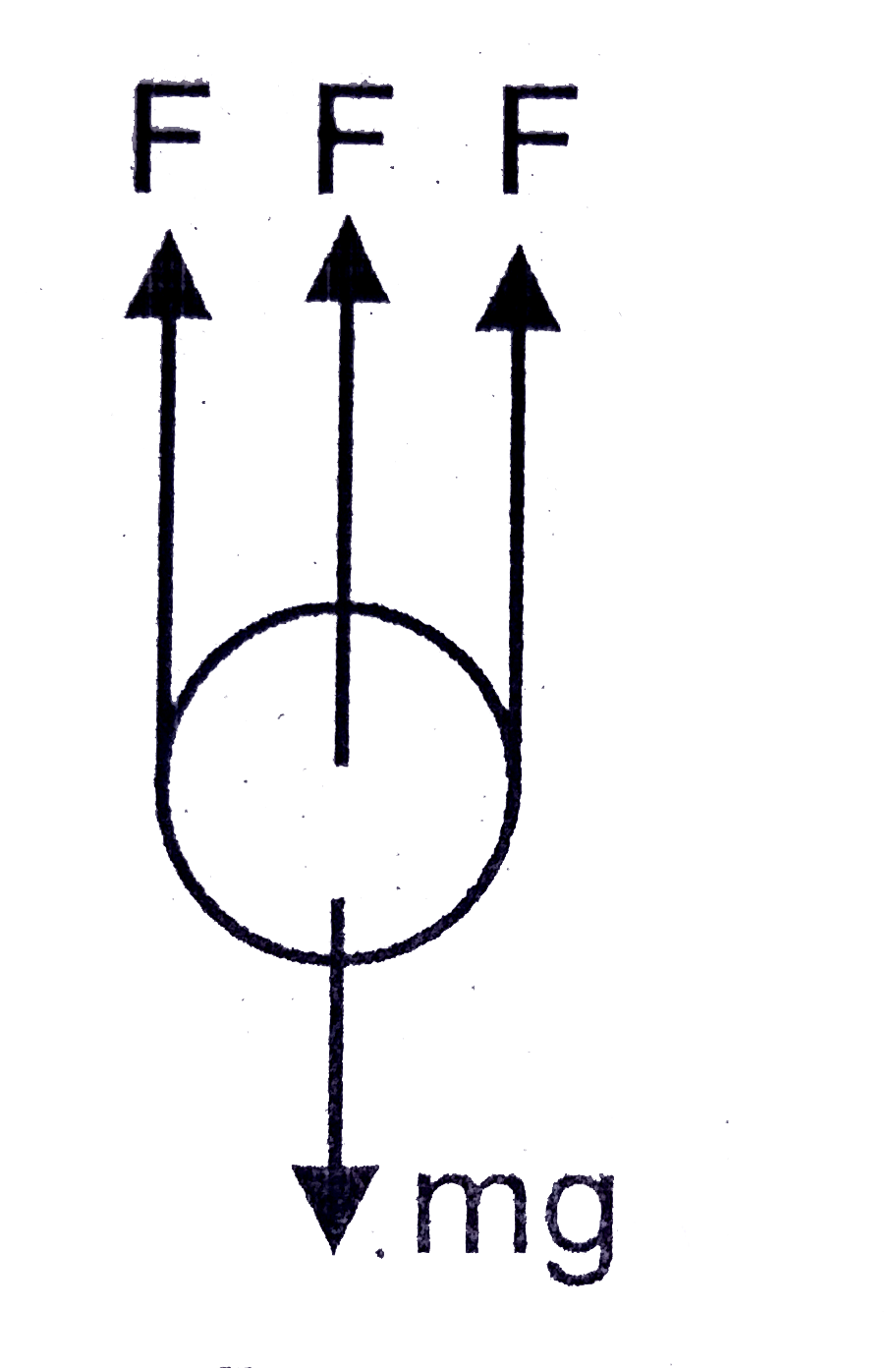
`mg`
`3F=mg`
`F=(mg)/(3)`
Promotional Banner

Similar Questions

Explore conceptually related problems

A rod of length l is pivoted smoothly at O is resting on a block of height h . If the block moves with a constant velocity V , pick the correct alternatives about angular velocity of rod :

In the diagram 100kg block is moving up with constant velocity, then find out the tension at point P :

A block of mass m is connected rigidly with a smooth wedge (plank) by a light spring of stiffness k. If the wedge is moved with constant velocity v_0 , find the work done by the external agent till the maximum compression of the spring.

The three block shown in fig. move with constant velocities. Find the velocity of blocks A and B. given V_(P2)=10ms^(-1) darr, V_(C)=2ms^(-1) uarr .

The block shown is moving with constant velocity. Find mu_(k) between the block and the surface.

In the figure, what should be mass m so that block A slides up with a constant velocity ?

An inclined plane is moving up with constant velocity v . A block kept on incline is at rest. Calculate the work done by gravity, friction force, and normal reaciton on block in time interval of t.

The block A is moving downward with constant velocity v_(0.) Find the velocity of the block B. When the string makes an angle theta with the horizontal

AB is a long frictionless horizontal surface. One end of an ideal spring of spring constant K is attached to a block of mass m, which is being moved left with constant velocity v, and the another end is free. Another block of mass 2m is given a velocity 3v towards the spring. Magnitude of work done by external agent in moving m with constant velocity v in long time is beta times mv^(2) . Find the value of beta

A 6 kg block is kept on an inclined rough surface as shown in figure.Find the force F requiredto (a) keep the block stationary. (b) move the block downwards with contact velocity and ( c) move the block upwards with an acceleration 4 m//s^(2) (Take g = 10 m//s^(2))

