Home
Class 12
CHEMISTRY
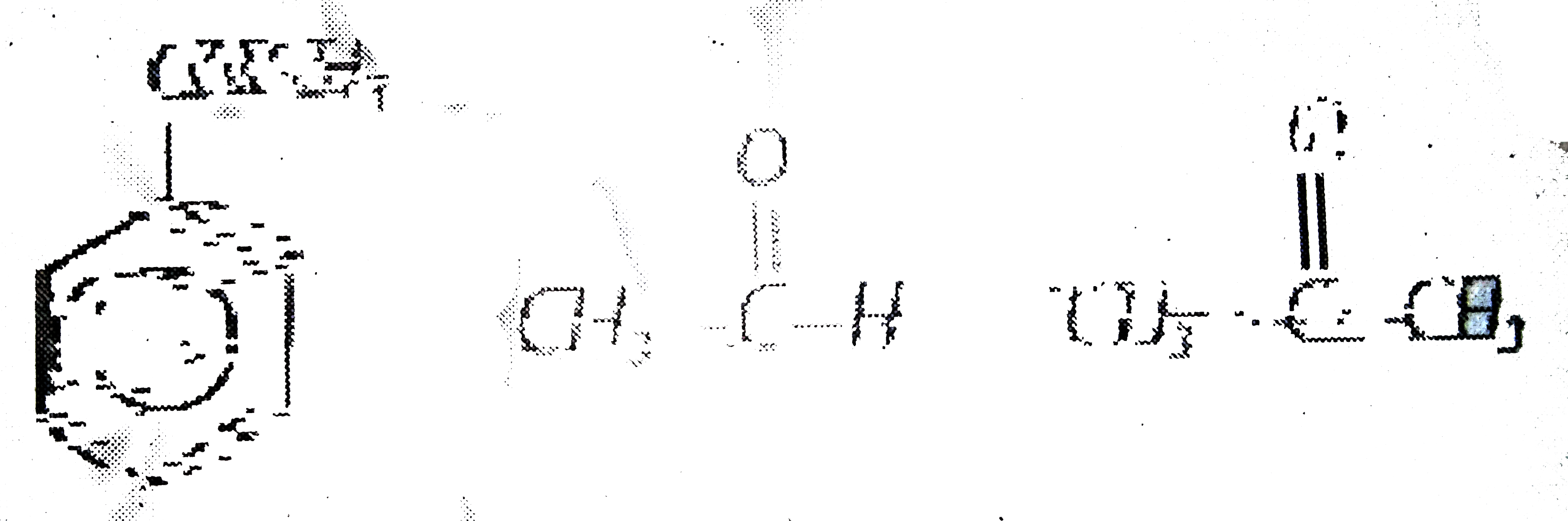
Ease of nucleophilic addition in the giv...

Ease of nucleophilic addition in the given compounds is

A

`IgtIIIgtII`

B

`IIgtIIIgtI`

C

`IIgtIgtIII`

D

`IIIgtIgtII`

Text Solution

Verified by Experts

The correct Answer is:

B
Promotional Banner

Similar Questions

Explore conceptually related problems

Which of the following is the correct represetation for intermediate of nucleophilic addition reaction to the given carbonyl compound (A) ?

Give the reactivity in the decreasing order of the following nucleophiles towards nucleophilic addition reaction with compound A(F_3C--=-CF_3) . (I) CH_3O^(Θ) (II) C_3H_5^(Θ) (III) CH_3COO (IV) CH_3SO_3^(Θ)

Describe two nucleophilic addition reactions of carbonyl compounds.

Ethanal is more reactive towards nucleophilic addition reaction than propanone. Why ?

Compare the reactivity of benzaldehyde and ethanal towards nucleophilic addition reactions. Write the cross aldol condensation product between benzaldehyde and ethanal.

The decreasing order of ease of dehydration in the following compounds is

The decreasing order of ease of dehydration in the following compounds is

Aldehyde and ketones are specially susceptible susceptible to nucleophile addition because carbonyl group (due to electronegatvity different between carbon and oxygen). Positive charge on carbon makes it reactive towards the nucleophile. This addition is catalysed by acid. Reactivity of carbonyl compound towards nucleophilic addition increases in the electron deficience at carbonyl carbon. Thus, (-I.E.) group increase while (+I.E.) groups decrease the reactivity of carbonyl compound Carbonyl compounds show nucleophilic addition with:

Aldehyde and ketones are specially susceptible susceptible to nucleophile addition because carbonyl group (due to electronegatvity different between carbon and oxygen). Positive charge on carbon makes it reactive towards the nucleophile. This addition is catalysed by acid. Reactivity of carbonyl compound towards nucleophilic addition increases in the electron deficience at carbonyl carbon. Thus, (-I.E.) group increase while (+I.E.) groups decrease the reactivity of carbonyl compound Select the least reactive carbonyl compound for nucleophilic addition:

Aldehyde and ketones are specially susceptible susceptible to nucleophile addition because carbonyl group (due to electronegatvity different between carbon and oxygen). Positive charge on carbon makes it reactive towards the nucleophile. This addition is catalysed by acid. Reactivity of carbonyl compound towards nucleophilic addition increases in the electron deficience at carbonyl carbon. Thus, (-I.E.) group increase while (+I.E.) groups decrease the reactivity of carbonyl compound Which of the following is most reactve to give nucleophilic addition?
