Home
Class 12
CHEMISTRY
Which one of the following does not give...

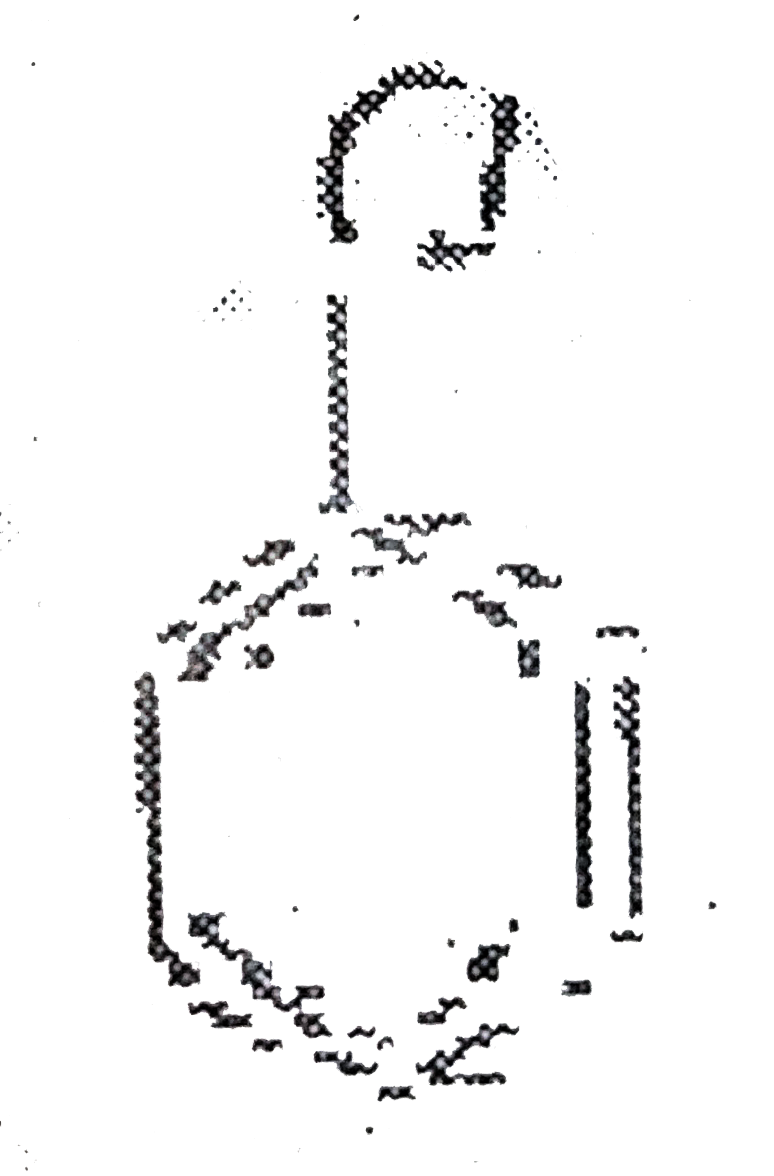
Which one of the following does not give white precipitate with acidified silver nitrate solution?

A

B

`CH_(2)=CH-Cl`

C

`CH_(2)=CH-CH_(2)-Cl`

D

Both (a) and (b)

Text Solution

AI Generated Solution

The correct Answer is:

To solve the question, we need to identify which of the given compounds does not form a white precipitate when reacted with acidified silver nitrate solution. The formation of a white precipitate indicates the formation of silver chloride (AgCl), which occurs when a chlorine atom (Cl) is released from the compound. ### Step-by-Step Solution: 1. **Understand the Reaction**: - When a compound containing chlorine reacts with acidified silver nitrate (AgNO3), it can form a white precipitate of silver chloride (AgCl). This happens when the chlorine can be easily displaced from the compound. 2. **Analyze Each Compound**: - **Option A: Chlorobenzene (C6H5Cl)**: - Chlorobenzene has a chlorine atom attached to a benzene ring. The bond between the carbon and chlorine has partial double bond character due to resonance. This resonance stabilizes the bond, making it difficult for the chlorine to be displaced. Therefore, chlorobenzene does not form a white precipitate with AgNO3. - **Option B: Vinyl Chloride (C2H3Cl)**: - Vinyl chloride also exhibits resonance. The chlorine is bonded to a carbon that is part of a double bond system, which gives the bond a partial double bond character. This means that the chlorine is not easily displaced, and hence, vinyl chloride does not form a white precipitate with AgNO3. - **Option C: Allyl Chloride (C3H5Cl)**: - Allyl chloride has a chlorine atom attached to a carbon that is part of a double bond system. When the chlorine is removed, the resulting carbocation can stabilize through resonance with the double bond. This makes it easier for allyl chloride to release the chlorine and form a white precipitate with AgNO3. - **Option D: Both A and B**: - Since both chlorobenzene and vinyl chloride do not form a white precipitate, this option suggests that both A and B are correct. 3. **Conclusion**: - The compounds that do not give a white precipitate with acidified silver nitrate solution are **Chlorobenzene (A)** and **Vinyl Chloride (B)**. Therefore, the correct answer is **Option D: Both A and B**. ### Final Answer: **Option D: Both A and B**
Promotional Banner

Similar Questions

Explore conceptually related problems

Which of the following will not give white precipitate with ammoniacal silver nitrate solution ?

Which one of the following gives white precipitate with AgNO_(3) ?

Which one of the following does not give a precipitate with excess of both NaOH solution and NH_(3) solution ?

Which one of the following compounds will give white precipitate with tollen's reagent ?

Carbon tetrachloride does not give a white precipitate upon heating with silver nitrate solution. Is it correct ?

AgNO_(3) solution will not give white precipitate with

Which one of the following is likely to give a precipitate with AgNO_(3) solution ?

Which one of the following is likely to give a precipitate with AgNO_(3) solution ?

Write the condition for each subquestion in not more than two sentences Ethyne and its derivatives will give white precipitate with ammonical silver nitrate solution.

Which one of the following will give a white precipitate with AgNO_3 in aqueous medium ?
