Home
Class 12
CHEMISTRY
Phenol overset(C(6)H(5)N(2)^(+)Cl)unders...

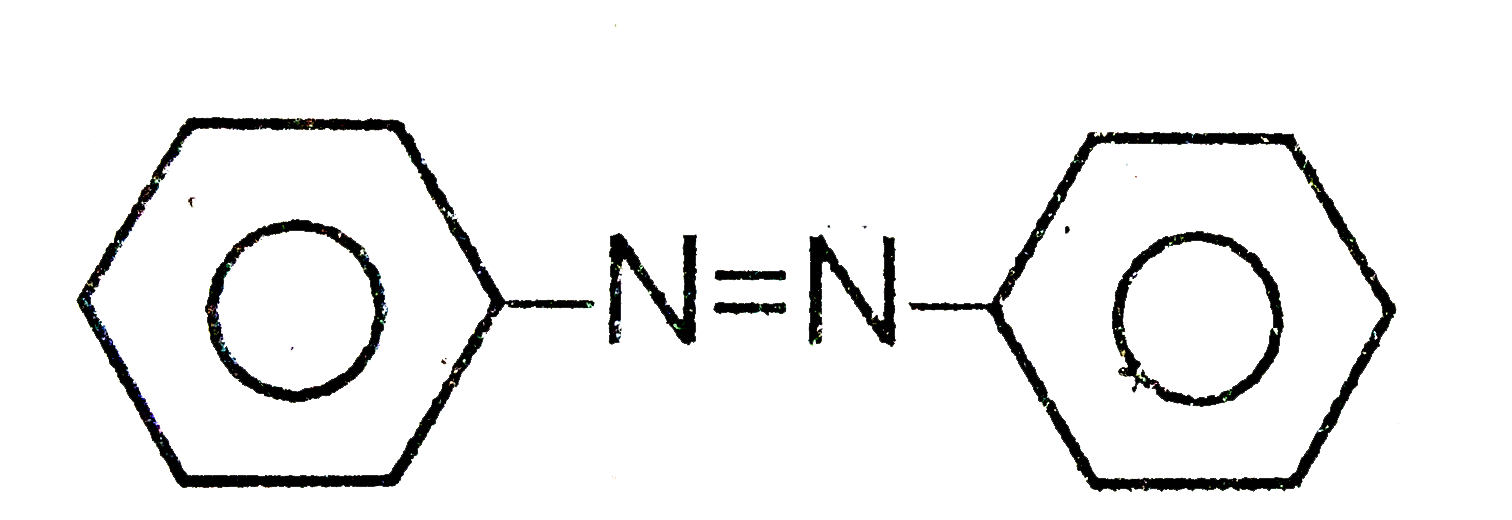
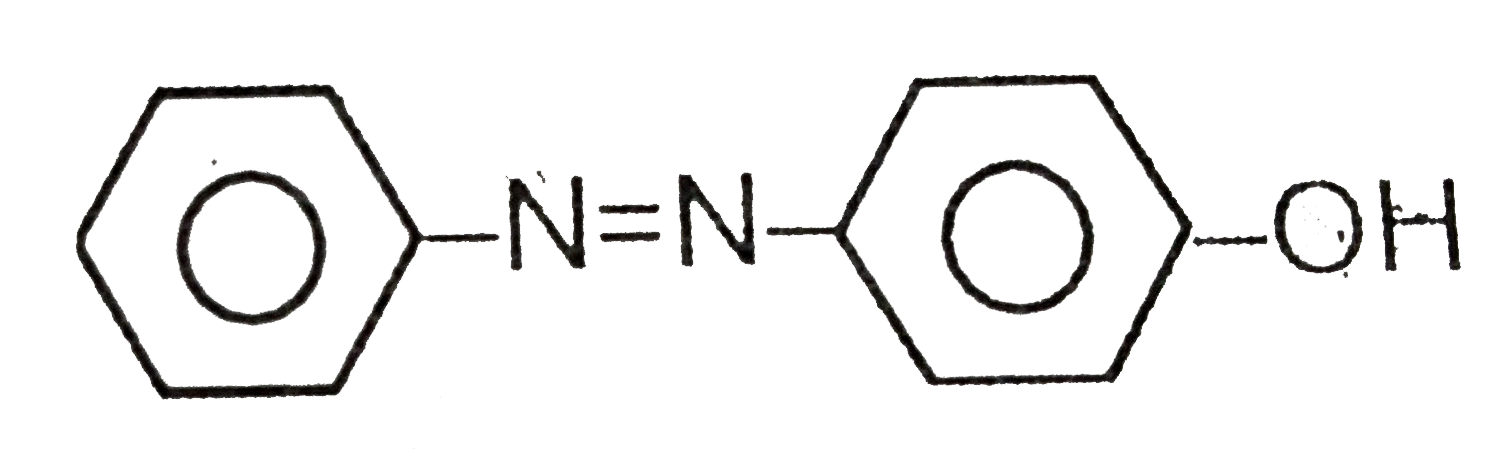
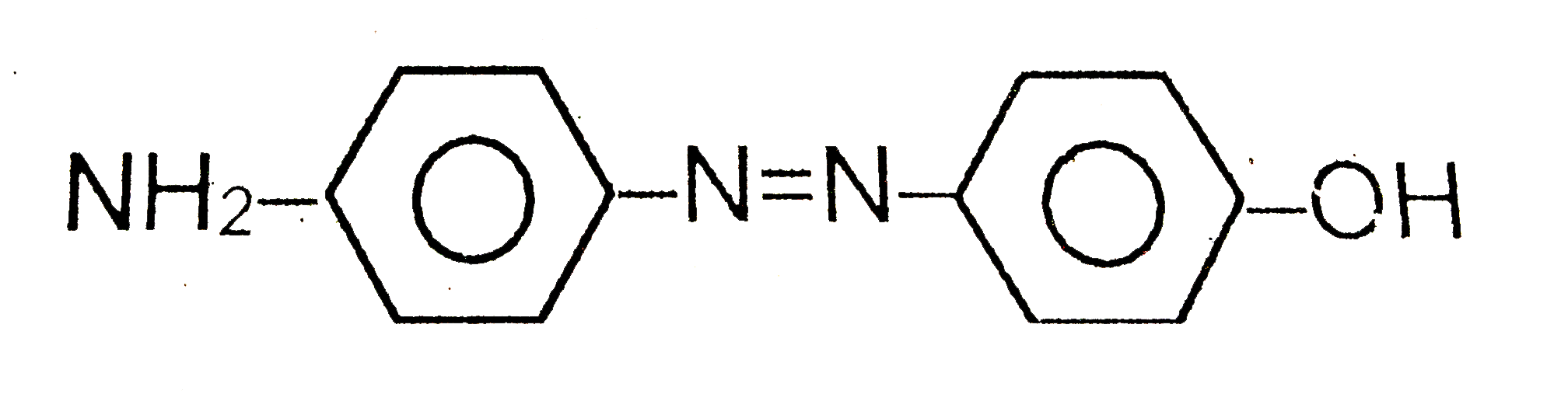
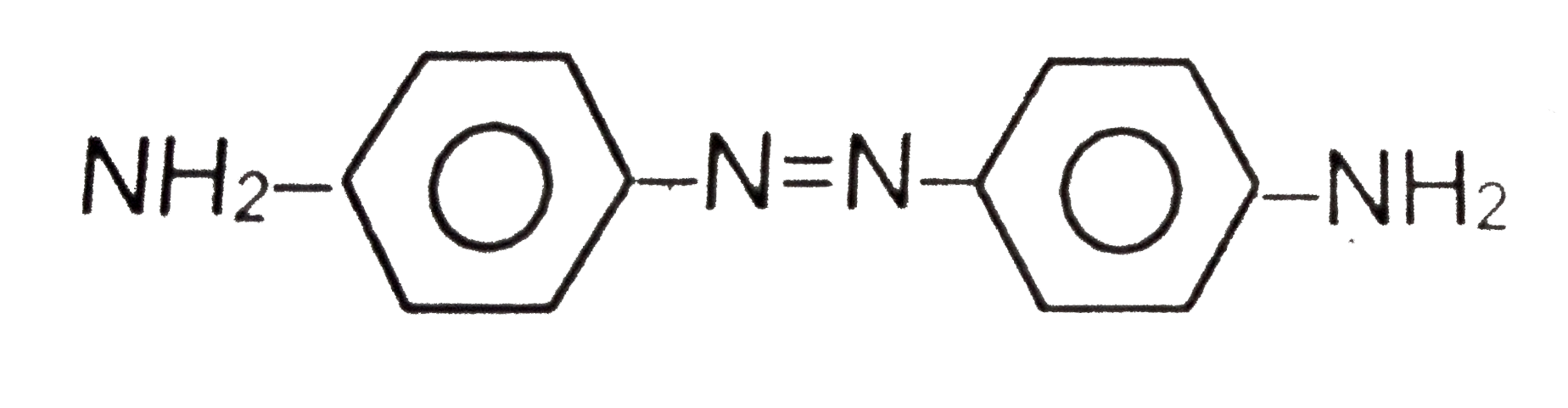
Phenol `overset(C_(6)H_(5)N_(2)^(+)Cl)underset(alkali solution) to ` Major Product : Product will be:

A

B

C

D

Text Solution

AI Generated Solution

The correct Answer is:

To solve the problem, we need to identify the major product formed when phenol reacts with benzene diazonium chloride in an alkaline solution. Here’s a step-by-step breakdown of the reaction: ### Step 1: Identify the Reactants We have two main reactants: - **Phenol (C6H5OH)**: A compound with a hydroxyl (-OH) group attached to a benzene ring. - **Benzene diazonium chloride (C6H5N2+Cl-)**: A diazonium salt, which contains a positively charged diazonium group (N2+) and a chloride ion (Cl-). ### Step 2: Understand the Reaction Conditions The reaction occurs in a weak alkaline solution, typically with a pH between 9 to 10. This environment is essential for the reaction to proceed effectively. ### Step 3: Mechanism of the Reaction In the alkaline solution, the hydroxyl group of phenol can act as a nucleophile. The diazonium salt can undergo a coupling reaction with phenol. The chloride ion (Cl-) is a leaving group in this reaction. ### Step 4: Formation of the Product During the reaction: 1. The diazonium group (N2+) from benzene diazonium chloride attacks the para position of the phenol ring. 2. The Cl- ion and a hydrogen ion (H+) from phenol are eliminated, leading to the formation of a new compound. The resulting product from this coupling reaction is **4-hydroxyazobenzene** (C6H5-N=N-C6H4(OH)), which is characterized by the azo (-N=N-) linkage between the two aromatic systems. ### Step 5: Final Product Identification The major product formed is **4-hydroxyazobenzene**, which is an orange-colored dye commonly used in various applications. ### Summary of the Reaction The overall reaction can be summarized as: \[ \text{C}_6\text{H}_5\text{OH} + \text{C}_6\text{H}_5\text{N}_2^+\text{Cl}^- \rightarrow \text{C}_6\text{H}_5\text{N}=\text{N}-\text{C}_6\text{H}_4\text{OH} + \text{HCl} \]
Promotional Banner

Similar Questions

Explore conceptually related problems

(overset_E^(+))to major product major product will be

CH_(3)-overset(O)overset(||)(C)-overset(16)(O)-H+R-overset(18)(O)-Hoverset("dil." H_(2)SO_(4))underset(Delta)to Major product. Product of the reaction is

In the given reaction C_6H_5-overset(O)overset(||)C-overset(O)overset(||)C-C_6H_5overset((i)CH_3MgBr("excess"))underset((ii)HOH//H^(o+))rarr "Product Product will be

overset((i)NaOH//100^(@)C)underset((ii)H^(+)//H_(2)O)rarr The major product is:

C_(6)H_(5)NH_(2) + CS_(2) underset(KOH (s))overset(Delta)rarr The end product in the reaction is

C_(6)H_(6)+CI_(2)overset(UVLight)rarr Product In above reaction product is .

In a set of the given reactions, acetic acid yielded a product iC. CH_(3)COOH+PCl_(5) to A overset(C_(6)H_(6))underset(Anh. AlCl_(3))toB overset(C_(2)H_(5)MgBr)underset("ether")toC Product C would be

Ph-C-=Chunderset(H_2O_2//OH^-)overset(B_2H_6)to Major Product is :
