Text Solution
Verified by Experts



Topper's Solved these Questions
FRICTION
PEARSON IIT JEE FOUNDATION|Exercise Competition Corner |54 VideosFRICTION
PEARSON IIT JEE FOUNDATION|Exercise Classroom Corner (Short Answer Type Questions)|29 VideosFORCE AND PRESSURE
PEARSON IIT JEE FOUNDATION|Exercise COMPETITION CORNER |37 VideosHEAT
PEARSON IIT JEE FOUNDATION|Exercise CONCEPT APPLICATION Level 3 |10 Videos
Similar Questions
Explore conceptually related problems
PEARSON IIT JEE FOUNDATION-FRICTION-Classroom Corner (Long Answer Type Questions)
- Explain the difference between static friction and sliding friction wi...
Text Solution
|
- Why does an object of greater mass experience more friction than an ob...
Text Solution
|
- Look at the pictures given below. Name and define the type of friction...
Text Solution
|
- Why is static friction greater than sliding friction?
Text Solution
|
- State any three advantages and disadvantages of friction.
Text Solution
|
- Describe any three ways in which friction between surfaces can be redu...
Text Solution
|
- The magnitude of frictional force can never be greater than the magnit...
Text Solution
|
- Explain how the wheel was a significant historical invention, in terms...
Text Solution
|
- Compare which of the two drivers, in each case given below, would have...
Text Solution
|
- Compare which of the two drivers, in each case given below, would have...
Text Solution
|
- Compare which of the two drivers, in each case given below, would have...
Text Solution
|
- Case 1: If you take a ball and push it so that it rolls across a smoot...
Text Solution
|
- Case 1: If you take a ball and push it so that it rolls across a smoot...
Text Solution
|
- Give examples to show that friction is both a friend and a foe.
Text Solution
|
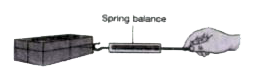
- Case 1: If you take a spring balance and a brick. Tie the spring balan...
Text Solution
|
- Case 1: If you take a spring balance and a brick. Tie the spring balan...
Text Solution
|
- Explain why objects moving in fluids must have special shapes.
Text Solution
|
- Why does friction occur? Justify your answer.
Text Solution
|
- Explain why objects moving in fluids must have special shapes.
Text Solution
|
- Why do we shape aeroplanes like that of bird?
Text Solution
|