A
B
C
D
Text Solution
Verified by Experts
The correct Answer is:
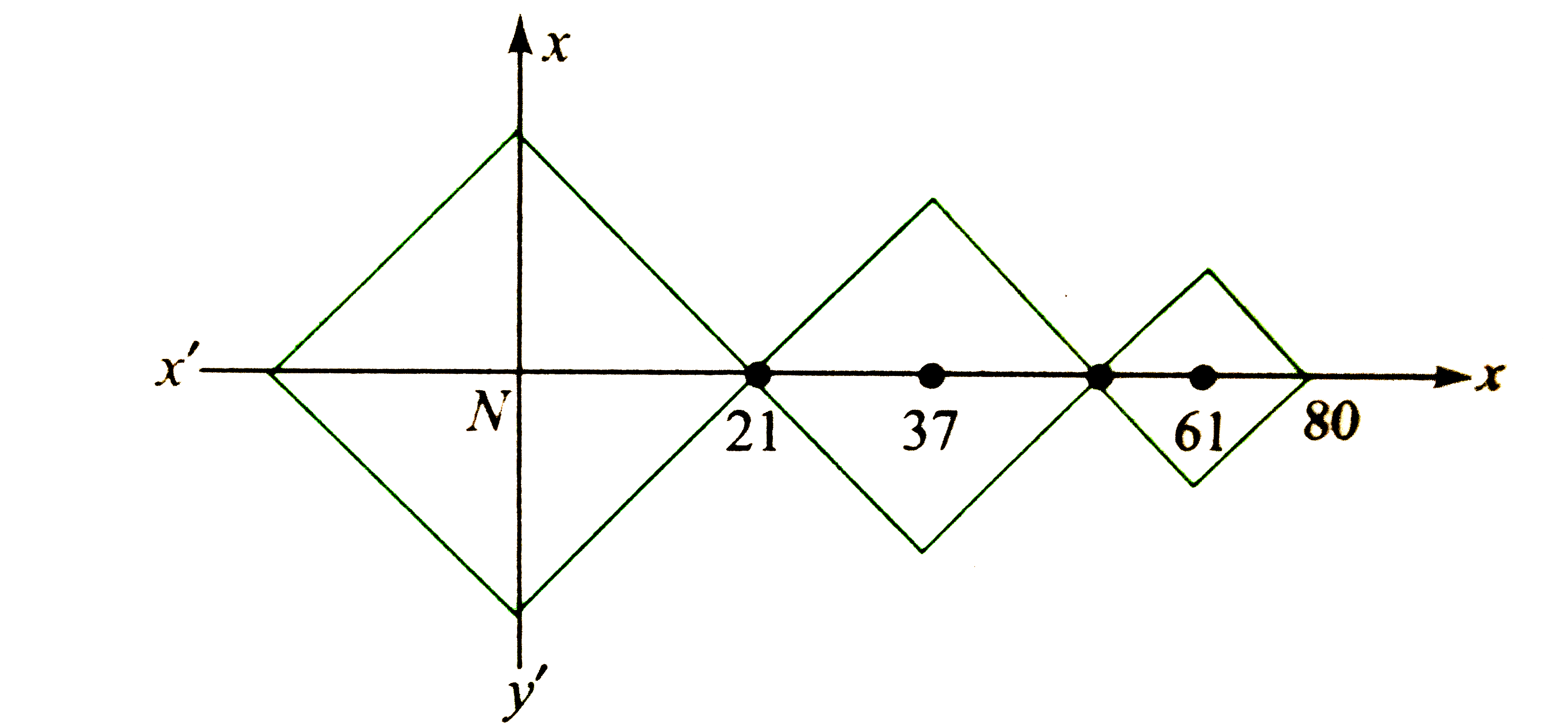



Topper's Solved these Questions
AREA
CENGAGE PUBLICATION|Exercise Linkded Comprehension Type|21 VideosAREA
CENGAGE PUBLICATION|Exercise Matrix Match Type|5 VideosAREA
CENGAGE PUBLICATION|Exercise Exercises - Single Correct Answer Type|40 VideosAPPLICATIONS OF DERIVATIVES
CENGAGE PUBLICATION|Exercise Subjective Type|2 VideosBINOMIAL THEOREM
CENGAGE PUBLICATION|Exercise Comprehension|11 Videos
Similar Questions
Explore conceptually related problems
CENGAGE PUBLICATION-AREA-Multiple Correct Answers Type
- Let A(k) be the area bounded by the curves y=x^2-3 and y=k x+2 The ra...
Text Solution
|
- The parabolas y^2=4xa n dx^2=4y divide the square region bounded by th...
Text Solution
|
- Find the area bounded by the following curve : (i) f(x) = sinx, g(x...
Text Solution
|
- If the curve y=a x^(1/2)+b x passes through the point (1,2) and lies a...
Text Solution
|
- The area bounded by the curve x = a cos^3t,, y = a sin^3t, is :
Text Solution
|
- If Ai is the area area bounded by |x-ai| + |y|=bi, i in N ,where a(i...
Text Solution
|
- For which of the following values of m is the area of the regions boun...
Text Solution
|
- The area bounded by the curves y=|x|-1a n dy=-|x|+1 is 1 sq. units (b)...
Text Solution
|
- Consider curves S(1): sqrt(|x|)+sqrt(|y|)=sqrt(a), S(2): x^(2)+y^(2)=a...
Text Solution
|
- Let A(k) be the area bounded by the curves y=x^(2)+2x-3 and y=kx+1. Th...
Text Solution
|
- The area of the region bounded by the curve y=e^x and lines x=0a n dy=...
Text Solution
|
- The area of the region R={(x,y):|x| le|y| and x^2+y^2le1} is
Text Solution
|
- Let f:RtoR be a differentiable function such that f(x)=x^(2)+int(0)^(x...
Text Solution
|