Home
Class 12
MATHS
Consider equation ((x^(2)+x)^2)+a(x^(2)+...

Consider equation `((x^(2)+x)^2)+a(x^(2)+x)+4=0` Match the values of `a` in Lits II for the types of roods in Lits I.

A

`{:(,a,b,c,d),((1),p,q,r,s):}`

B

`{:(,a,b,c,d),((2),q,r,r,p):}`

C

`{:(,a,b,c,d),((3),r,p,s,q):}`

D

`{:(,a,b,c,d),((4),q,s,p,r):}`

Text Solution

Verified by Experts

The correct Answer is:
1

`(x^(2)+x)^(2)+a(x^(2)+x)+4=0`
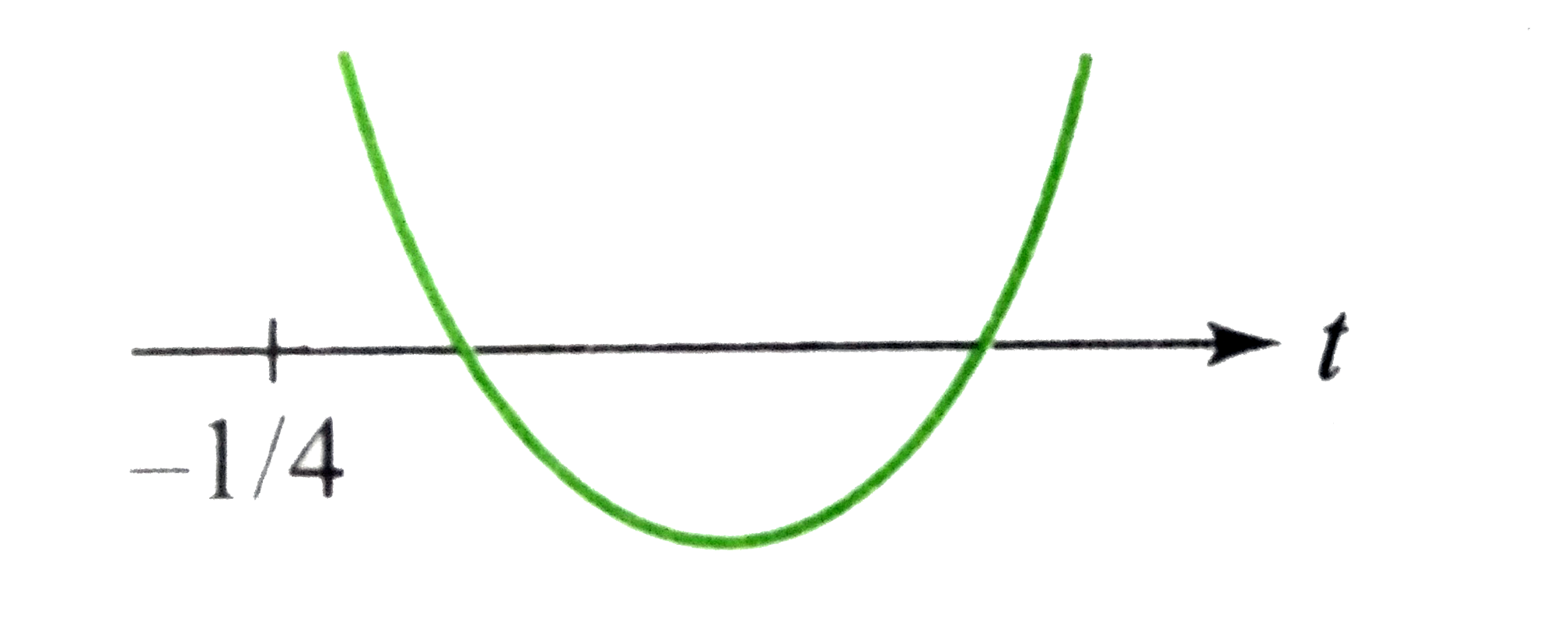
Let `t=x^(2)+x=(x+1//2)^(2)-1//4`.
`impliestin[-(1)/(4),oo]`
Now, `f(t)=t^(2)+at+4=0" "....(1)`
(a) All four real and distinct roots.
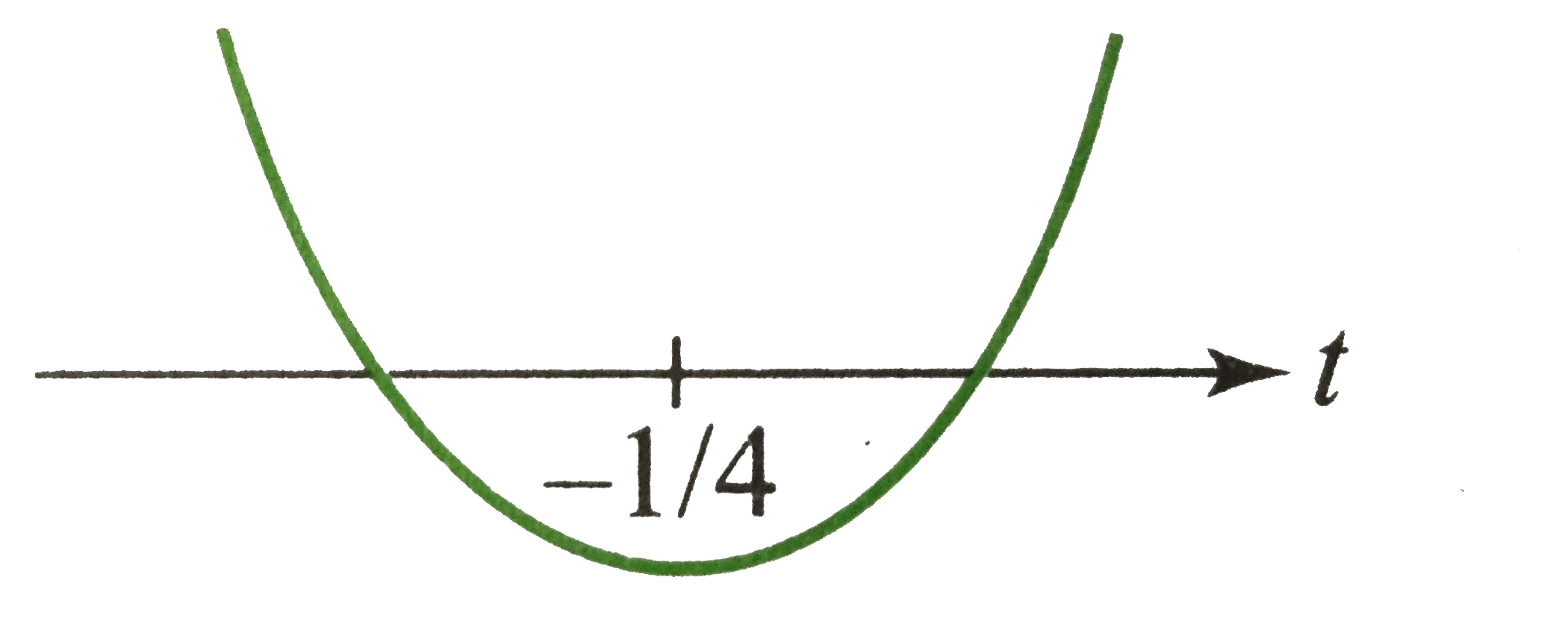
So, equation (1) has both roots greater then `-1//4`.

Following conditions are required:
`(i) Dgt0impliesa^(2)-16gt0implies|a|gt4`
(ii) `f(-1//4)=(1)/(16)-(a)/(4)+4gt0impliesalt65//4`
(iii) `-(B)/(2A)=(a)/(2)gt-(1)/(4)impliesalt(1)/(2)`
`impliesain(-oo,-4)`
(b) Two real roots which are distinct.

`impliesf(-1//4)lt0`
`impliesagt65//4`
`impliesain(65//4,oo)`
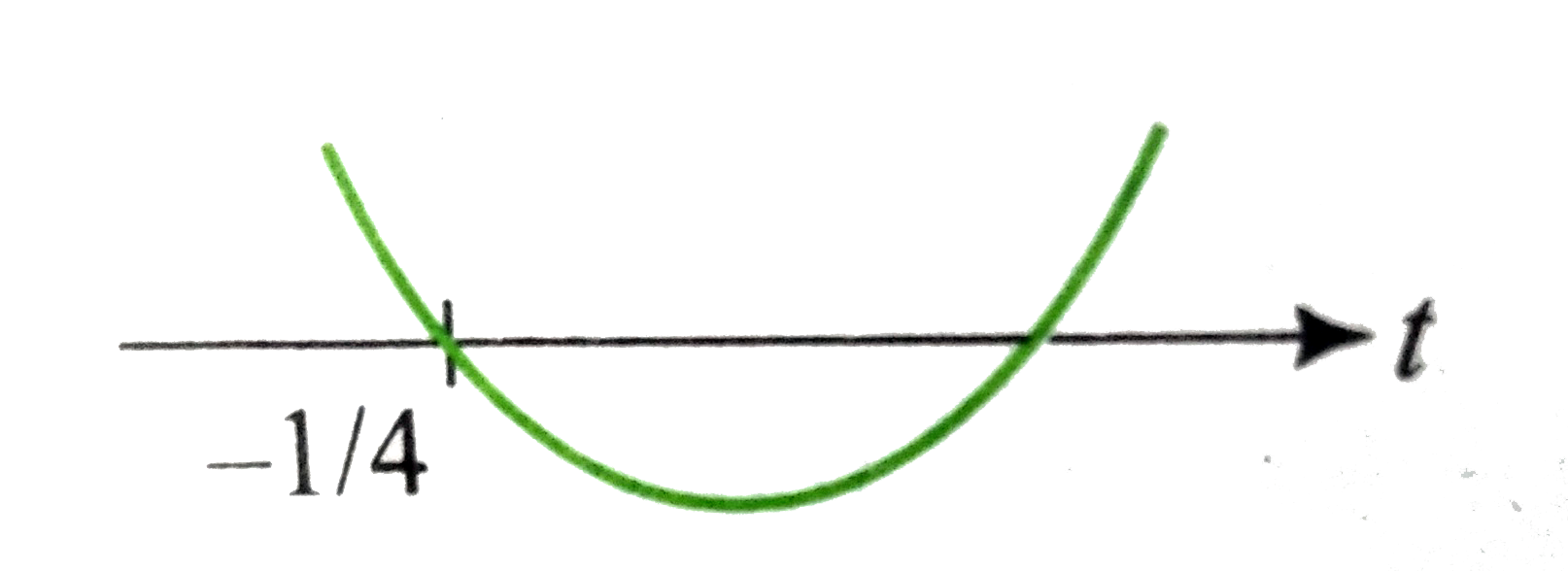
(c) All four roots are imaginary.

(i) `Dge0implies|a|ge4`
(ii) `f(-1//4)gt0impliesalt(65)/(4)`
(iii) `-(B)/(2A)lt-(1)/(4)impliesagt(1)/(2)impliesain[4,(65)/(4)]`
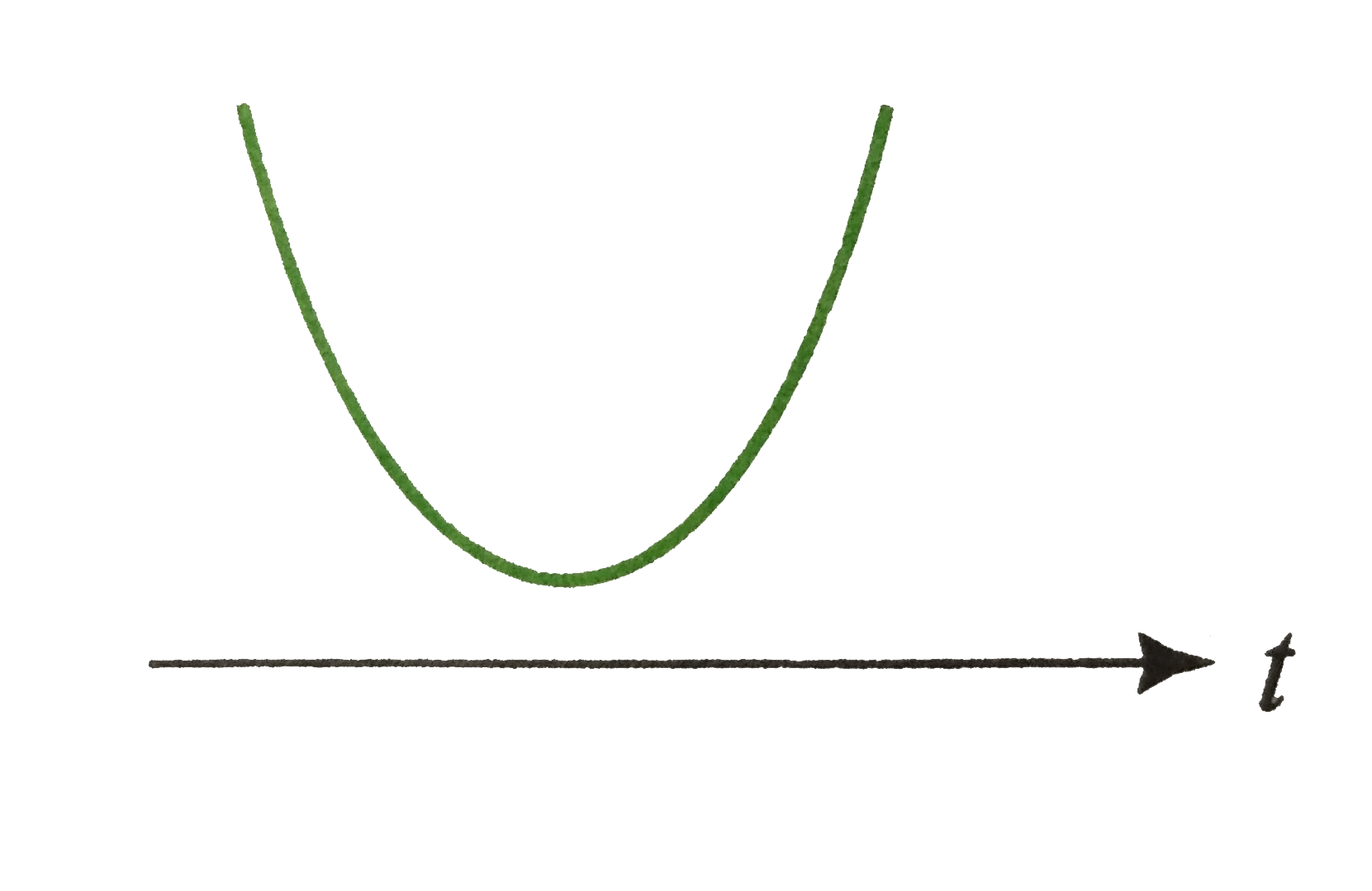
Case II:
`Dlt0`

`impliesain(-4,4)" "....(2)`
From case I and case II,
`ain(-4,(65)/(4))`
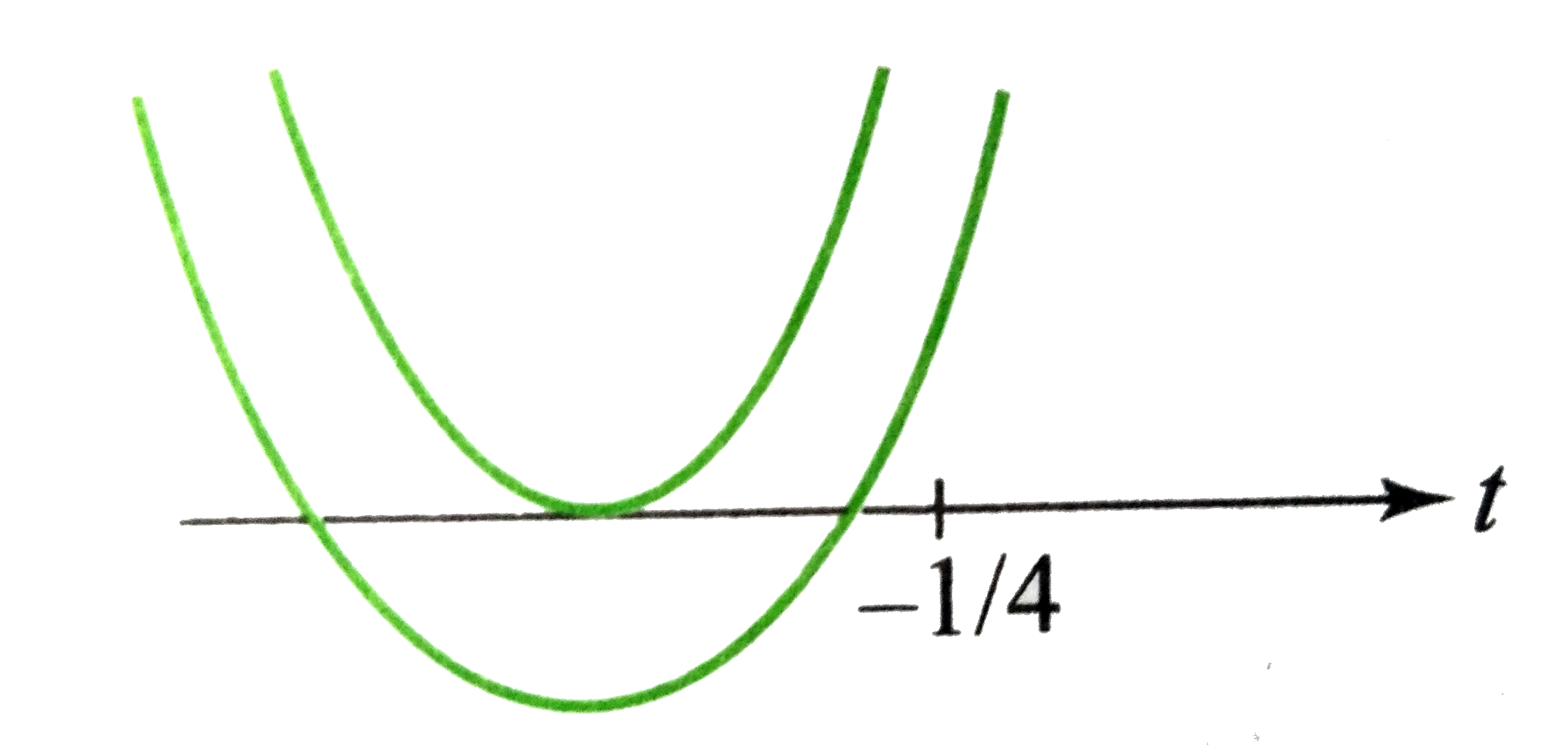
(d) Four real roots in which two are equal.

(i) `Dgt0implies|a|gt4`
(ii) `f(-1//4)=0impliesa=65//4`
(iii) `-(B)/(2A)gt-(1)/(4)impliesalt(1)/(2)`
No common solution.
`:.ainphi`.
Promotional Banner

Topper's Solved these Questions

  • THEORY OF EQUATIONS

    CENGAGE PUBLICATION|Exercise NUMERICAL VALUE TYPE|43 Videos
  • THEORY OF EQUATIONS

    CENGAGE PUBLICATION|Exercise Archives JEE MAIN (single correct Answer Type )|7 Videos
  • THEORY OF EQUATIONS

    CENGAGE PUBLICATION|Exercise Linked Comprechension Type|37 Videos
  • STRAIGHT LINES

    CENGAGE PUBLICATION|Exercise ARCHIVES (NUMERICAL VALUE TYPE)|1 Videos
  • THREE DIMENSIONAL GEOMETRY

    CENGAGE PUBLICATION|Exercise All Questions|291 Videos

Similar Questions

Explore conceptually related problems

The roots of the equation x^(4)-2x^(2)+4=0 are the vertices of a :

Solve the equation x^4-5x^2+4=0 .

The equation 2cos^2 (x/2)sin^2x=x^2+x^(-2);0

The roots of the equation x^(2)-(1-2i) x-2i =0 are -

If cos 0 = x^2 - x + 5/4 , the value of x will be___

Consider the equation x^2+x-a=0,ainN If equation has integral roots,then

Let us consider the equation cos^4x/a+sin^4x/b=1/(a+b),x in[0,pi/2],a,bgt0 The value of sin^2x in terms of a and b is

Consider the graph of y = f(x) as shown in the following figure. (i) Find the sum of the roots of the equation f (x) = 0. (ii) Find the product of the roots of the equation f(x) = 4. (iii) Find the absolute value of the difference of the roots of the equation f(x) = x+2 .

Consider quadratic equations x^(2)-ax+b=0 ………. (i) and x^(2)-px+q=0 ………. (ii) If for the equations (i) and (ii) , one root is common and the equation (ii) have equal roots, then b+q is equal to

Consider the function f(x)=x^(2)+bx+c, where D=b^(2)-4cgt0 , then match the follwoing columns.