Home
Class 12
CHEMISTRY
Which of the following pairs of compound...

Which of the following pairs of compounds are not position
isomers?

A

B

C

D

Text Solution

AI Generated Solution

The correct Answer is:

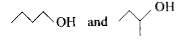
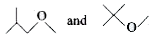
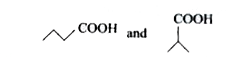
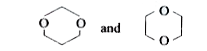
To solve the question of which pairs of compounds are not position isomers, we need to understand the definition of position isomers. Position isomers are compounds that have the same molecular formula and the same carbon skeleton but differ in the position of functional groups or multiple bonds. ### Step-by-Step Solution: 1. **Identify the Compounds**: First, we need to look at the pairs of compounds provided in the question. For this example, let's assume we have the following pairs: - Pair 1: Butane-1-ol and Butane-2-ol - Pair 2: 1-Methoxy-2-methylpropane and 2-Methoxy-2-methylpropane - Pair 3: Acetic acid and Propanoic acid - Pair 4: 1,3-Dioxacyclohexane and 1,4-Dioxacyclohexane 2. **Analyze Each Pair**: - **Pair 1**: Butane-1-ol and Butane-2-ol - Both have the same carbon chain (4 carbons) but differ in the position of the -OH group. Hence, they are position isomers. - **Pair 2**: 1-Methoxy-2-methylpropane and 2-Methoxy-2-methylpropane - Both have the same carbon skeleton but differ in the position of the methoxy group. Hence, they are position isomers. - **Pair 3**: Acetic acid and Propanoic acid - These compounds have different carbon skeletons (2 carbons vs. 3 carbons). They are not position isomers but rather structural isomers. - **Pair 4**: 1,3-Dioxacyclohexane and 1,4-Dioxacyclohexane - Both have the same carbon skeleton but differ in the position of the ether groups. Hence, they are position isomers. 3. **Conclusion**: From the analysis, we can conclude that the pair that does not exhibit position isomerism is **Pair 3: Acetic acid and Propanoic acid**. ### Final Answer: The pair of compounds that are not position isomers is **Acetic acid and Propanoic acid**.
Promotional Banner

Similar Questions

Explore conceptually related problems

Which of the following pairs of compounds are position isomers?

Which of the following pairs of compounds are not isomers:-

Which of the following pairs of compounds are functional isomers?

Which of the following pair of compounds is not functional isomers?

Which of the following pairs of compounds are enantiomers?

Which of the following pairs of compounds are more stable?

Which are not position isomers?
