Home
Class 12
CHEMISTRY
Which of the following compounds will be...

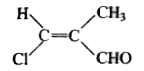
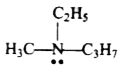
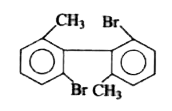
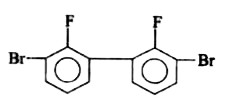
Which of the following compounds will be optically active?

A

B

C

D

Text Solution

AI Generated Solution

The correct Answer is:

To determine which of the given compounds is optically active, we need to follow a systematic approach. Here’s a step-by-step solution: ### Step 1: Understand the Conditions for Optical Activity For a compound to be optically active, it must meet two conditions: 1. **Presence of a Chiral Carbon**: A chiral carbon is typically an sp³ hybridized carbon atom that is bonded to four different groups (or atoms). 2. **Absence of a Plane of Symmetry**: The molecule must not have any plane of symmetry, which would allow it to be superimposed on its mirror image. ### Step 2: Analyze Each Compound Let’s analyze the compounds one by one: #### Compound 1: - **Observation**: Contains a double bond (C=C). - **Analysis**: The presence of a double bond indicates that at least one carbon is sp² hybridized, which cannot be chiral. Therefore, this compound does not have a chiral carbon. - **Conclusion**: Not optically active. #### Compound 2: - **Observation**: Contains a nitrogen atom and carbon atoms with similar substituents. - **Analysis**: One of the carbons is bonded to two hydrogen atoms, which means it does not have four different groups. Thus, it does not meet the criteria for chirality. - **Conclusion**: Not optically active. #### Compound 3: - **Observation**: Contains a carbon atom bonded to four different groups. - **Analysis**: This carbon has four different substituents (e.g., CH3, H, and two other distinct groups). Since there is no plane of symmetry (the groups are arranged in such a way that they cannot be superimposed on their mirror image), this compound is chiral. - **Conclusion**: Optically active. #### Compound 4: - **Observation**: Contains similar groups on the same side. - **Analysis**: This compound has a plane of symmetry because the groups can be divided into two identical halves. Therefore, it does not meet the criteria for optical activity. - **Conclusion**: Not optically active. ### Final Answer Based on the analysis, **Compound 3** is the only compound that is optically active. ---

To determine which of the given compounds is optically active, we need to follow a systematic approach. Here’s a step-by-step solution: ### Step 1: Understand the Conditions for Optical Activity For a compound to be optically active, it must meet two conditions: 1. **Presence of a Chiral Carbon**: A chiral carbon is typically an sp³ hybridized carbon atom that is bonded to four different groups (or atoms). 2. **Absence of a Plane of Symmetry**: The molecule must not have any plane of symmetry, which would allow it to be superimposed on its mirror image. ### Step 2: Analyze Each Compound ...
Promotional Banner

Similar Questions

Explore conceptually related problems

Which of the following compounds can be optically active? Select correct answer using the codes given :

Which of the following compounds is optically active ?

Which of the following compounds are optically active ?

Which of the following species will be optically active ?

Which of the following compound may be optical active ?
