Home
Class 12
CHEMISTRY
The reaction of p-aminophenol with one m...

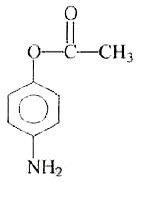
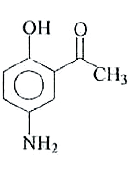
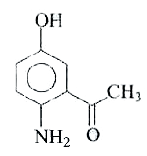
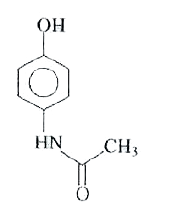
The reaction of `p-`aminophenol with one mole of acetyl chloride in presence of pyridine gives :

A

B

C

D

Text Solution

AI Generated Solution

The correct Answer is:

To solve the problem regarding the reaction of p-aminophenol with one mole of acetyl chloride in the presence of pyridine, we can follow these steps: ### Step-by-Step Solution: 1. **Identify the Reactants**: - The reactants are p-aminophenol (C6H4(OH)(NH2)) and acetyl chloride (CH3C(=O)Cl). - p-Aminophenol has an amino group (-NH2) at the para position to the hydroxyl group (-OH) on the benzene ring. 2. **Understand the Role of Pyridine**: - Pyridine acts as a basic solvent and helps in the reaction by deprotonating the amino group, making it a better nucleophile. 3. **Nucleophilic Attack**: - The nitrogen atom in the amino group (-NH2) is more nucleophilic than the oxygen in the hydroxyl group (-OH) due to its lower electronegativity. - The nitrogen will attack the carbonyl carbon of acetyl chloride, leading to the formation of an acylated product. 4. **Formation of the Intermediate**: - The nucleophilic attack results in the formation of an intermediate where the nitrogen is bonded to the carbonyl carbon, and a chlorine atom is released as a leaving group. - This intermediate can be represented as: \[ C6H4(OH)(NH)(C(=O)CH3)^{+} \] - Here, the nitrogen has a positive charge because it is forming four bonds (two from hydrogen and one from the carbonyl carbon). 5. **Elimination of Chloride Ion**: - The positively charged nitrogen can stabilize itself by eliminating a proton (H+) to restore its neutral state. - The chlorine ion (Cl-) is released during this process. 6. **Final Product Formation**: - The final product is an N-acetyl derivative of p-aminophenol, which can be represented as: \[ C6H4(OH)(NHCOCH3) \] - This structure consists of the unchanged hydroxyl group, the amino group now acylated to form an amide, and the acetyl group (COCH3) attached to the nitrogen. 7. **Conclusion**: - The product formed from the reaction of p-aminophenol with acetyl chloride in the presence of pyridine is N-acetyl-p-aminophenol.
Promotional Banner

Similar Questions

Explore conceptually related problems

The reaction of 1-phenylpropane with limited amount of chlorine in the presence of light gives mainly .

Hydrogenation of benzoyl chloride in the presence of Pd//BaSO_4 gives :

Hydrogenation of benzoyl chloride in the presence of Pd on BaSO_4 gives

Hydrogenation of benzoyl chloride in the presence of Pd on BaSO_(4) gives

sp^2, sp^3 , polar, non-polar, gem, vicinal, 2, 3, Grove's, Darzen, Markownikov's rule, Kharasch, increase, decrease Alcohols on treatment with thionyl chloride, in presence of pyridine, yield alkyl halides. This reaction is known as ....... process.

Reaction of HBr with propene in the presence of peroxide gives :-
