Home
Class 12
CHEMISTRY
Compound 'X' give following reactions ...

Compound `'X'` give following reactions
`X(C_(6)H_(8)O_(2)) "GRB_HP_JEE_ORG_CHE_C11_E01_007_Q01.png" width="80%">
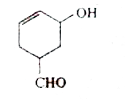
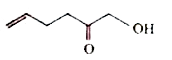
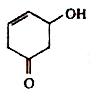
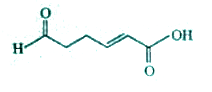
Its structure can be :

A

B

C

D

Text Solution

AI Generated Solution

The correct Answer is:

To determine the structure of compound 'X' (C₆H₈O₂) based on the given reactions, we will follow these steps: ### Step 1: Calculate the Double Bond Equivalent (DBE) The formula for calculating the Double Bond Equivalent (DBE) is: \[ \text{DBE} = C - \frac{H}{2} + \frac{N}{2} + 1 \] Where: - \( C \) = number of carbon atoms - \( H \) = number of hydrogen atoms - \( N \) = number of nitrogen atoms (not applicable here) For compound 'X': - \( C = 6 \) - \( H = 8 \) Calculating DBE: \[ \text{DBE} = 6 - \frac{8}{2} + 1 = 6 - 4 + 1 = 3 \] ### Step 2: Analyze the Possible Structures We need to check the given options to see which one has 3 double bond equivalents. The options are: - **Option A**: Contains a ring and two double bonds (3 DBE) - **Option B**: Contains two double bonds (2 DBE) - **Option C**: Contains a ring and two double bonds (3 DBE) - **Option D**: Contains three double bonds (3 DBE) ### Step 3: Identify Acidic Hydrogen Next, we check which of the structures can release hydrogen gas when reacted with sodium metal, indicating the presence of acidic hydrogen (like in carboxylic acids). - **Option A**: Contains acidic hydrogen - **Option B**: No acidic hydrogen - **Option C**: Contains acidic hydrogen - **Option D**: Contains acidic hydrogen ### Step 4: 2,4-Dinitrophenylhydrazine (2,4-DNP) Test The 2,4-DNP test identifies carbonyl groups (C=O). We need to find out which options contain a carbonyl group: - **Option A**: Contains an aldehyde (positive test) - **Option B**: No carbonyl group (negative test) - **Option C**: Contains a ketone (positive test) - **Option D**: Contains a ketone (positive test) ### Step 5: Ozonolysis Reaction The ozonolysis reaction will help us determine the structure based on the products formed: - **Option C**: If ozonolysis occurs, it will yield a single molecule with 6 carbons. - **Option D**: Ozonolysis will yield two different products, indicating it does not correspond to a single compound. ### Conclusion Based on the analysis: - **Option C** is the correct structure for compound 'X' since it satisfies all the conditions: it has 3 DBE, contains acidic hydrogen, has a carbonyl group, and yields a single product upon ozonolysis. ### Final Answer The structure of compound 'X' is represented by **Option C**. ---

To determine the structure of compound 'X' (C₆H₈O₂) based on the given reactions, we will follow these steps: ### Step 1: Calculate the Double Bond Equivalent (DBE) The formula for calculating the Double Bond Equivalent (DBE) is: \[ \text{DBE} = C - \frac{H}{2} + \frac{N}{2} + 1 \] Where: - \( C \) = number of carbon atoms - \( H \) = number of hydrogen atoms ...
Promotional Banner

Similar Questions

Explore conceptually related problems

Calculate the angles x,y and z if (x)/(3) = (y)/(4) =(z)/(5) (##SEL_RKB_ICSE_MAT_X_C17_E02_042_Q01.png" width="80%">
