Home
Class 12
CHEMISTRY
Which of the following compounds will re...

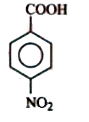
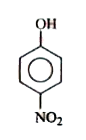
Which of the following compounds will react with `NaNH_(2)` ?

A

`CH_(3)-C-=CH`

B

C

D

`ph-overset(O)overset(||)underset(O)underset(||)(S)-OH`

Text Solution

AI Generated Solution

The correct Answer is:

To determine which of the given compounds will react with sodium amide (NaNH₂), we need to understand the nature of sodium amide as a strong base and its ability to deprotonate compounds that have acidic hydrogen atoms. Here’s a step-by-step solution: ### Step 1: Identify the Nature of Sodium Amide Sodium amide (NaNH₂) is a strong base. It can abstract acidic protons (H⁺ ions) from compounds that possess acidic hydrogen atoms. ### Step 2: Analyze Each Compound We will analyze each of the given compounds to see if they contain acidic hydrogen atoms that can be abstracted by NaNH₂. 1. **Compound A: Alkyne (e.g., terminal alkyne)** - Terminal alkynes have a hydrogen atom attached to a carbon that is part of a triple bond (C≡C-H). This hydrogen is acidic and can be easily abstracted by NaNH₂ to form an acetylide ion. - **Conclusion**: Reacts with NaNH₂. 2. **Compound B: Carboxylic Acid** - Carboxylic acids (RCOOH) have a hydrogen atom attached to the hydroxyl group (-OH), which is acidic. NaNH₂ can deprotonate this hydrogen, forming a carboxylate ion. - **Conclusion**: Reacts with NaNH₂. 3. **Compound C: Phenolic Compound (e.g., p-nitrophenol)** - Phenolic compounds have an -OH group attached to a benzene ring. The hydrogen of the hydroxyl group is slightly acidic due to resonance stabilization. NaNH₂ can abstract this hydrogen. - **Conclusion**: Reacts with NaNH₂. 4. **Compound D: Sulfonic Acid** - Sulfonic acids (R-SO₃H) are stronger acids than carboxylic acids. The hydrogen atom attached to the sulfonic group is highly acidic and can be abstracted by NaNH₂. - **Conclusion**: Reacts with NaNH₂. ### Step 3: Final Conclusion All four compounds (A, B, C, and D) have acidic hydrogen atoms and will react with sodium amide (NaNH₂). ### Summary of Results - **Compound A**: Reacts with NaNH₂ (terminal alkyne). - **Compound B**: Reacts with NaNH₂ (carboxylic acid). - **Compound C**: Reacts with NaNH₂ (phenolic compound). - **Compound D**: Reacts with NaNH₂ (sulfonic acid). ### Final Answer **All options (A, B, C, and D) will react with NaNH₂.** ---

To determine which of the given compounds will react with sodium amide (NaNH₂), we need to understand the nature of sodium amide as a strong base and its ability to deprotonate compounds that have acidic hydrogen atoms. Here’s a step-by-step solution: ### Step 1: Identify the Nature of Sodium Amide Sodium amide (NaNH₂) is a strong base. It can abstract acidic protons (H⁺ ions) from compounds that possess acidic hydrogen atoms. ### Step 2: Analyze Each Compound We will analyze each of the given compounds to see if they contain acidic hydrogen atoms that can be abstracted by NaNH₂. ...
Promotional Banner

Similar Questions

Explore conceptually related problems

Which of the following compounds reacts with NaCNBH_(3) ?

Which of the following compounds will react with Na to form 4,5-diethyloctane?

Which of the following compound will not react with l_(2)//OH^(-) .

Which of the following compound will not react with I_(2)//OH^(-) .

Which of the following compound react with BF_(3) ?

Observe the following feasible reaction: Q. Which of the following compound does not react with NaHCO_(3) .

Which of the following compound react with B_(2)H_(6) ?

Which of the following compounds will reacts with ethanolic KCN ?
