Home
Class 12
CHEMISTRY
Which of the following undergoes Hydroly...

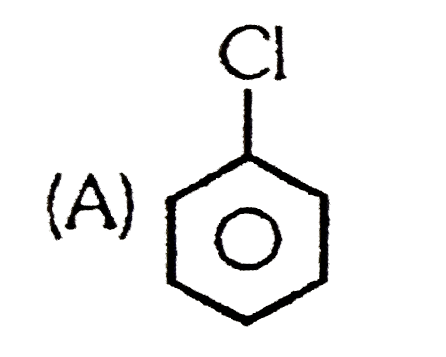
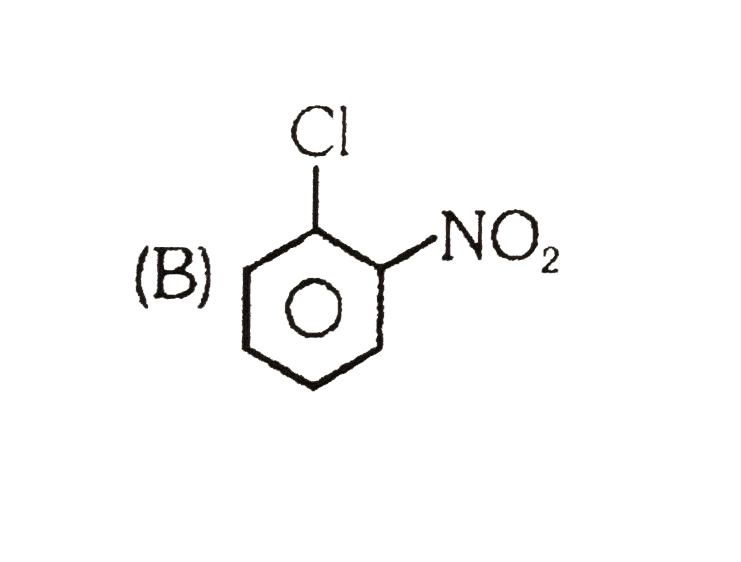
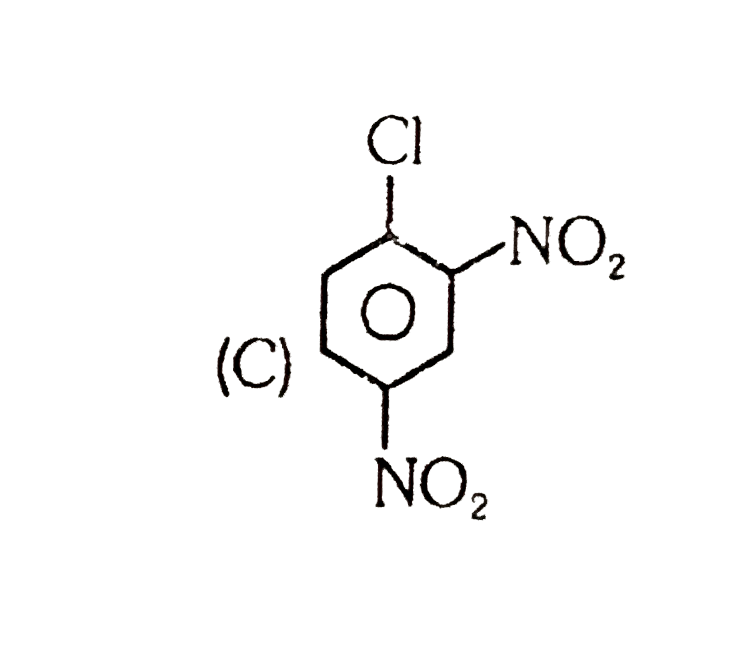
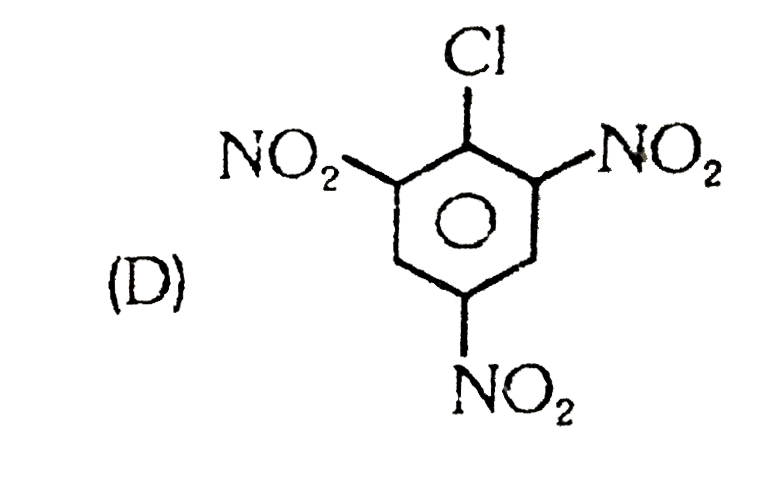
Which of the following undergoes Hydrolysis most easily:

A

B

C

D

Text Solution

AI Generated Solution

The correct Answer is:

To determine which compound undergoes hydrolysis most easily, we need to analyze the options based on the presence of electron-withdrawing groups (EWGs). Here’s a step-by-step breakdown of the solution: ### Step 1: Understand Hydrolysis Hydrolysis is a chemical reaction involving the breaking of a bond in a molecule by the addition of water. In the context of organic compounds, hydrolysis often involves the cleavage of a carbon-chlorine (C-Cl) bond. ### Step 2: Identify the Role of Electron-Withdrawing Groups Electron-withdrawing groups increase the polarity of the C-Cl bond. The more polar the bond, the weaker it becomes, making it easier for the bond to break during hydrolysis. Therefore, the presence of EWGs enhances the hydrolysis process. ### Step 3: Analyze the Options We need to look at the given options and identify how many electron-withdrawing groups are present in each compound. The compound with the highest number of EWGs will undergo hydrolysis most easily. ### Step 4: Count the Electron-Withdrawing Groups - **Option A**: Count the number of EWGs. - **Option B**: Count the number of EWGs. - **Option C**: Count the number of EWGs. - **Option D**: Count the number of EWGs. Assuming Option D has three electron-withdrawing groups, it will have the highest polarity in the C-Cl bond. ### Step 5: Conclusion Based on the analysis, the compound in **Option D**, which contains three electron-withdrawing groups, will undergo hydrolysis most easily due to the increased bond polarity and decreased bond strength. ### Final Answer **Option D** undergoes hydrolysis most easily. ---

To determine which compound undergoes hydrolysis most easily, we need to analyze the options based on the presence of electron-withdrawing groups (EWGs). Here’s a step-by-step breakdown of the solution: ### Step 1: Understand Hydrolysis Hydrolysis is a chemical reaction involving the breaking of a bond in a molecule by the addition of water. In the context of organic compounds, hydrolysis often involves the cleavage of a carbon-chlorine (C-Cl) bond. ### Step 2: Identify the Role of Electron-Withdrawing Groups Electron-withdrawing groups increase the polarity of the C-Cl bond. The more polar the bond, the weaker it becomes, making it easier for the bond to break during hydrolysis. Therefore, the presence of EWGs enhances the hydrolysis process. ...
Promotional Banner

Topper's Solved these Questions

  • ELECTROCHEMISTRY

    ALLEN|Exercise MISCELLANEOUS SOLVED EXAMPLES|29 Videos
  • ELECTROCHEMISTRY

    ALLEN|Exercise COMPREHENSION TYPE|18 Videos
  • CHEMISTRY AT A GLANCE

    ALLEN|Exercise ORGANIC CHEMISTRY|472 Videos
  • HYDROCARBON

    ALLEN|Exercise MCQ|15 Videos

Similar Questions

Explore conceptually related problems

Which of the following salt undergoes hydrolysis?

Which of the following undergoes nitration most easily?

Which of the following salts undergoes hydrolysis ?

Which of the following chlorides hydrolyses most easily?

Which of the following compound undergo hydrolysis most easily :

Which of the following do not undergo hydrolysis?

Which of the following do not undergo hydrolysis?

Which of the following undergoes decarboxylation most readily on being heated ?

Which chloroderivative of benzene among the following would undergo hydrolysis most readily with aqueous sodium hydroxide to furnish the corresponding hydroxyderivative ?

ALLEN-ELECTROCHEMISTRY-EXERCISE -05 [B]
  1. Which of the following undergoes Hydrolysis most easily:

    Text Solution

    |

  2. Find the solubility product of a saturated solution of Ag(2)CrO(4) in ...

    Text Solution

    |

  3. Calculate the equilibrium constant for the reaction, 2Fe^(3+) + 3I^(-)...

    Text Solution

    |

  4. The gasX at 1 atm is bubbled through a solution containing a mixture o...

    Text Solution

    |

  5. The following electrochemical cell has been set up Pt(1)|Fe^(3+)|Fe^...

    Text Solution

    |

  6. Copper sulphate solution (250 ML) was electrolyzed using a platinum an...

    Text Solution

    |

  7. For the electrochemical cell, (M|M^(o+))||(X^(c-)|X),E^(c-).((M^(o+)|M...

    Text Solution

    |

  8. The standard potential of the following cell is 0.23V at 15^(@)C and 0...

    Text Solution

    |

  9. A standard solution of KNO(3) is used to make salt bridge, because

    Text Solution

    |

  10. The correct order of equivalent conductance at infinite dilution of ...

    Text Solution

    |

  11. The reaction 3ClO^(ө)(aq)rarrClO(3)^(-)(aq)+2Cl^(ө)(aq) is an exam...

    Text Solution

    |

  12. Complete the following chemical reaction equations : (i)MnO(4)^(...

    Text Solution

    |

  13. Two students use same stock solution of ZnSO(4) and a solution of CuSO...

    Text Solution

    |

  14. In an electrolytic cell, the flow of electrons is form

    Text Solution

    |

  15. Find the equilibrium constant of the following reaction Cu^(2+) (a...

    Text Solution

    |

  16. Zn|Zn^(2+)(a=0.1M)||Fe^(2+)(a=0.01M)Fe. The EMF of the above cell i...

    Text Solution

    |

  17. Calculate DeltaG(r)^(@) of the following reaction Ag^(+)(aq)+cI^(-)(...

    Text Solution

    |

  18. The rusting of iron takes place as follows : 2H^(o+)+2e^(-) +(1)/(2...

    Text Solution

    |

  19. We have taken a saturated solultion of AgBr, K(SP) is 12 xx 10^(-4). I...

    Text Solution

    |

  20. Tollen reagent is used for the detection of aldehydes. When a solution...

    Text Solution

    |

  21. Tollen reagent is used for the detection of aldehydes. When a solution...

    Text Solution

    |
