Home
Class 12
CHEMISTRY
Which is/are true statements (s):...

Which is/are true statements (s):

A

Protonation increases electrophilic nature of carbonyl group

B

`CF_(3)SO_(3)^(-)` is better leaving group than `CH_(3)SO_(3)^(-)`

C

Benzyl carbonium ion is stabilised by resonance

D

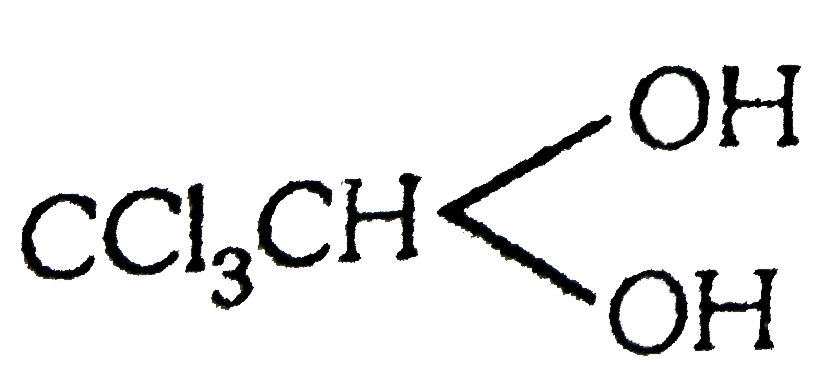
show H-Bonding

Text Solution

AI Generated Solution

The correct Answer is:

To determine which statements are true regarding the properties and behavior of certain chemical species, we will analyze each statement one by one. ### Step 1: Analyze the First Statement **Statement 1:** Protonation increases the electrophilic nature of the carbonyl group. - **Explanation:** A carbonyl group (C=O) can be protonated, which means it can gain a hydrogen ion (H⁺). When this occurs, the carbon atom becomes more positively charged (due to the addition of H⁺), resulting in a deficiency of electron density around the carbon atom. This increased positive charge enhances the electrophilic character of the carbon atom, making it more reactive towards nucleophiles. - **Conclusion:** This statement is **true**. ### Step 2: Analyze the Second Statement **Statement 2:** CF3SO3⁻ is a better leaving group than CH3SO3⁻. - **Explanation:** The ability of a leaving group to depart from a molecule is influenced by its size and basicity. Larger and less basic groups tend to be better leaving groups. The trifluoromethyl group (CF3) is larger than the methyl group (CH3), and the corresponding leaving groups CF3SO3⁻ and CH3SO3⁻ can be compared. CF3SO3⁻ is derived from trifluoromethanesulfonic acid, which is a stronger acid than methanesulfonic acid, indicating that CF3SO3⁻ is less basic and thus a better leaving group than CH3SO3⁻. - **Conclusion:** This statement is **true**. ### Step 3: Analyze the Third Statement **Statement 3:** Benzyl carbonium ion is stabilized by resonance. - **Explanation:** The benzyl carbonium ion (C6H5CH2⁺) has a positive charge on the carbon atom adjacent to a benzene ring. The positive charge can be delocalized through resonance with the π electrons of the benzene ring. This delocalization stabilizes the carbonium ion, as it can be represented by multiple resonance structures. - **Conclusion:** This statement is **true**. ### Step 4: Analyze the Fourth Statement **Statement 4:** Chloral shows hydrogen bonding. - **Explanation:** Chloral (CCl3CHO) contains a carbonyl group (C=O) and hydroxyl groups (OH). The presence of these functional groups allows for the formation of hydrogen bonds. The hydrogen atom of the hydroxyl group can form a hydrogen bond with the oxygen atom of the carbonyl group or with other molecules, indicating that chloral can indeed exhibit hydrogen bonding. - **Conclusion:** This statement is **true**. ### Final Conclusion All four statements are true: 1. True 2. True 3. True 4. True ---
Promotional Banner

Topper's Solved these Questions

  • ALKYL AND ARYL HALIDE

    ALLEN|Exercise EXERCISE-02|1 Videos
  • ALKYL AND ARYL HALIDE

    ALLEN|Exercise EXERCISE-04 [A]|1 Videos
  • ALKYL AND ARYL HALIDE

    ALLEN|Exercise EXERCISE-01|1 Videos
  • ALKENE, ALKANE & ALKYNE

    ALLEN|Exercise EXCERSISE-3|28 Videos
  • Atomic Structure

    ALLEN|Exercise All Questions|62 Videos

Similar Questions

Explore conceptually related problems

Which is / are true statement(s) ?

Which is/are true statement(s) when metal carbides react with H_(2)O ?

Which is true statement(s)?

Which is true statement ?

Which of the following is/are true statement(s)?

Which of the following is/are true statement(s)?

Which of the following is/are true statements

Indentify the true statement(s)

Which of the following is a true statement ?
