Home
Class 12
CHEMISTRY
An organic compound A has molecular form...

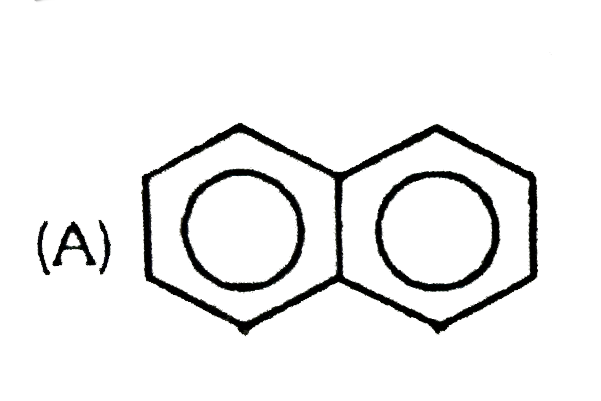
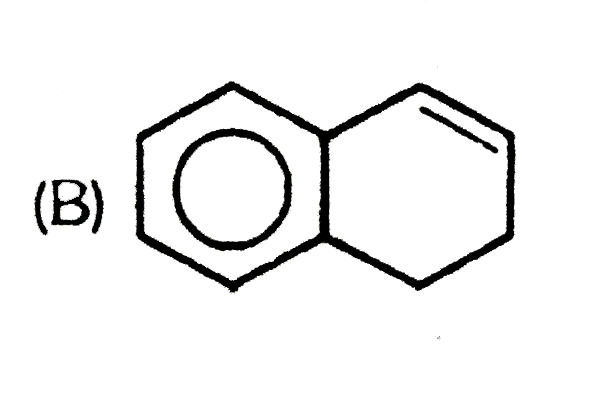
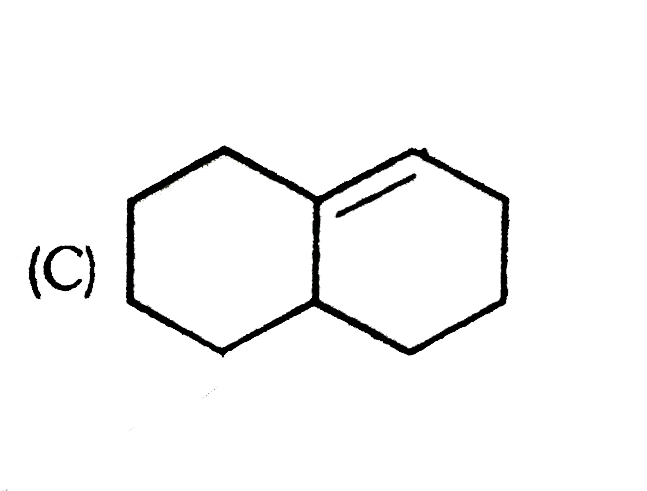
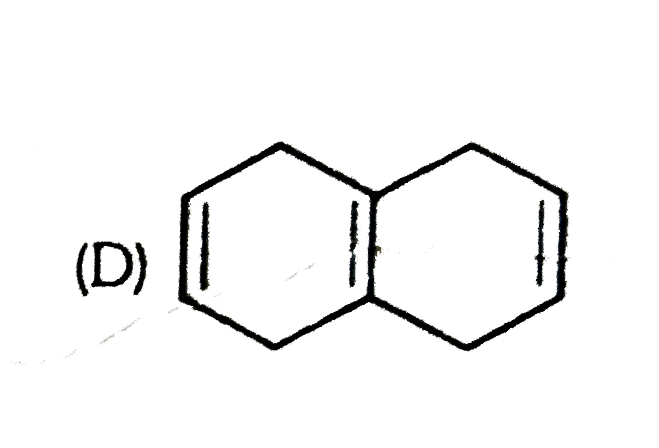
An organic compound A has molecular formula `C_(10)H_(17)Br` and it is non-resolvable. A does not decolourize brown colour of bromine water solution. A on treatement with `(CH_(3))_(2 COK//(CH_(3))_(3)COH` yields `B` as majot product. B on treatment with `H_(2)//Pt` yields `(C_(10)H_(16))` which on treatment with `CI_(2)//hv` yields three monochloro derivative. Also B on boiling with acidic permanganate solution yields `C(C_(10)H_(16)O_(3))C`. on heating with sodalime yields `D(C_(9)H_(16)O).D` on reducing with `LiAIH_(4)` followed yields `C(C_(10)H_(16)O_(3)).C` on heating with sodalime yields `D(C_(9)H_(16)O).D` on reducing with `LiAIH_(4)` followed by heating product with concentrated `H_(2)SO_(4)` yields `E(C_(9)H_(16))` as major product. E on treatment with ozone followed by work-up with `Zn-H_(2)O` yields 6-Ketononanal.
Compound B is:

A

B

C

D

Text Solution

Verified by Experts

The correct Answer is:

C
Promotional Banner

Topper's Solved these Questions

  • ALKYL AND ARYL HALIDE

    ALLEN|Exercise EXERCISE-02|1 Videos
  • ALKYL AND ARYL HALIDE

    ALLEN|Exercise EXERCISE-04 [A]|1 Videos
  • ALKYL AND ARYL HALIDE

    ALLEN|Exercise EXERCISE-01|1 Videos
  • ALKENE, ALKANE & ALKYNE

    ALLEN|Exercise EXCERSISE-3|28 Videos
  • Atomic Structure

    ALLEN|Exercise All Questions|62 Videos

Similar Questions

Explore conceptually related problems

Which of the compounds with molecular formula C_(5)H_(10) yields acetone on ozonolysis ?

A compound with molcular formula C_(4)H_(10)O_(3) . is converted by the action of acetyl chloride to a compound of molecular mass 190. The original compound (C_(4)H_(10)O_(3)) has

An alkyl bromide A has molecular formula C_(8)H_(17)Br and four different structures can be drawn for it, all optically active. A on refluxing with ethanolic KOH solution yields only one elirnination product B(C_(8)H_(16)) which it still enantiomeric. B on treatment with H_(2)//Pt yields C(C_(8)H_(18)) which does not rotate the plane polarized light, B on ozonolysis followed by work-up with H_(2)O_(2) yields D(C_(7)H_(14)O) as one product which it still resolvable. Deduce structures of A to D.

An organic compound (X) has molecular formula C_(7)H_(6)O_(2) and it does not effervesces with NaHCO_(3). X on treatment with excess of HBr(aq) gives Y(C_(6)H_(6)O_(2)) and CH_(2)Br_(2) . Y forms a violet coloured solution with FeCl_(3) . If X treated with Br_(2)Fe, how many different monobromination product would result?

A hydrocarbon A(C_(10)H_(12)) has no chiral carbon. A gives a white precipitate with ammonical solution of silver nitrate. A on treatment with H_(2)//pt gives B(C_(10)H_(20)) . A on ozonolysis gives C(C_(8)H_(12)O_(4)) as one product which on heating with soda lime gives D(C_(6)H_(12)) . D on monochlorination with Cl_(2)//hv gives C_(6)H_(11)Cl as sole isomer. Identify A to D .

Among the isomeric alkanes formula C_(5)H_(12) , identify the one that on photochemical chlorination yields only monochloro derivative.

An optically activ compound (A) has the molecular formula C_(6)H_(10) . The compound gives a ppt. When treated with Ag(NH_(3))_(2)OH . On catalytic hydrogenation, A yields B(C_(6)H_(14)) which is only optically inactive identify the total number of alphaH in product formed by treatment of A with O_(3)//H_(2)O_(2) then LAH and then H^(o+)//Delta

An organic compound A’ with molecular formula C_(7)H_(7)NO reacts with Br_(2) /aqKOH to give compound B’, which upon reaction with NaNO_(2) & HCl" at "O^(@) C gives C’. Compound C’ on heating with CH_(3)CH_(2)OH gives a hydrocarbon D’. Compound B’ on further reaction with Br_(2) water gives white precipitate of compound E’. Identify the compound A, B, C, D&E, also justify your answer by giving relevant chemical equations.

ALLEN-ALKYL AND ARYL HALIDE-EXERCISE
  1. Statement-I: Boiling point of alkyl halide increases with increases in...

    Text Solution

    |

  2. An organic compound A has molecular formula C(10)H(17)Br and it is non...

    Text Solution

    |

  3. An organic compound A has molecular formula C(10)H(17)Br and it is non...

    Text Solution

    |

  4. An organic compound A has molecular formula C(10)H(17)Br and it is non...

    Text Solution

    |

  5. An organic compound A has molecular formula C(10)H(17)Br and it is non...

    Text Solution

    |

  6. Nucleophilic substitution reactions generally expressed as Nu^(-) +R...

    Text Solution

    |

  7. Nucleophilic substitution reactions generally expressed as Nu^(-) +R...

    Text Solution

    |

  8. Nucleophilic substitution reactions generally expressed as Nu^(-) +R...

    Text Solution

    |

  9. Nucleophilic substitution reactions generally expressed as Nu^(-) +R...

    Text Solution

    |

  10. Nucleophilic aliphatic substitution reaction is mainly of two types: S...

    Text Solution

    |

  11. Nucleophilic aliphatic substitution reaction is mainly of two types: S...

    Text Solution

    |

  12. Nucleophilic aliphatic substitution reaction is mainly of two types: S...

    Text Solution

    |

  13. An optically active compound A (assume dextrorotatory) has the molecul...

    Text Solution

    |

  14. An optically active compound A (assume dextrorotatory) has the molecul...

    Text Solution

    |

  15. Select the member of each pair that shows rate of S(N)2 reaction with ...

    Text Solution

    |

  16. Of the following statements which are true for S(N)1 reaction. (a) T...

    Text Solution

    |

  17. Of the following statements , which are true for S(N)2 reaction. (a)...

    Text Solution

    |

  18. Arrange the isomers of molecular formula C(4)H(9)CI in order of decrea...

    Text Solution

    |

  19. There is an overall 29-fold difference in reactivity of 1-chlorohexane...

    Text Solution

    |

  20. Identify the product when A reacts with

    Text Solution

    |
