Home
Class 12
CHEMISTRY
Which is faster in the following pairs o...

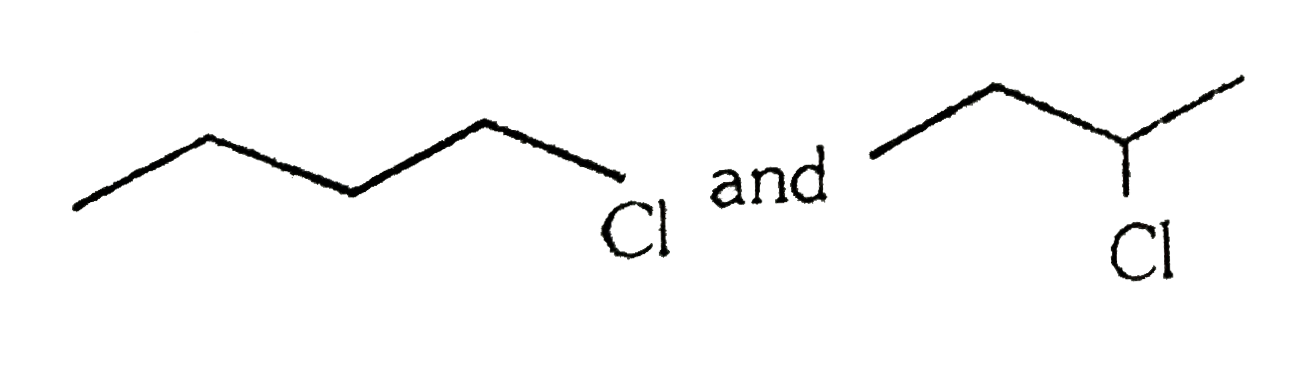
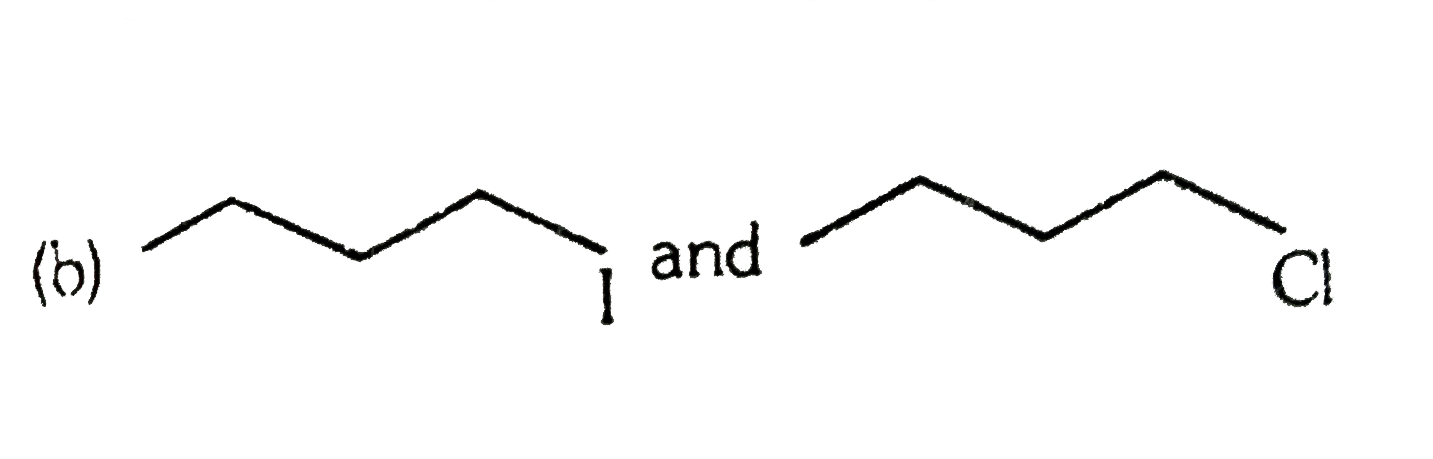
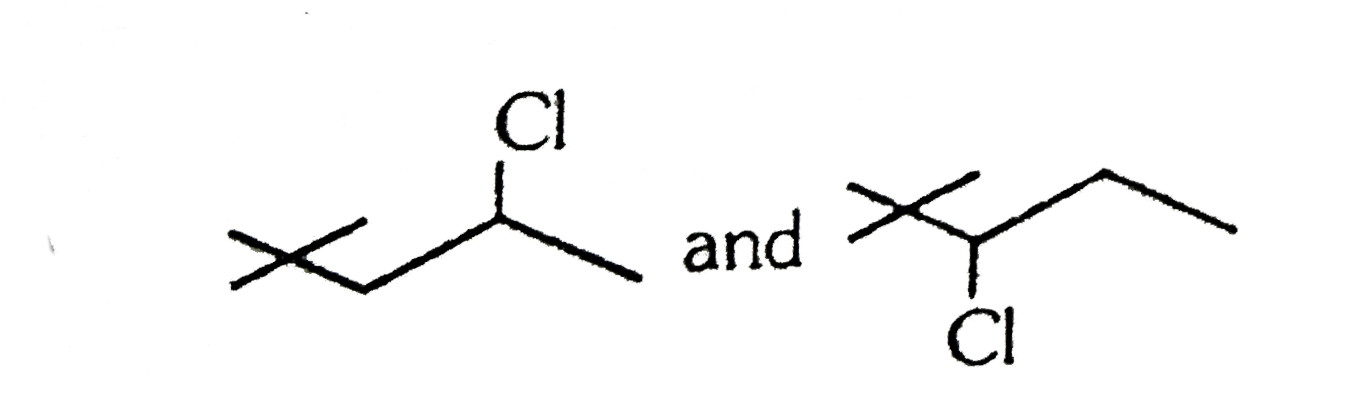
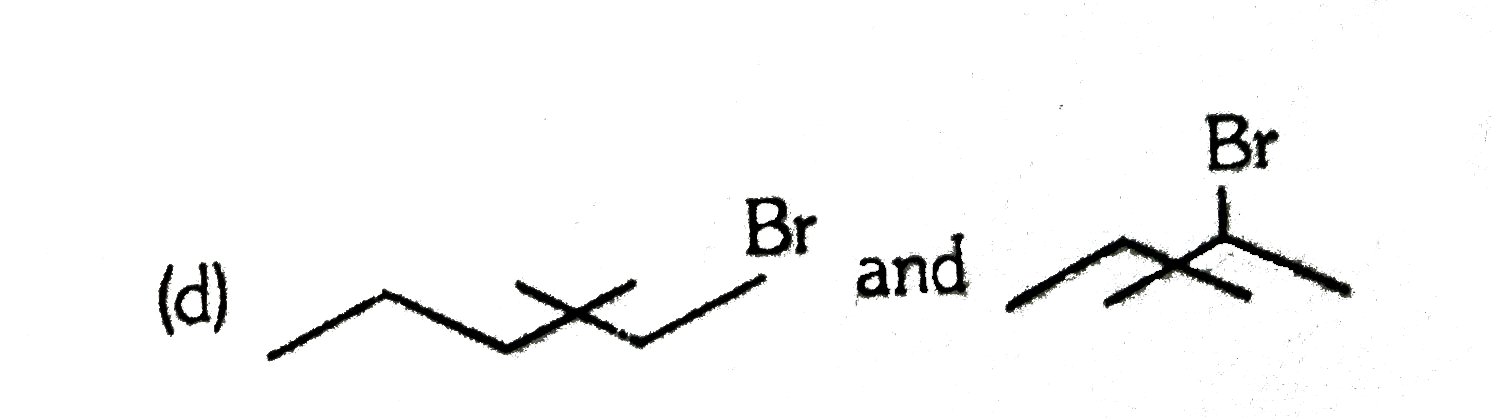
Which is faster in the following pairs of halogen compounds undergoing `S_(N)2` reactions?

A

B

C

D

Text Solution

AI Generated Solution

The correct Answer is:

To determine which halogen compound undergoes an SN2 reaction faster in the given pairs, we need to analyze the steric hindrance and the type of carbocation formed when the halogen is removed. The SN2 reaction rate is inversely proportional to steric hindrance, meaning that less steric hindrance leads to a faster reaction. ### Step-by-Step Solution: 1. **Identify the Halogen Compounds**: We will analyze the pairs of halogen compounds provided in the question. Let's denote them as Compound A and Compound B. 2. **Determine the Type of Carbocation Formed**: - For each compound, when the halogen is removed, we need to determine the type of carbocation that would form. - A primary carbocation is less stable than a secondary carbocation, and tertiary carbocations are the most stable. However, in SN2 reactions, we are more concerned about steric hindrance than carbocation stability. 3. **Analyze Steric Hindrance**: - **Option 1**: If Compound A forms a primary carbocation and Compound B forms a secondary carbocation, then Compound A will undergo the SN2 reaction faster due to less steric hindrance. - **Option 2**: If both compounds form primary carbocations, they will have similar rates of reaction since they both have low steric hindrance. - **Option 3**: If Compound A forms a secondary carbocation with significant steric hindrance (due to bulky groups), and Compound B forms a primary carbocation, then Compound B will react faster. - **Option 4**: Similar to Option 3, if both compounds have significant steric hindrance, the one forming a primary carbocation will react faster. 4. **Conclusion**: After analyzing the pairs, the compound that forms a primary carbocation with the least steric hindrance will react faster in the SN2 mechanism. Based on the analysis from the video, the answer is that the second option (both forming primary carbocations) is the fastest in undergoing the SN2 reaction. ### Final Answer: The faster compound in the given pairs of halogen compounds undergoing SN2 reactions is **Option B**. ---
Promotional Banner

Topper's Solved these Questions

  • ALKYL AND ARYL HALIDE

    ALLEN|Exercise EXERCISE-02|1 Videos
  • ALKYL AND ARYL HALIDE

    ALLEN|Exercise EXERCISE-04 [A]|1 Videos
  • ALKYL AND ARYL HALIDE

    ALLEN|Exercise EXERCISE-01|1 Videos
  • ALKENE, ALKANE & ALKYNE

    ALLEN|Exercise EXCERSISE-3|28 Videos
  • Atomic Structure

    ALLEN|Exercise All Questions|62 Videos

Similar Questions

Explore conceptually related problems

In the following pairs of halogen compounds, which would undergo S_(N)2 reaction faster?

In the following pair of halogen compounds which would undergo S_(N^2) reaction faster?

In the following pairs of halogen compounds, which compound undergoes faster S_(N)1 reaction?

In the following pairs of halogen compounds, which compounds undergoes faster S_(N^1) reaction?

Which ones in the following pairs of substances undergoes S_(N)2 substitution reaction faster and why ?

Which one in the following pairs of substances undergoes S_(N^2) substitution reaction faster and why?

(i) Which alkyI hailde from the following pair is chiral and undergoes faster S_(N)2 reaction ? (ii) Out of S_(N)1 and S_(N)2 which reaction occurs with (a) Inversion of configuration (b) Recemisation

Which alkyl halide from the following pair is (i) Chiral and (ii) undergoes S_(N)1 reaction faster ? (a) (CH_(3))_(3)CBr (b) CH_(3)CH_(2)CHBrCH_(3)

Arrange the following compounds in order of: Decreasing S_(N)1 reaction rate:

Which of the following is halogen exchange reaction ?

ALLEN-ALKYL AND ARYL HALIDE-EXERCISE
  1. There is an overall 29-fold difference in reactivity of 1-chlorohexane...

    Text Solution

    |

  2. Identify the product when A reacts with

    Text Solution

    |

  3. Which is faster in the following pairs of halogen compounds undergoing...

    Text Solution

    |

  4. R -Mg-Br(A) on reaction with H(2)O forms a gas (B), which occupied 1.4...

    Text Solution

    |

  5. Provide structure of major product in the following reaction indicatin...

    Text Solution

    |

  6. Propose mechanism of the following reactions:

    Text Solution

    |

  7. Which of the following alkyl halide could be successfully used to synt...

    Text Solution

    |

  8. An alkyl bromide A has molecular formula C(8)H(17)Br and four differen...

    Text Solution

    |

  9. Identify A to G in the following. (a) overset(Br(2), C Cl(4))rarr A...

    Text Solution

    |

  10. Identify B to F

    Text Solution

    |

  11. Vinyl chloride does not give S(N) reaction but allyl chloride gives. E...

    Text Solution

    |

  12. Arrange the following in the increasing order of their ability as a le...

    Text Solution

    |

  13. RBr when treated with AgCN in a highly polar solvent gives RNC whereas...

    Text Solution

    |

  14. SN^(1) reaction is feasable in-

    Text Solution

    |

  15. Bottles containing C6H5I and C6H5CH2I lost their original labels. They...

    Text Solution

    |

  16. The reaction of chloroform with alcoholic KOH and p-toluidine form-

    Text Solution

    |

  17. The compound formed on heating chlorobenzene with chloral in the pres...

    Text Solution

    |

  18. Tertiary alkyl halide are practically inert to substitution by SN^(2)...

    Text Solution

    |

  19. Among the following the one that gives positive iodoform test upon rea...

    Text Solution

    |

  20. The structure of the major product formed in the following reaction is...

    Text Solution

    |
