Home
Class 11
PHYSICS
Two nonconducting spheres of radii R1 an...

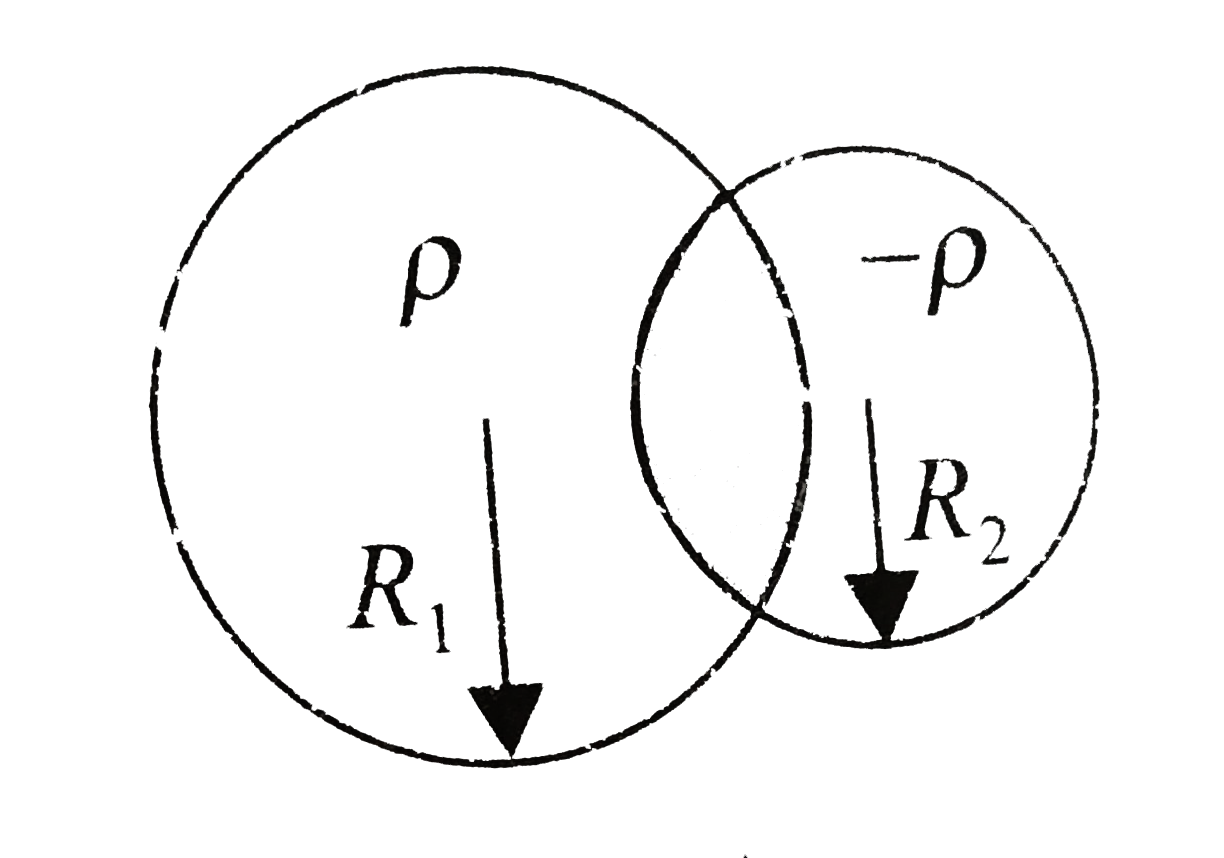
Two nonconducting spheres of radii `R_1 and R_2` and carrying uniform volume charge densities `+rho and -rho`, respectively, are placed such that they partially overlap, as shown in the figure. At all points in the overlapping region,

A

the electrostatic field is zero

B

the electrostatic potential is constant

C

the electrostatic field is constant in magnitude

D

the electrostatic field has same direction

Text Solution

Verified by Experts

The correct Answer is:
C, D


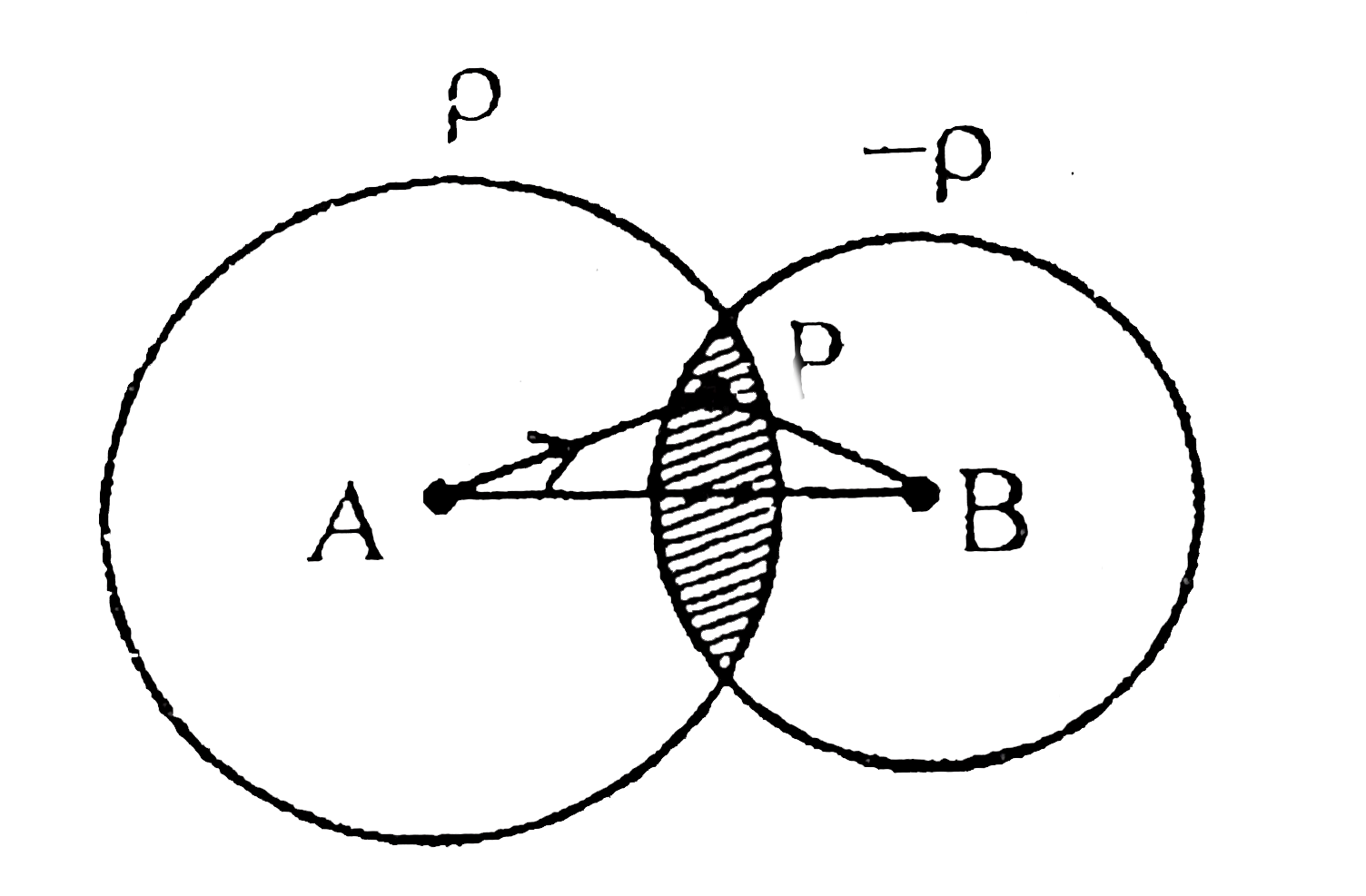
electric field at point P
`=(rho(vec(AP)))/(3 in_(0))+(-rho(vec(BP)))/(3 in_(0))=(rho(vec(AP)-vec(BP)))/(3 in_(0))=(rho(vec(AB)))/(3 in_(0))`
= constant in both magnitude and direction at evergy point of overlap region.
also e is non zero so potential is not same at all points.
Promotional Banner

Topper's Solved these Questions

  • MISCELLANEOUS

    ALLEN|Exercise REASONING TYPE|1 Videos
  • MISCELLANEOUS

    ALLEN|Exercise MATCH THE COLUME TYPE|1 Videos
  • MISCELLANEOUS

    ALLEN|Exercise Exercise-05(B)|19 Videos
  • KINEMATICS (MOTION ALONG A STRAIGHT LINE AND MOTION IN A PLANE)

    ALLEN|Exercise BEGINNER S BOX-7|8 Videos
  • PHYSICAL WORLD, UNITS AND DIMENSIONS & ERRORS IN MEASUREMENT

    ALLEN|Exercise EXERCISE-IV|8 Videos

Similar Questions

Explore conceptually related problems

Two non-conducting solid spheres of radii R and 2R, having uniform volume charge densities rho_1 and rho_2 respectively, touch each other. The net electric field at a distance 2R from the centre of the smaller sphere, along the line joining the centres of the spheres, is zero. The ratio rho_1/rho_2 can be

Two charged spheres of radii R_(1) and R_(2) having equal surface charge density. The ratio of their potential is

Two concentric conducting shells of radii R and 2R are having charges Q and -2Q respectively.In a region r

There are two nonconducting spheres having uniform volume charge densities rho and - rho . Both spheres have equal radius R . The spheres are now laid down such that they overlap as shown in Fig.2.125. Take vec(d) = O_(1) vec(O_(2)) . The electric field vec(E) in the overlapped region is

There are two nonconducting spheres having uniform volume charge densities rho and - rho . Both spheres have equal radius R . The spheres are now laid down such that they overlap as shown in Fig.2.125. Take vec(d) = O_(1) vec(O_(2)) . The electric field vec(E) in the overlapped region is

There are two nonconducting spheres having uniform volume charge densities rho and - rho . Both spheres have equal radius R . The spheres are now laid down such that they overlap as shown in Fig.2.125. Take vec(d) = O_(1) vec(O_(2)) . The potential difference Delta V between the centres of the two spheres for d = R is

A nonconducting sphere of radius R is filled with uniform volume charge density -rho . The center of this sphere is displaced from the origin by vecd . The electric field vecE at any point P having position vector inside the sphere is

If two liquids of same mass but densities rho_1 and rho_2 respectively are mixed, then the density of the mixture is:

Two spheres A and B of equal radii R, each are uniformly dense with densities 2 rho and rho respectively are placed as shown in figure.The initial acceleration of particle placed at point P due to gravity of both the spheres will be (P is just above the surface of sphere B).

A Uniformly charged solid non-conducting sphere of uniform volume charge density rho and radius R is having a concentric spherical cavity of radius r. Find out electric field intensity at following points, as shown in the figure : (i) Point A (ii) Point B (iii) Point C (iv) Centre of the sphere

