Home
Class 12
CHEMISTRY
Which is maximum reactive towords acid c...

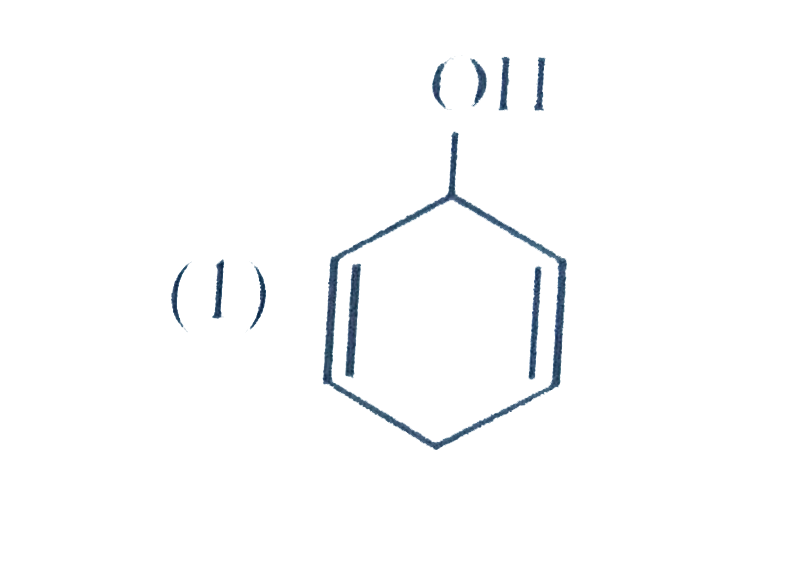
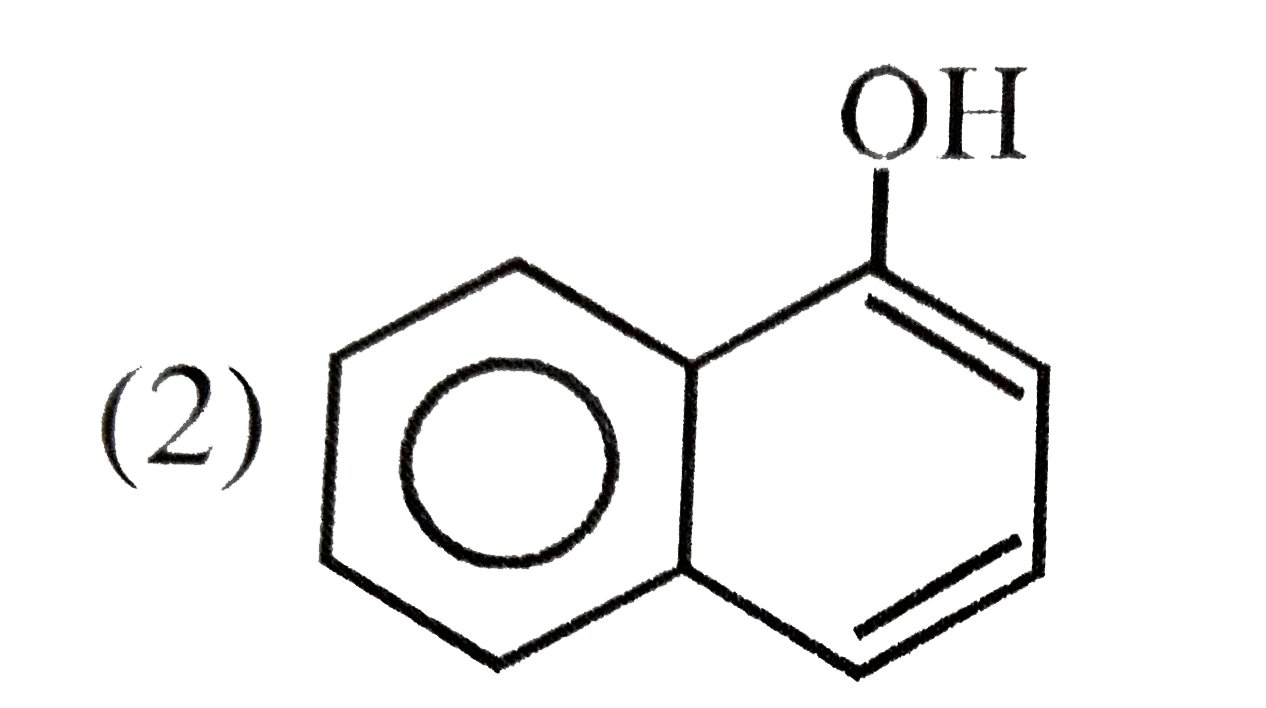
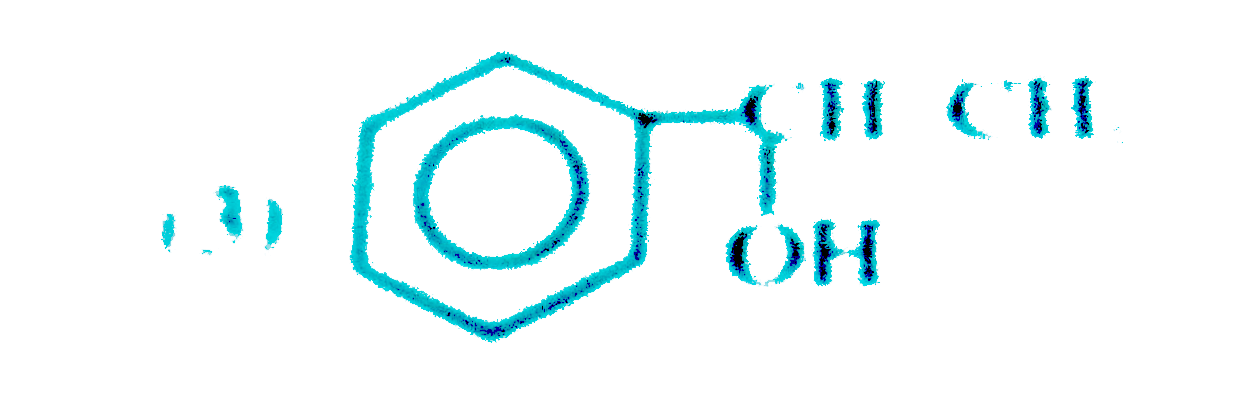
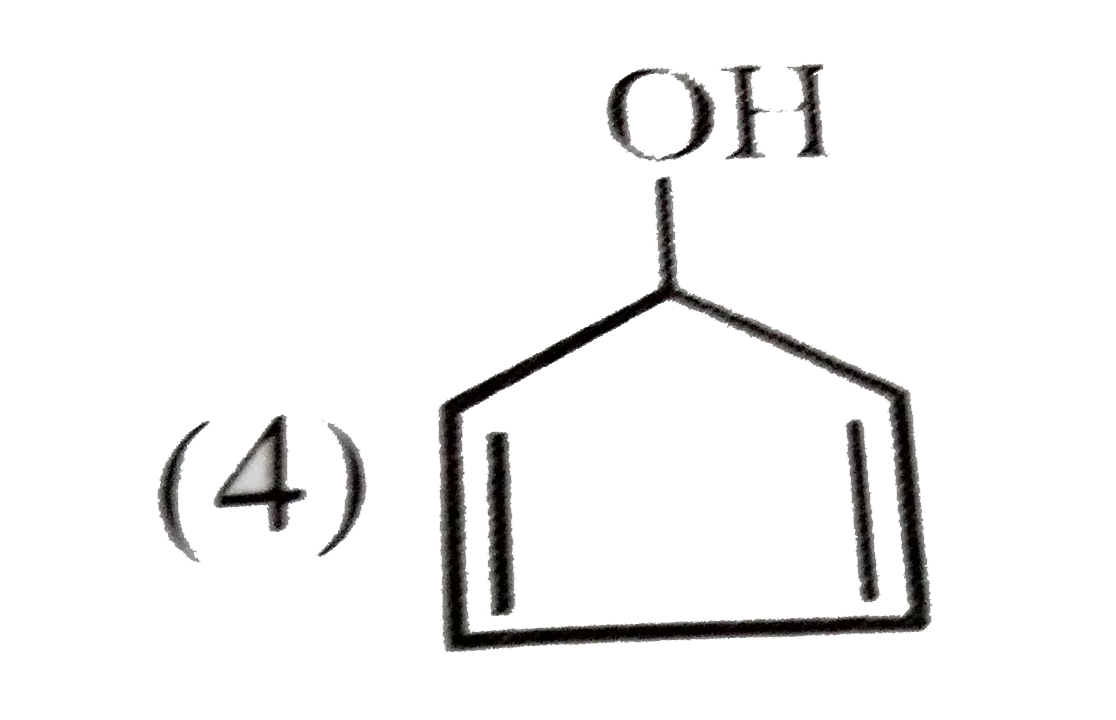
Which is maximum reactive towords acid catalysed dehydration :

A

B

C

D

Text Solution

AI Generated Solution

The correct Answer is:

To determine which compound is the most reactive towards acid-catalyzed dehydration, we will analyze the stability of the carbocations formed during the reaction for each option. The more stable the carbocation, the more reactive the compound will be. ### Step-by-Step Solution: 1. **Identify the Compounds**: We have four different compounds to analyze for their reactivity towards acid-catalyzed dehydration. 2. **Mechanism of Acid-Catalyzed Dehydration**: In acid-catalyzed dehydration, the hydroxyl group (OH) is protonated by H⁺, leading to the formation of water (H₂O) which leaves, resulting in the formation of a carbocation. 3. **Analyze Each Compound**: - **Compound 1**: After protonation of the OH group, a carbocation is formed on the adjacent carbon. The stability of this carbocation will depend on its structure. - **Compound 2**: This compound has a cyclic structure. Upon protonation, the carbocation formed is on a sp² carbon which is less stable due to the ring strain and the electronegativity of the sp carbon. - **Compound 3**: This compound has a benzene ring attached to the carbon with the OH group. The carbocation formed can be stabilized by resonance with the benzene ring, making it more stable than the previous compounds. - **Compound 4**: This compound allows for resonance stabilization of the carbocation formed after dehydration. The positive charge can be delocalized over multiple atoms, leading to a very stable carbocation. 4. **Compare the Stability of Carbocations**: - **Compound 1**: Moderate stability. - **Compound 2**: Least stable due to ring strain. - **Compound 3**: More stable due to resonance with the benzene ring. - **Compound 4**: Most stable due to extensive resonance stabilization. 5. **Conclusion**: The compound that forms the most stable carbocation after dehydration is Compound 4. Therefore, it is the most reactive towards acid-catalyzed dehydration. ### Final Answer: Compound 4 is the most reactive towards acid-catalyzed dehydration.
Promotional Banner

Topper's Solved these Questions

  • CHEMISTRY AT A GLANCE

    ALLEN|Exercise INORGANIC CHEMISTRY|300 Videos
  • Chemical Equilibrium

    ALLEN|Exercise All Questions|30 Videos
  • ELECTROCHEMISTRY

    ALLEN|Exercise EXERCISE -05 [B]|38 Videos

Similar Questions

Explore conceptually related problems

Which of the following is maximum reactive for dehydrohalogenation :-

Among the following compound find the one which is maximum reactive towards electrophilic reagent ?

Most reactive towords E.S,R :

Explain the mechanism of the following reactions : Acid catalysed dehydration of an alcohol forming an alkene.

The relative rate of acid catalysed dehydration of following alcohols would be I.

Predict the major product of acid catalysed dehydration of (i) 1-methylcyclohexanol and (ii) butan-1-ol

The major product formed by the acid catalysed hydration of

(a) Predict the major product of acid catalysed dehydration of 1-Methylcyclohexanol. (b) You are given benzene, conc. H_(2)SO_(4), NaOH and did. HCI. Write the preparation of phenol using these reagents.

DDT is manufactured by acid catalysed condensation of :

ALLEN-CHEMISTRY AT A GLANCE-ORGANIC CHEMISTRY
  1. CH(3)-underset(CH(3))underset(|)overset(CH(3))overset(|)C-CH=CH-CH(3)o...

    Text Solution

    |

  2. During debromination of meso-dibromobutane, the major compound formed ...

    Text Solution

    |

  3. Which is maximum reactive towords acid catalysed dehydration :

    Text Solution

    |

  4. Which gives ketonic group after hydroboration oxidation :

    Text Solution

    |

  5. Complete the following reaction

    Text Solution

    |

  6. on oxymercuration demercuaration produces the major product

    Text Solution

    |

  7. How many chiral compounds are possible on monochlorination of 2-methyl...

    Text Solution

    |

  8. Ozonolysis of an organic compound A produces acetone and propionaldehy...

    Text Solution

    |

  9. Arrange the following in decreasing order of reactivity towards electr...

    Text Solution

    |

  10. Which of the following is most basic

    Text Solution

    |

  11. Ph-CH=CH-Ph underset(C Cl(4))overset(Cl(2))rarr X overset(2NaNH(2))rar...

    Text Solution

    |

  12. Which Intermediate formed during addition of halogen on alkenes ?

    Text Solution

    |

  13. CH(3)-C-=CHunderset(dil.H(2)SO(4))overset(HgSO(4))(to) product Produ...

    Text Solution

    |

  14. Product, Product is

    Text Solution

    |

  15. No. of structural isomeric alkenes (molecular formula =C(6)H(12)) whic...

    Text Solution

    |

  16. Arrange the following towards their reactivity for electrophilic addit...

    Text Solution

    |

  17. Arrange the following towards reactivity for heat of combustion :-

    Text Solution

    |

  18. Benzene + Acetylchloride overset(AlCl(3))(to) product Name of the abov...

    Text Solution

    |

  19. Which of the following Alkane can not be prepared by hydrogenation o...

    Text Solution

    |

  20. From how many alkyl halide we get pentane on reaction with Zn + HCl ...

    Text Solution

    |
