Home
Class 12
CHEMISTRY
The most important condition for resonan...

The most important condition for resonanace to occur is that the invovled atoms in resonating structure must be coplanar or nearly coplanar for maximum delocalisation. If this condition does not fulfil, involved orbitals cannot be parallel to each other and as consequence delocalisation cannot occur. Bulky groups present on adjacent atoms inhibit the planarity of atoms involved in resonance. this pehnomenon is known as steric inhibition of resonance. Steric inhibition of resonance has profound effect on
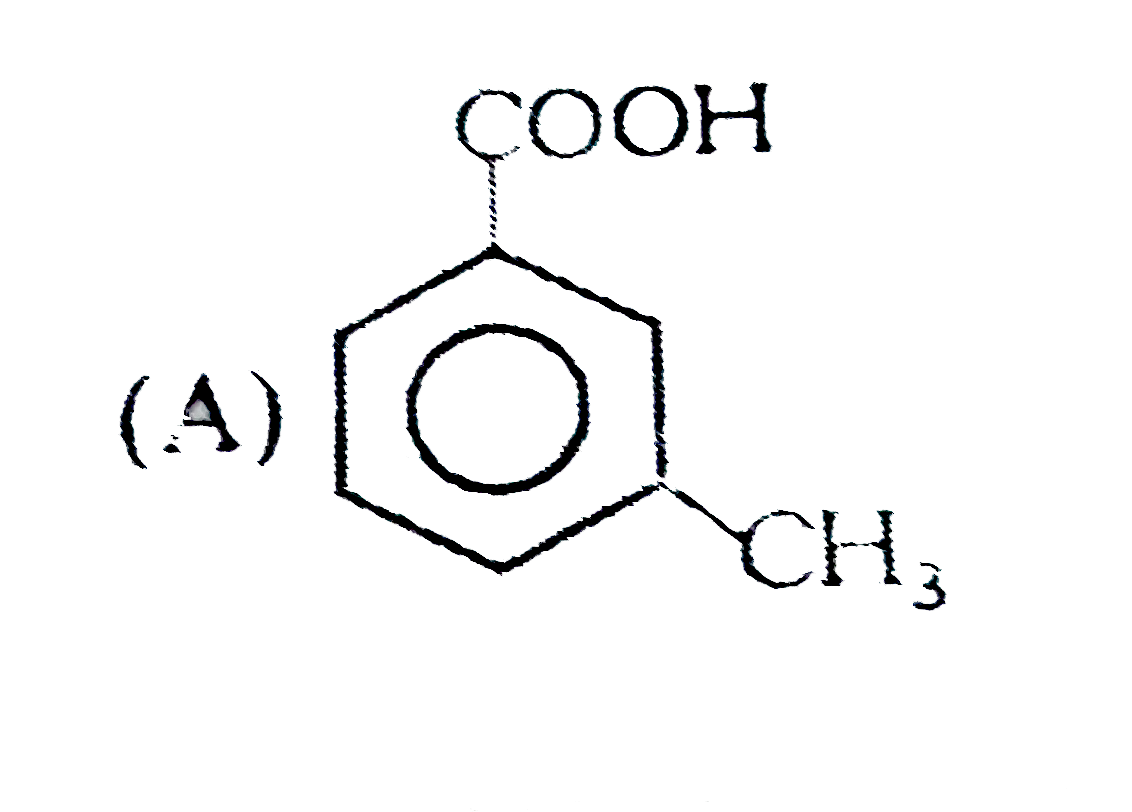
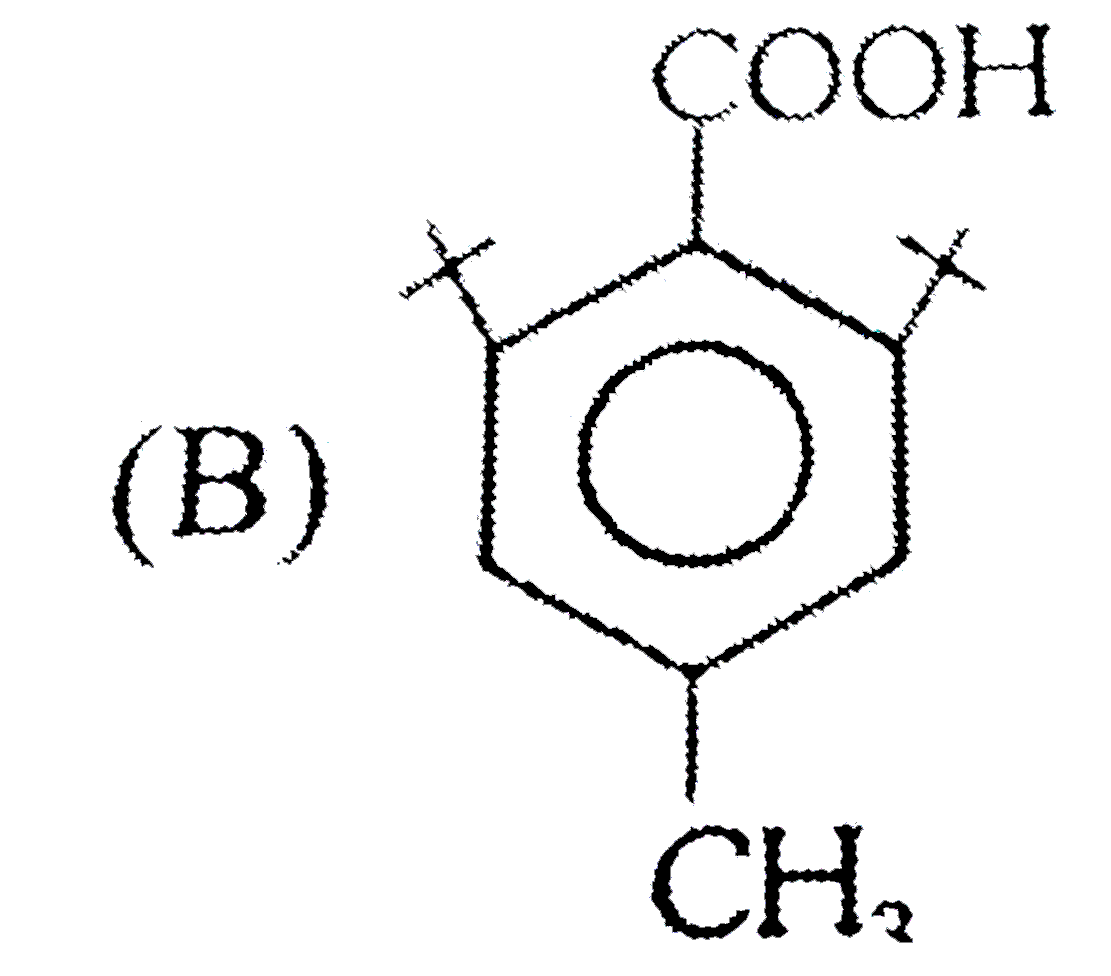
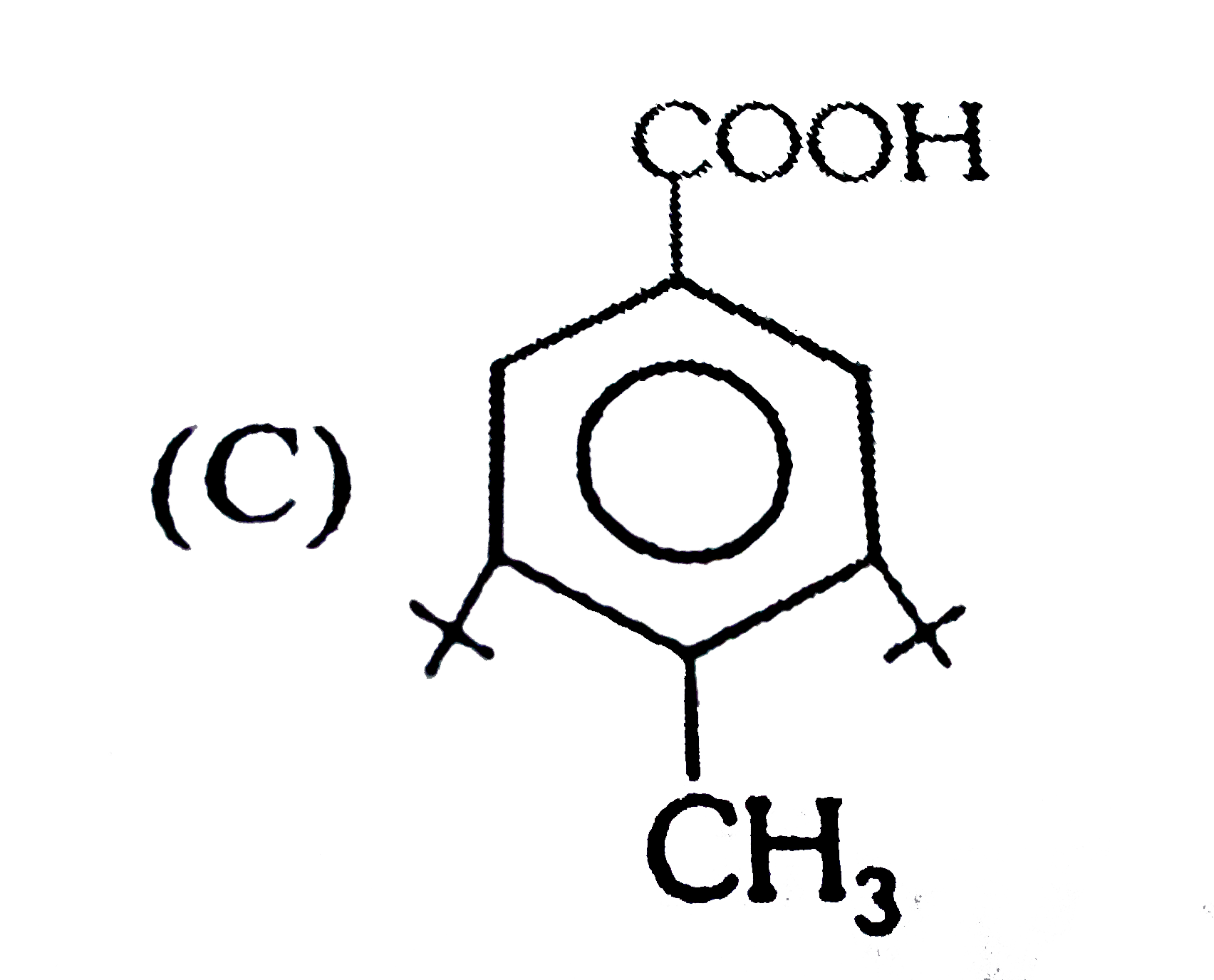
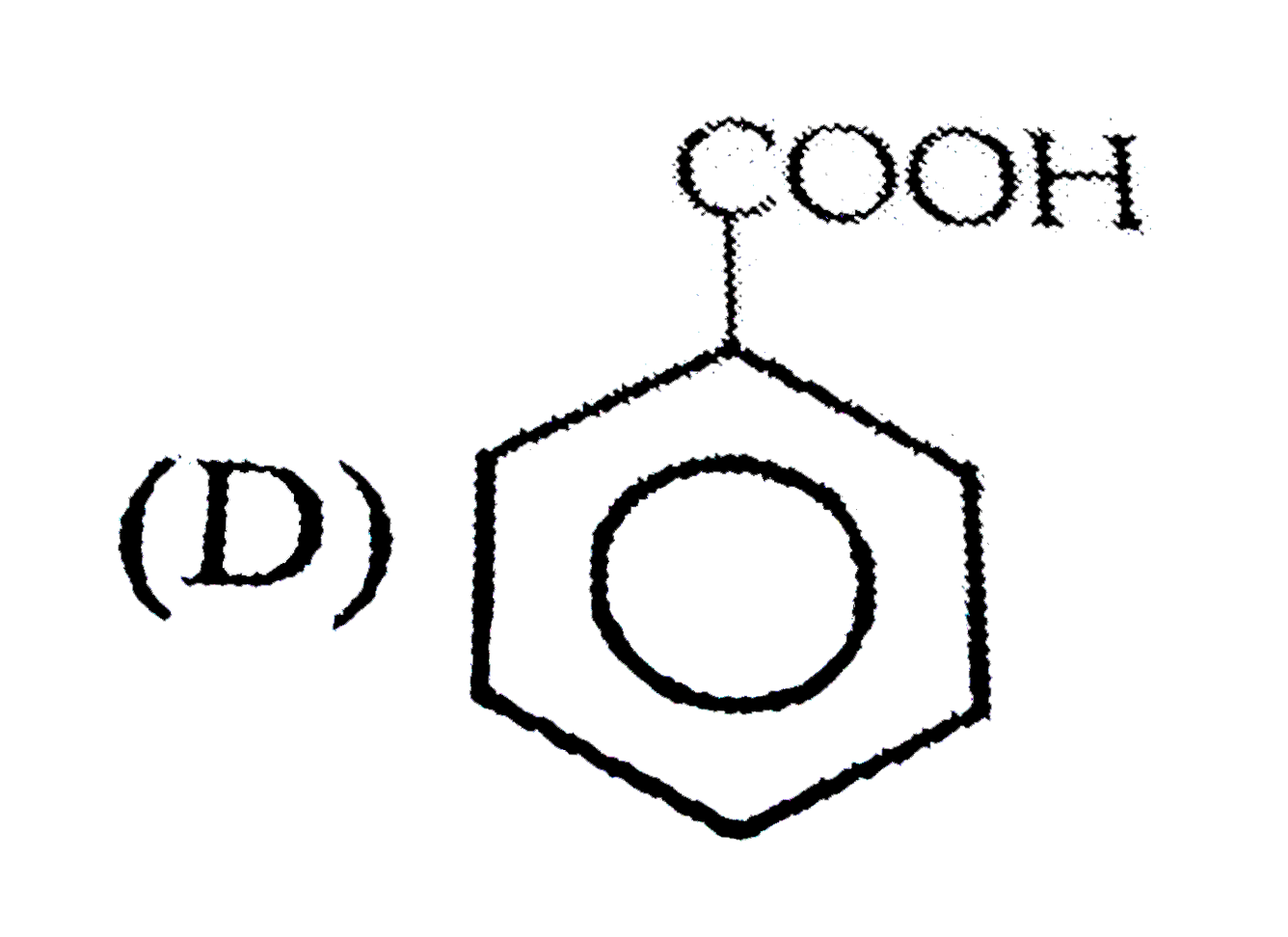
Q. Which of the following is most acidic:

A

B

C

D

Text Solution

AI Generated Solution

The correct Answer is:

To determine which of the given compounds is the most acidic, we need to analyze the effects of substituents on the acidity of benzoic acid derivatives. Here's a step-by-step solution: ### Step 1: Identify the Compounds We start by identifying the compounds in the options provided. All options are derivatives of benzoic acid (C6H5COOH), which means they all contain the carboxylic acid functional group (-COOH). ### Step 2: Understand the Role of Substituents The acidity of benzoic acid is influenced by the substituents attached to the benzene ring. The key concept here is that: - **Electron-withdrawing groups (EWGs)** increase acidity by stabilizing the negative charge on the conjugate base (the carboxylate ion). - **Electron-donating groups (EDGs)** decrease acidity by destabilizing the conjugate base. ### Step 3: Classify the Substituents In the options, we need to classify the substituents: - If a compound has an electron-withdrawing group (like -NO2, -Cl, etc.), it will be more acidic. - If a compound has an electron-donating group (like -CH3, -OCH3, etc.), it will be less acidic. ### Step 4: Analyze Each Compound 1. **Compound A**: Contains a -CH3 group (an electron-donating group). 2. **Compound B**: Contains a -Cl group (an electron-withdrawing group). 3. **Compound C**: Contains a -CH3 group (an electron-donating group). 4. **Compound D**: Is benzoic acid itself (no substituents). ### Step 5: Compare Acidity - **Compound A** and **Compound C**: The presence of the -CH3 group decreases acidity. - **Compound B**: The presence of the -Cl group increases acidity due to its electron-withdrawing nature. - **Compound D**: Benzoic acid has no substituents, making it moderately acidic. ### Step 6: Conclusion Among the compounds analyzed: - Compound B (with -Cl) will be the most acidic due to the electron-withdrawing effect of chlorine, which stabilizes the conjugate base. - Therefore, the most acidic compound is **Compound B**. ### Final Answer The most acidic compound among the options is **Compound B**. ---
Promotional Banner

Topper's Solved these Questions

  • ACIDIC STRENGTH & BASIC STRENGTH

    ALLEN|Exercise Exercise II|15 Videos
  • ACIDIC STRENGTH & BASIC STRENGTH

    ALLEN|Exercise Exercise III|14 Videos
  • CONCENTRATION TERMS

    ALLEN|Exercise Exercise Jee-Advance|3 Videos
  • AIIMS 2019

    ALLEN|Exercise CHEMISTRY|40 Videos

Similar Questions

Explore conceptually related problems

The most important condition for resonanace to occur is that the invovled atoms in resonating structure must be coplanar or nearly coplanar for maximum delocalisation. If this condition does not fulfil, involved orbitals cannot be parallel to each other and as consequence delocalisation cannot occur. Bulky groups present on adjacent atoms inhibit the planarity of atoms involved in resonance. this pehnomenon is known as steric inhibition of resonance. Steric inhibition of resonance has profound effect on Q. Arrange the following in the decreasing order of basicity: .

Steric Inhibition of Resonance

State the condition for the resonance to occur.

Resonance occurs due to

The most stable resonating structure is

Resonance is delocalisation of :

Maximum extent of steric inhibition of resonance can be expected in

Resonance structure of a molecule cannot have
