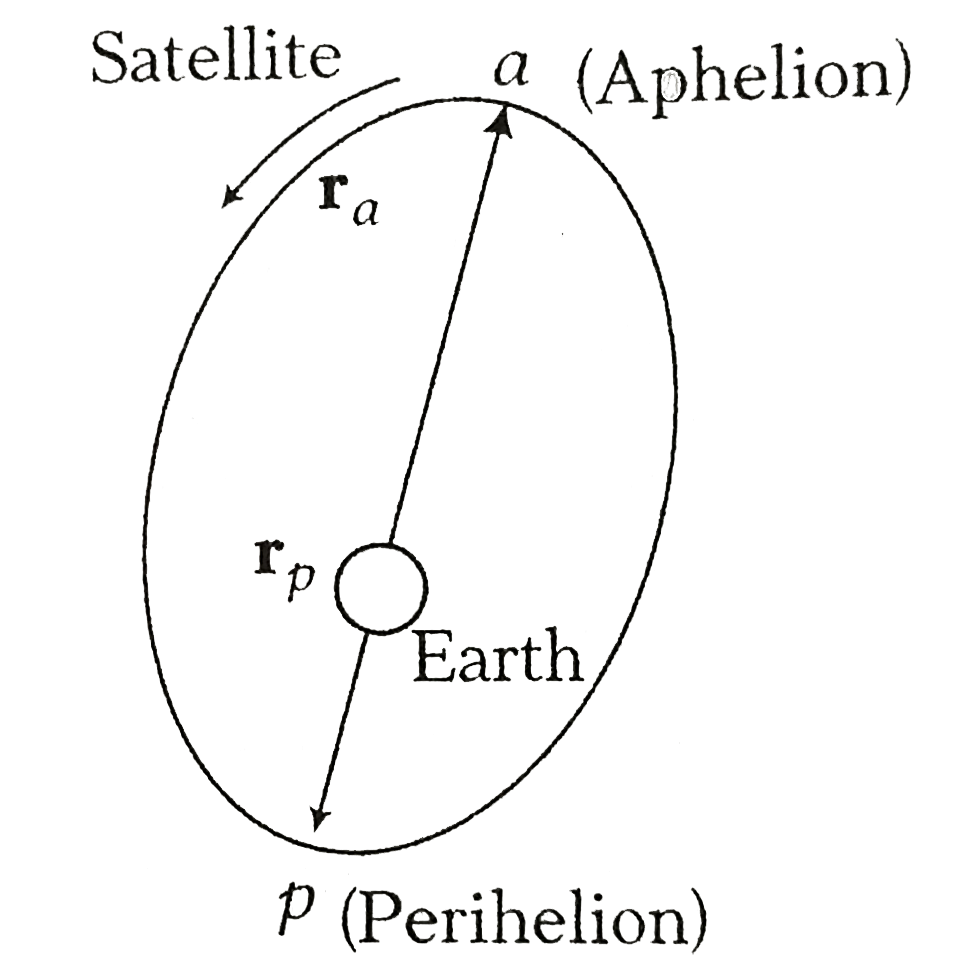
A
B
C
D
Text Solution
Verified by Experts
The correct Answer is:



Topper's Solved these Questions
Similar Questions
Explore conceptually related problems
ALLEN-GRAVITATION-EXERCISE 3
- The change in the value of acceleration of earth toward sun, when the ...
Text Solution
|
- The masses and radii of the earth an moon are M(1) and R(1) and M(2), ...
Text Solution
|
- A projectile is fired vertically upwards from the surface of the earth...
Text Solution
|
- The largest and the shortest distance of the earth from the sun are r(...
Text Solution
|
- The mean radius of earth is R, its angular speed on its own axis is w ...
Text Solution
|
- A gestationary satellite is orbiting the earth at a height 6 R above t...
Text Solution
|
- A planet revolves around the sun in an elliptical orbit . If v(p) an...
Text Solution
|
- Two solid spherical planets of equal radii R having masses 4M and 9M t...
Text Solution
|
- Read the following statements : S(1) : An object shall weigh more at...
Text Solution
|
- Imagine a light planet revolving around a very massive star in a circu...
Text Solution
|
- Consider a satellite orbiting the earth as shown in the figure below. ...
Text Solution
|