Home
Class 12
CHEMISTRY
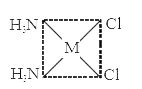
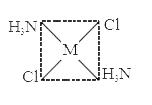
Which of following isomers of [M(NH(3))(...

Which of following isomers of `[M(NH_(3))_(2)Cl_(2)]` would react with silver oxalate `(Ag_(2)C_(2)O_(4))` :-

A

B

C

Both

D

None

Text Solution

AI Generated Solution

The correct Answer is:

To determine which isomer of \([M(NH_3)_2Cl_2]\) reacts with silver oxalate \((Ag_2C_2O_4)\), we need to analyze the structure of the isomers and the nature of the ligands involved. ### Step-by-Step Solution: 1. **Identify the Isomers**: The compound \([M(NH_3)_2Cl_2]\) can exist in two forms: cis and trans isomers. In the cis isomer, the similar ligands (NH3 or Cl) are adjacent to each other, while in the trans isomer, they are opposite. 2. **Understand Ligand Types**: - Amine (NH3) and chloro (Cl) are monodentate ligands, meaning they can form one bond with the metal center. - Oxalate \((C_2O_4^{2-})\) is a bidentate ligand, which means it can form two bonds with the metal center. 3. **Reactivity of Bidentate Ligands**: Bidentate ligands tend to replace monodentate ligands that are similar and adjacent to each other. Therefore, the oxalate ion will replace two similar ligands that are next to each other. 4. **Analyze the Isomers**: - In the **cis isomer**, both NH3 or both Cl ligands are adjacent. This arrangement allows the oxalate ion to replace the two adjacent ligands. - In the **trans isomer**, the similar ligands are opposite each other, which means the oxalate cannot effectively replace them. 5. **Conclusion**: The cis isomer of \([M(NH_3)_2Cl_2]\) will react with silver oxalate \((Ag_2C_2O_4)\) because it has the required adjacent similar ligands for the bidentate oxalate to replace. ### Final Answer: The isomer that would react with silver oxalate \((Ag_2C_2O_4)\) is the **cis isomer** of \([M(NH_3)_2Cl_2]\).

To determine which isomer of \([M(NH_3)_2Cl_2]\) reacts with silver oxalate \((Ag_2C_2O_4)\), we need to analyze the structure of the isomers and the nature of the ligands involved. ### Step-by-Step Solution: 1. **Identify the Isomers**: The compound \([M(NH_3)_2Cl_2]\) can exist in two forms: cis and trans isomers. In the cis isomer, the similar ligands (NH3 or Cl) are adjacent to each other, while in the trans isomer, they are opposite. 2. **Understand Ligand Types**: ...
Promotional Banner

Topper's Solved these Questions

  • INORGANIC CHEMISTRY

    ALLEN|Exercise COORDINATION COMPOUNDS & d-BLOCK COMPOUNDS (MATCH THE COLUMN)|2 Videos
  • INORGANIC CHEMISTRY

    ALLEN|Exercise p-BLOCK ELEMENT|80 Videos
  • INORGANIC CHEMISTRY

    ALLEN|Exercise CHEMICAL BONDING|119 Videos
  • HYDROGEN

    ALLEN|Exercise EXERCISE-5|17 Videos
  • Ionic Equilibrium

    ALLEN|Exercise All Questions|37 Videos

Similar Questions

Explore conceptually related problems

Consider the following isomers. (i) [Pt (NH_(3))_(4)Cl_(2)]Br_(2) " " (ii) [Pt (NH_(3))_(4) Br_(2)]Cl_(2) (iii) [Co(NH_(3))_(4)Cl_(2)] NO_(2) Which of the following observations is correct ?

Which of the following is formed when As_(2)S_(3) is warmed with NH_(4)OH and H_(2)O_(2) ?

Which of the following will show optical isomers? (I) cis- [Co(NH_(3))_(2)(en)_(2)]^(3+) (II) trans- [IrCl_(2)(C_(2)O_(4))_(2)]^(3-) (III) [Rh(en)_(3)]^(3+) (IV) cis- [IR(H_(2)O)_(3)Cl_(3)]

Which of the following will show optical isomers? (I) cis- [Co(NH_(3))_(2)(en)_(2)]^(3+) (II) trans- [IrCl_(2)(C_(2)O_(4))_(2)]^(3-) (III) [Rh(en)_(3)]^(3+) (IV) cis- [IR(H_(2)O)_(3)Cl_(3)]

Write the IUPAC names of the following coordination compounds: (a) [Pt(NH_(3))_(2)Cl(NO_(2))] (b) K_(3)[Cr(C_(2)O_(4))_(3)] (c) [CoCl_(2)(en)_(2)]Cl (d) [Co(NH_(3))]Cl (e) Hg[Co(SCN)_(4)]

The number of geometrical isomers for octahedral [Co(NH_(3))_(2)Cl_(4)]^(-) and square planar [AuCl_(2)Br_(2)]^(-) respectively are :

Illustrate the geometrical isomers of [Pt(NH_3)_4Cl_2]^(2+) .

The number of geometrical isomers for octahedral [CoCl_(4)(NH_(3))_(2)]^(-) , square planar [AgBr_(2)Cl_(2)]^(-) and [PtCl_(2)(en)] are:-

Give the IUPAC names of the following compound [Ag(NH_3)_2]Cl

Name the type of isomerism exibited by the following isomers : (1) [Cr(NH_(3))_(6)][Cr(CN)_(6)] and [Cr(NH_(3))_(4)(CN)_(2)][Cr(NH_(3))_(2)(CN)_(4)] (2) [Co(py)_(2)(H_(2)O)_(2)Cl_(2)]Cl and [Co(py)_(2)(H_(2)O)Cl_(3)]H_(2)O (3) [Pt(NH_(3))_(4)Br_(2)]Cl_(2) and [Pt(NH_(3))_(4)Cl_(2)]Br_(2) (4) [Co(NH_(3))_(5)NO_(2)]Cl_(2) and [Co(NH_(3))_(5)ONO]Cl_(2)

ALLEN-INORGANIC CHEMISTRY-COORDINATION COMPOUNDS & d-BLOCK COMPOUNDS
  1. The number of geometrical isomers of the complex [Co(NO(2))(3)(NH(3))(...

    Text Solution

    |

  2. Name the type of isomerism exibited by the following isomers : (1) ...

    Text Solution

    |

  3. Which of following isomers of [M(NH(3))(2)Cl(2)] would react with sil...

    Text Solution

    |

  4. Which of the following complex will follow EAN rule ?

    Text Solution

    |

  5. Identify the geometrical isomers of the following:-

    Text Solution

    |

  6. Which of the following will show optical isomers? (I) cis-[Co(NH(3))...

    Text Solution

    |

  7. Which of the following isomerism is/are not shown by the complex [Co(C...

    Text Solution

    |

  8. Three arrangements are shown for the complex [Co(e n) (NH(3))(2)Cl(2)]...

    Text Solution

    |

  9. Which kind of isomerism is exhibited by octahedral [Co(NH(3))(2)Br(2)]...

    Text Solution

    |

  10. Which of the following has an option isomer ?

    Text Solution

    |

  11. Which of the following pairs represents linkage isomers ?

    Text Solution

    |

  12. Select the correct statement from the following?

    Text Solution

    |

  13. [Fe(e n)(2)(H(2)O)(2)]^(2+) +e n to complex (x). The correct statement...

    Text Solution

    |

  14. Which of the following complexes show geometrical as well as optical i...

    Text Solution

    |

  15. The total number of possible isomers for the complex compound [Cu^(II)...

    Text Solution

    |

  16. [Co(e n)(3)]^(3+) ion is expected to show :-

    Text Solution

    |

  17. How many geometrical isomers are there for [Co(NH(3))(2)Cl(4)]^(-), a...

    Text Solution

    |

  18. How many isomers are possible for the complex ion [Cr(NH(3))(3)Cl(3)] ...

    Text Solution

    |

  19. For the square planar complex [Pt(NH(3))(NH(2)OH)(py)(No(2))]^(o+) how...

    Text Solution

    |

  20. Isomerisms exhibited by [Cr(NH3)2(H2O)2Cl2]^+ are

    Text Solution

    |
