Home
Class 12
CHEMISTRY
Which forms aromatic compound on heating...

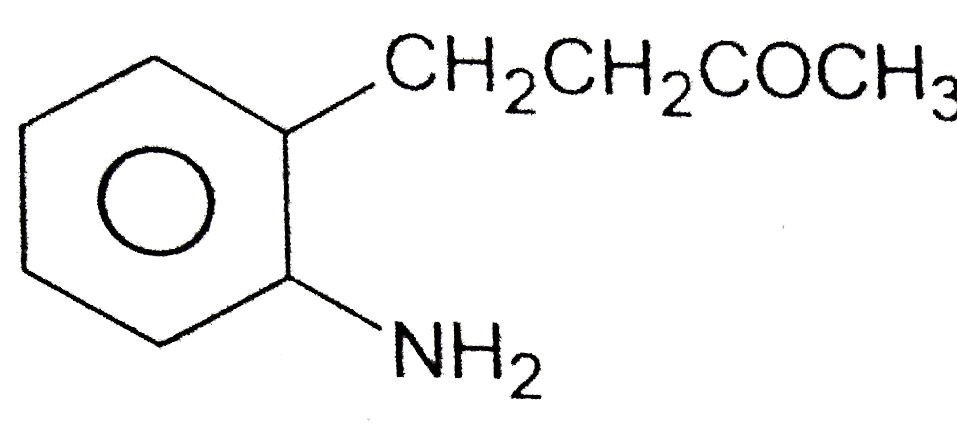
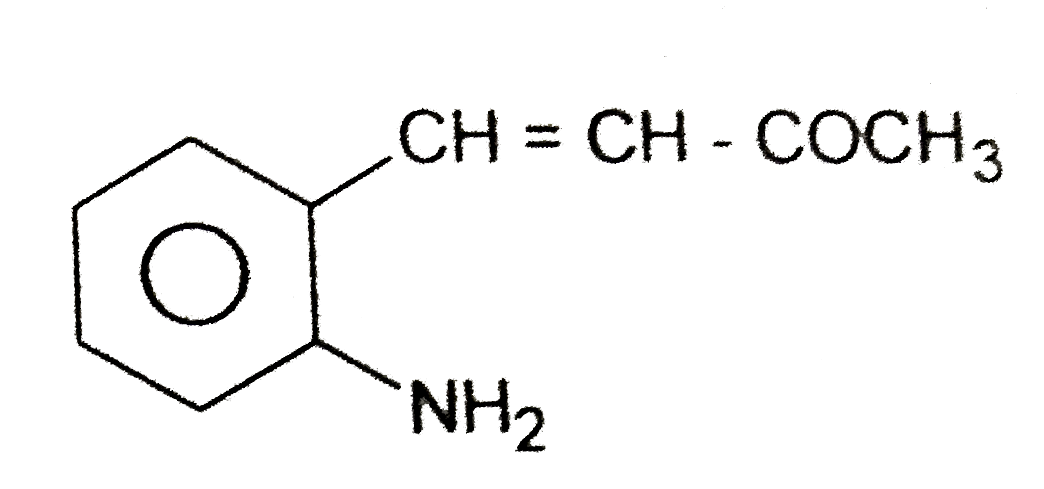
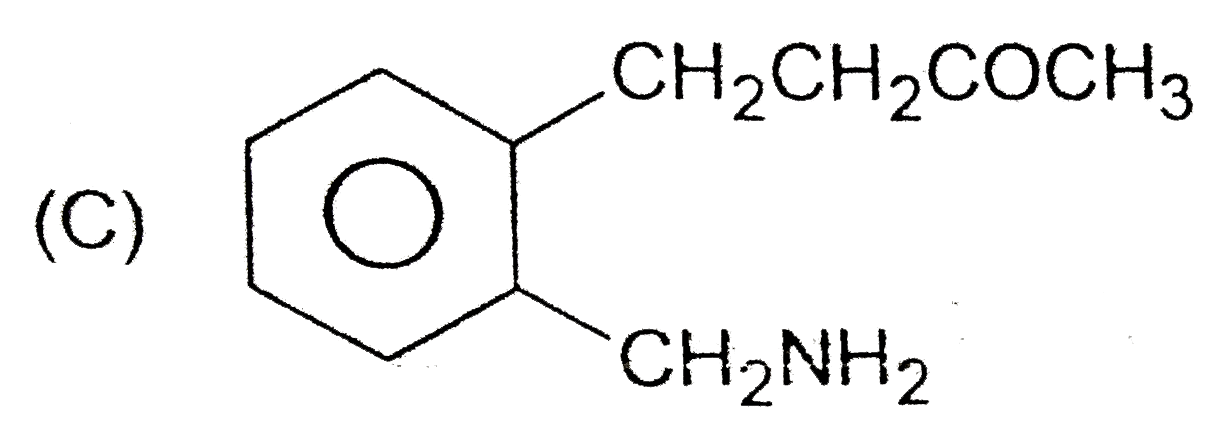
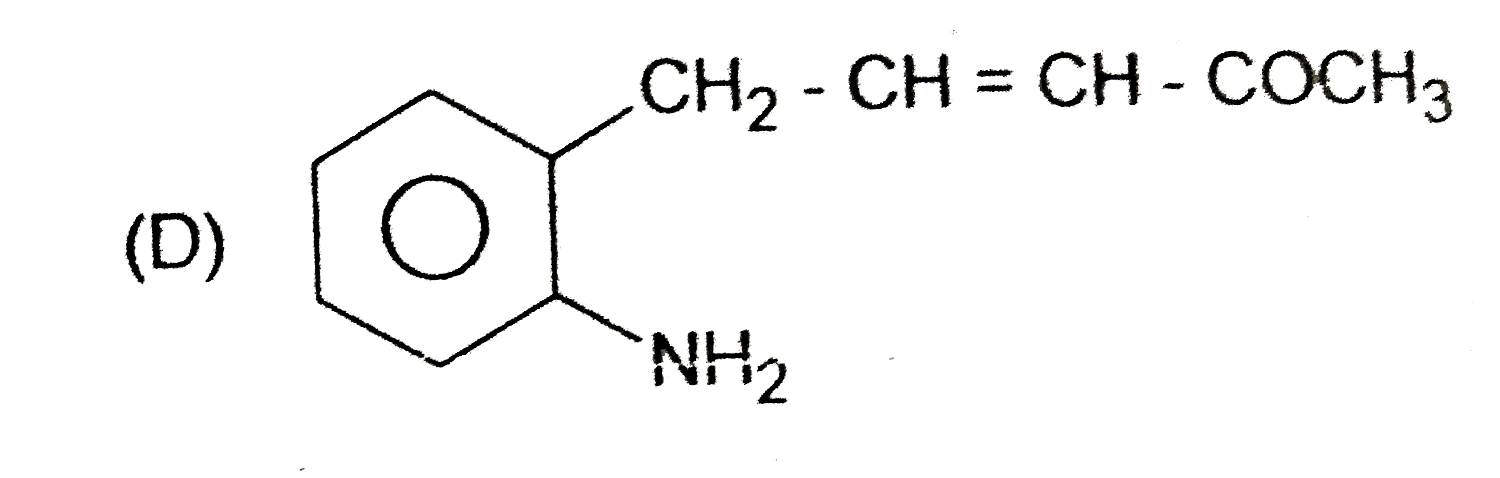
Which forms aromatic compound on heating?

A

B

C

D

Text Solution

AI Generated Solution

The correct Answer is:

To determine which compound forms an aromatic compound upon heating, we need to analyze the options based on the criteria for aromaticity. Here’s a step-by-step solution: ### Step 1: Understand the Criteria for Aromaticity A compound is considered aromatic if it meets the following criteria: 1. It must be cyclic. 2. It must have continuous conjugation (alternating single and double bonds). 3. It must contain \(4n + 2\) π electrons, where \(n\) is a non-negative integer. ### Step 2: Analyze Each Option Let’s analyze each option provided in the question to see which one forms an aromatic compound upon heating. #### Option A: - **Structure**: A benzene ring connected to a nitrogen and a carbonyl group. - **Heating Reaction**: On heating, water is removed. - **Resulting Structure**: The resulting structure has 4 π electrons (due to the nitrogen and carbonyl), which means it is anti-aromatic (not aromatic). #### Option B: - **Structure**: A benzene ring connected to a chain of carbons and a nitrogen. - **Heating Reaction**: Water is removed due to intramolecular hydrogen bonding. - **Resulting Structure**: The resulting structure has 5 π electrons (the nitrogen's lone pair is not involved in delocalization). This satisfies the aromaticity condition (5 π electrons can be considered as \(4n + 1\), which is acceptable for aromatic compounds). #### Option C: - **Structure**: A benzene ring with a carbonyl and an amine group. - **Heating Reaction**: Water is removed. - **Resulting Structure**: The resulting structure does not have alternating double bonds and has sp3 hybridized carbons, making it non-aromatic. #### Option D: - **Structure**: Similar to option C but with a different arrangement. - **Heating Reaction**: Water is removed. - **Resulting Structure**: Again, it has sp3 hybridized carbons and does not maintain the aromatic criteria, thus it is non-aromatic. ### Step 3: Conclusion After analyzing all options, we find that **Option B** is the only one that forms an aromatic compound upon heating. ### Final Answer: **The correct answer is Option B.** ---

To determine which compound forms an aromatic compound upon heating, we need to analyze the options based on the criteria for aromaticity. Here’s a step-by-step solution: ### Step 1: Understand the Criteria for Aromaticity A compound is considered aromatic if it meets the following criteria: 1. It must be cyclic. 2. It must have continuous conjugation (alternating single and double bonds). 3. It must contain \(4n + 2\) π electrons, where \(n\) is a non-negative integer. ...
Promotional Banner

Similar Questions

Explore conceptually related problems

Non-aromatic compound is

Which one is not aromatic compound ?

The aromatic compound would be

Which of the aromatic compounds reacts fastest with methoxide ion?

which amines form foul smelling compound on heating with chloroform and ethanol KOH?

The aromatic compound would be :

An aromatic compound (A) on treatment with aqueous ammonia and heating forms compound (B) which on heating with Br_2 and KOH forms a compound (C ) of the molecular formula C_6 H_7 N . Write the structures and IUPAC names of compounds (A) . (B) and (C ).
