Home
Class 12
PHYSICS
The figure shows a portion of a circuit....

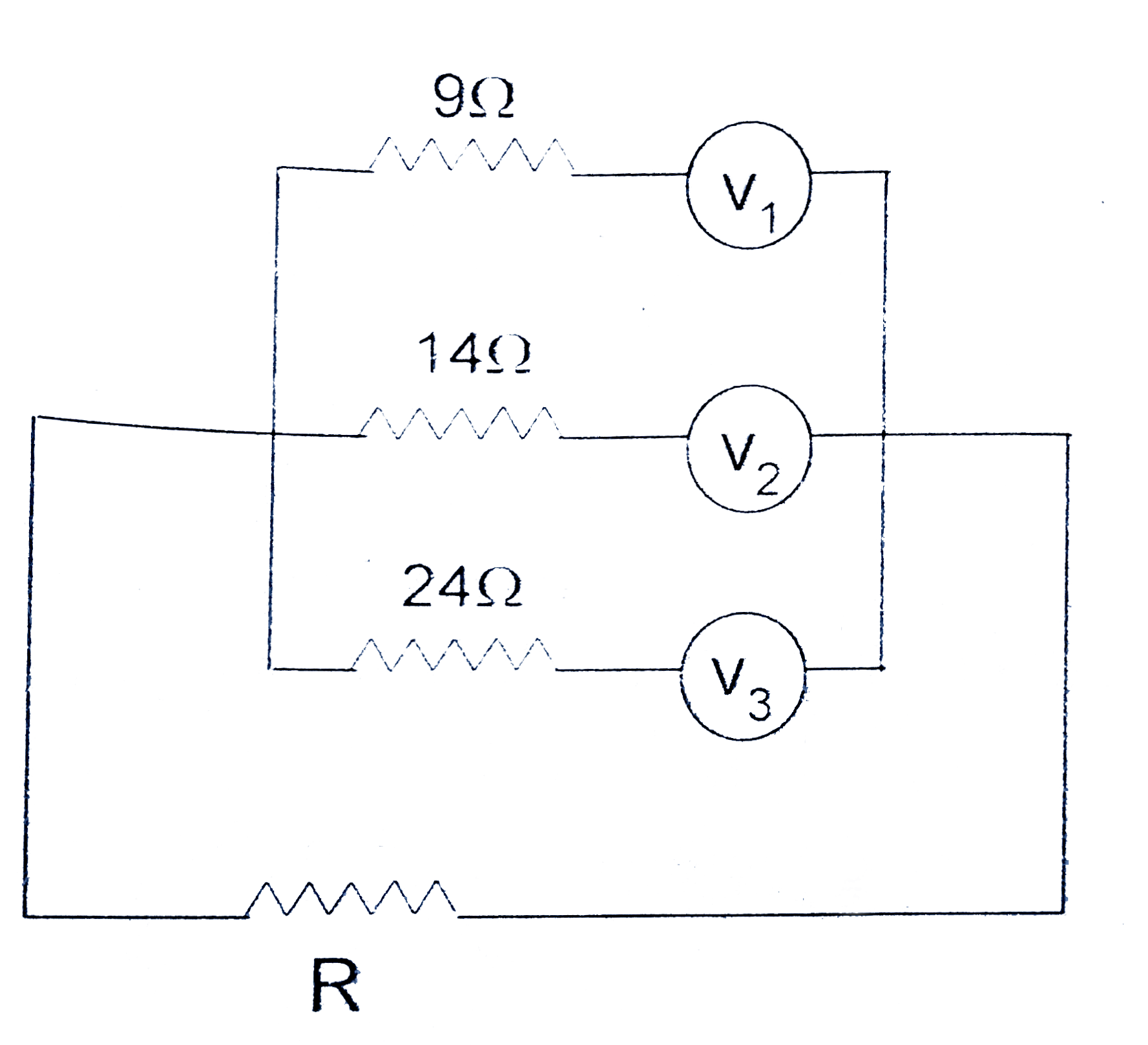
The figure shows a portion of a circuit. Resistor are known and indicated on diagram and voltmeter are identical. If voltmeters `v_(1)` and `v_(2)` reads `7.5v` and `5v` respecticely then reading of `v_(3)`

A

`0v`

B

`10v`

C

`2.5v`

D

`3.0v`

Text Solution

Verified by Experts

The correct Answer is:
D

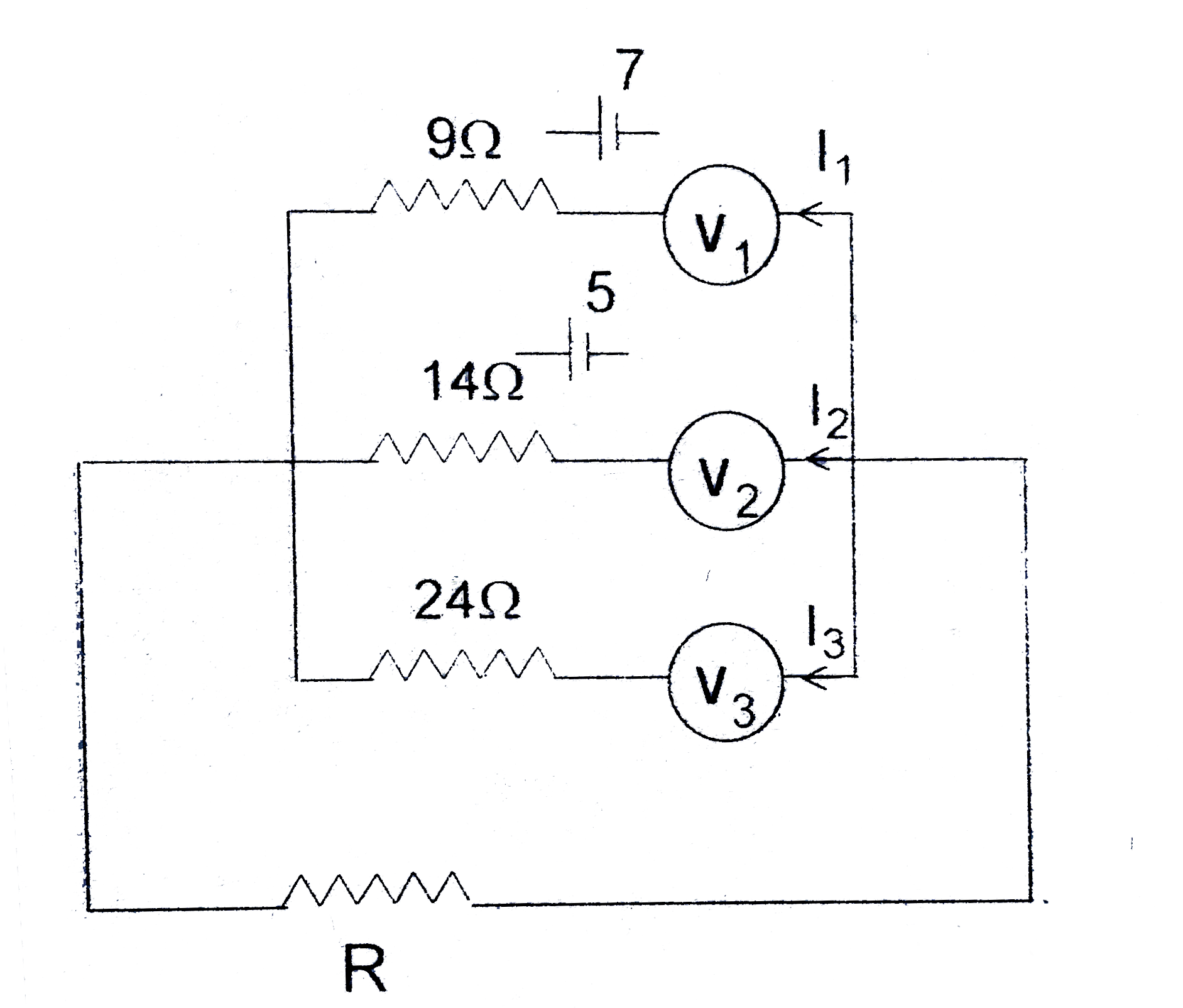
since voltmeter are indentical

`(I_(1))/(I_(2))=(3)/(2)` let `I_(2)=x I_(1)=(3)/(2)x`
`9xx(3)/(2)x-14x+5-7.5=0`
`x=-5.0A=I_(2)`
`-7.5A=I_(1)`
`(27x-28x)/(2)=2.5`
Hence resistance of Voltemeter is `1Omega`
`25I_(3) = -7.5xx9 = -75`
`I_(3) = -3A`
Hence `V_(3)=3.0V`
Promotional Banner

Similar Questions

Explore conceptually related problems

In the circuit shown, A and V are ideal ammeter and voltmeter respectively. Reading of the voltmeter will be

If the readings V_(1) and V_(3) are 10. volt each, then reading of V_(2) is:

In the circuit shown, the readings of voltmeters V_(1), V_(2) and V_(3) are given by

Consider the circuit shown in the figure, the cell is ideal. The readings of the ideal voltmeters V_(1) and V_(2) in volts are respectively.

In the circuit shown in figure ammeter and voltmeter are ideal. If E=4 V,R=9Omega and r=1Omega then readings of ammeter and voltmeter are

In the circuit shown in figure ammeter and voltmeter are ideal. If E=4 V,R=9Omega and r=1Omega then readings of ammeter and voltmeter are

In the circuit shown the reading of ammeter and voltmeter are 4 A and 20 V respectively. The meters are non ideal, then R ia

In the following circuit, determine the reading of ideal voltmeter (V) and ideal ammeter (A).

Figure shows part of a circuit. If l = 5A and is decreasing at a constant rate of 10^(3)A//s then V_(B)-V_(A) is

The diagram shows a capacitor C and a resistor R connected in series to an AC source. V_(1) and V_(2) are voltmeters and A is ammeter Now, consider the following statemensts : (I) Reading in A and V_(2) are always in phase. (II) Reading in V_(1) is ahead in phase with reading in V_(2) , (III) Reading in A and V_(1) are always in phase. Which of these statements are/is correct

