Home
Class 12
PHYSICS
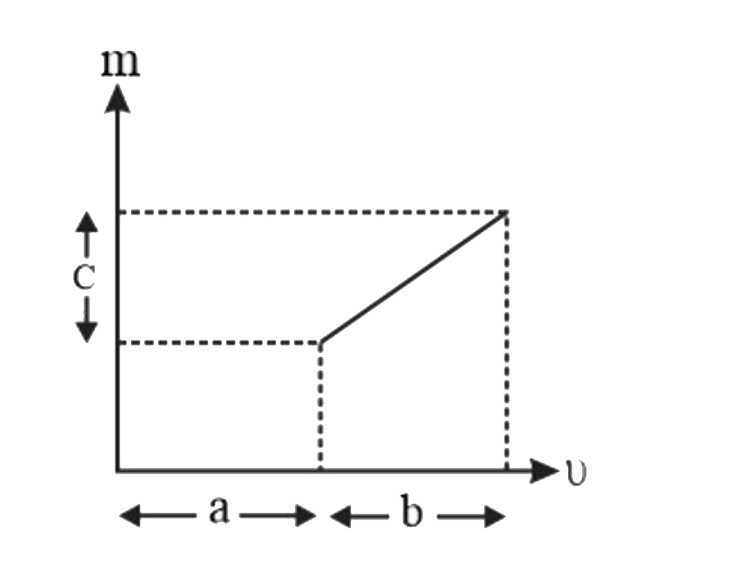
The graph shows how the magnification m ...

The graph shows how the magnification m produced by a thin lens varies with image distance v. The focal length of the lens used is

A

`b//c`

B

`b//ca`

C

`bc//a`

D

`c//b`

Text Solution

Verified by Experts

The correct Answer is:

A

`(1)/(v) + (1)/(u) = (1)/(f) :. U = (fv)/(f - v)`
`:. (v)/(u) = (f - v)/(f) = 1 - (v)/(f)`
`|m|=|1 - (v)/(f)| :.` slope `(1)/(f) = b//c`
Promotional Banner

Similar Questions

Explore conceptually related problems

The graph shows how the magnification m produced by a thin lens varies with image distance v. What is the focal length of the lens used?

The graph shows how the magnification m produced by a thin lens varies with image distance v. What is the focal length of the lens used?

The graph shows how the magnification m produced by a convex thin lens varies with image distance v . What was the focal length of the used ?

The graph in Fig. shows how the inverse of magnification 1//m produced by a convex thin lens varies with object distance u . What was the focal length of the lens used ? .

Figure, shows variation of magnification m (produced by a thin convex lens) and distance v of image from pole of the lens. When of the following statements are correct?

A convex lens of focal length f is placed somewhere in between an object and a screen. The distance between the object and the screen is x . If the numerical value of the magnification produced by the lens is m , then the focal lnegth oof the lens is .

The graph shown relationship between object distance and image distance for a equiconvex lens. Then focal length of the lens is

The magnification produced by a spherical lens is +2.5 . What is the nature of image ?

A convex lens produces an image of a real object on a screen with a magnification of 1/2. When the lens is moved 30 cm away from the object, the magnification of the image on the screen is 2. The focal length of the lens is
