Home
Class 12
PHYSICS
In the figure, OA and OB are two uniform...

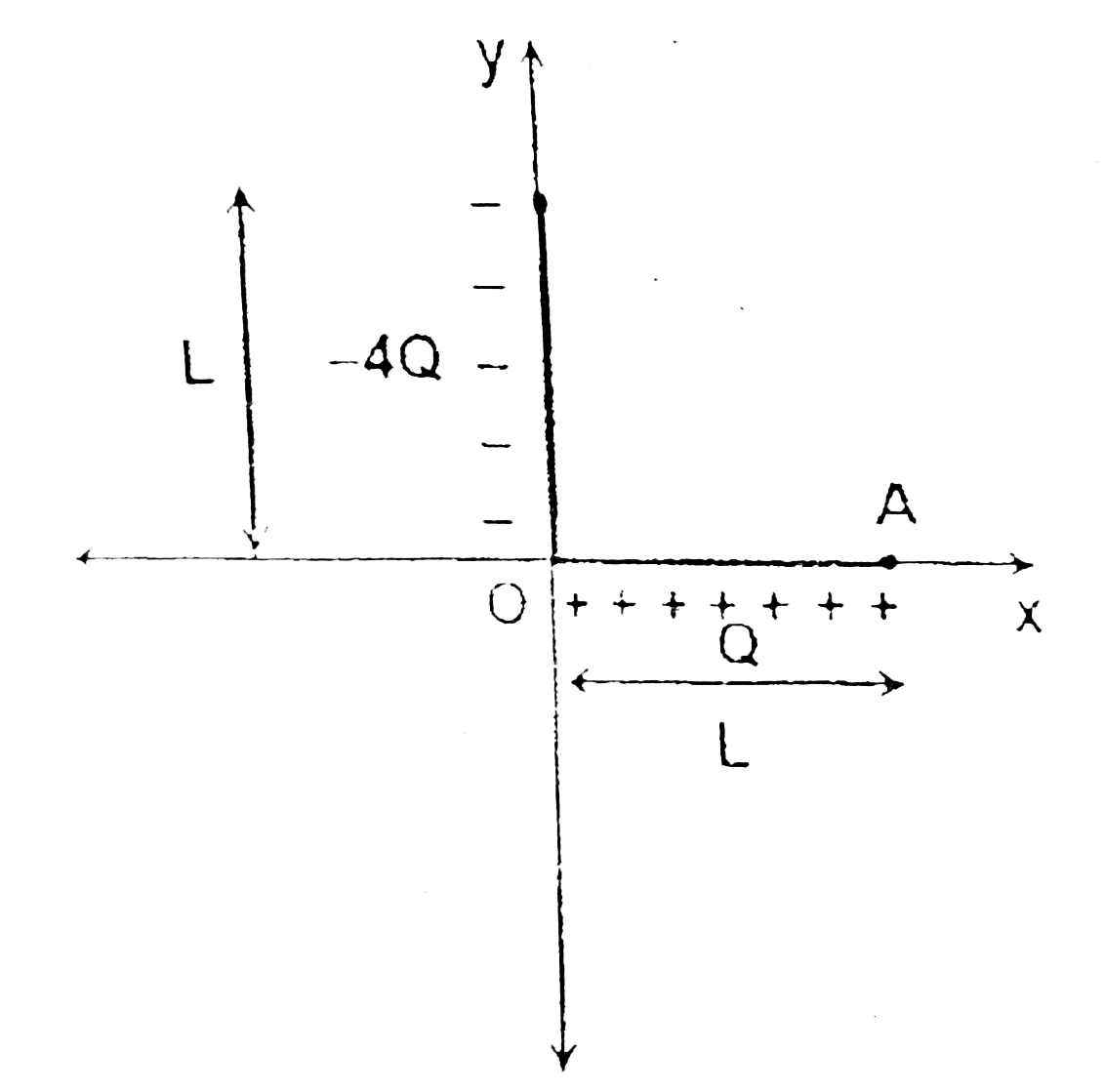
In the figure, `OA` and `OB` are two uniformly charged wires, placed along `x` and `y` axis respectively. Find the unit vector in the direction of field at point `(0,0,sqrt(3L))`.

Text Solution

Verified by Experts
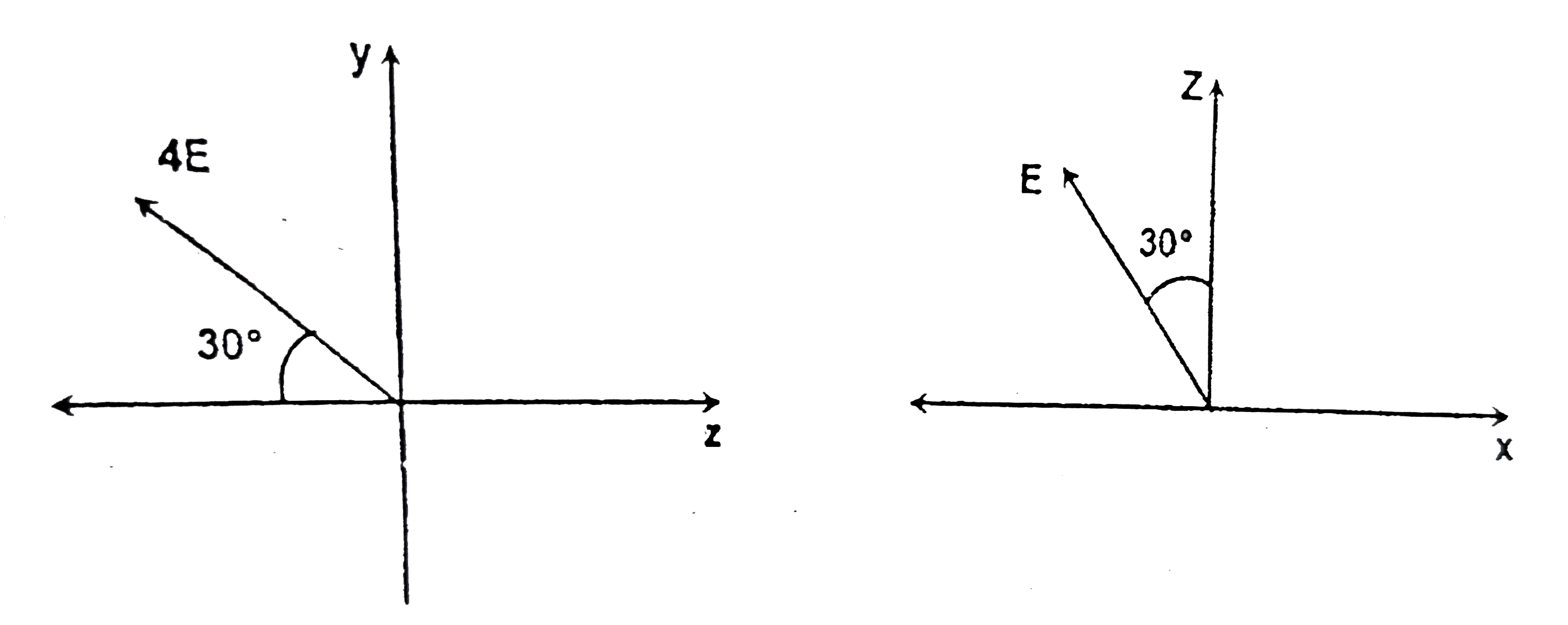
`vecE=-(E)/(2)hati+(Esqrt(3))/(2)hatk-2Esqrt(3)hatk+2Ehatj`
`:. hatE=(-1hati+4hatj-3sqrt(3)jhatk)/(sqrt(44))`
Promotional Banner

Similar Questions

Explore conceptually related problems

Two long wires are kept along x and y axis they carry currents I&II respectively in +ve xx and +ve y direction respectively.Find vecB at point (0,0,d)

Two uniformly long charged wires with linear densities lambda and 3lambda are placed along X and Y axis respectively. Determined the slope of electric field at any point on the l ine y=sqrt3x

If hati and hatj are unit vectors along X-and Y-axis respectively, then what is the magnitude and direction of hati +hatj and hati - hatj ?

A small electric dipole is placed at origin with its dipole moment directed along positive x-axis .The direction of electric field at point (2,2sqrt(2),0)

Two infinitely long, thin, insulated, straight wires lie in the x-y plane along the x- and y- axis respectively. Each wire carries a current I, respectively in the positive x-direction and positive y-direction. The magnetic field will be zero at all points on the straight line:

The location of three long wires carrying same current I are x=-a , x=0 and x=+ a respectively as shown in figure. The magnetic field at point ( 0 , 0 , a ) is

Two charges q_(1) and q_(2) are placed at (0,0,d) and (0,0,-d) respectively. Find locus of points where the potential is zero.

In the figure, two point charges +q and -q are placed on the x-axis at (+a,0) and (-a,0) respectively. A tiny dipole of dipolem moment (p) is kept at the origin along the y-axis. The torque on the dipole equals

A wire AMB is placed along y-axis having linear charge density lambda C/m. The electric field intensity at point P is ( PM=0.1 m)

Two long straight currents carrying wires having currents I and 2I lie along y-and z-axis, respectively, as shown in Fig. Find vecB at a point P(x,0).

