Home
Class 12
PHYSICS
Current-voltage characteristics of two e...

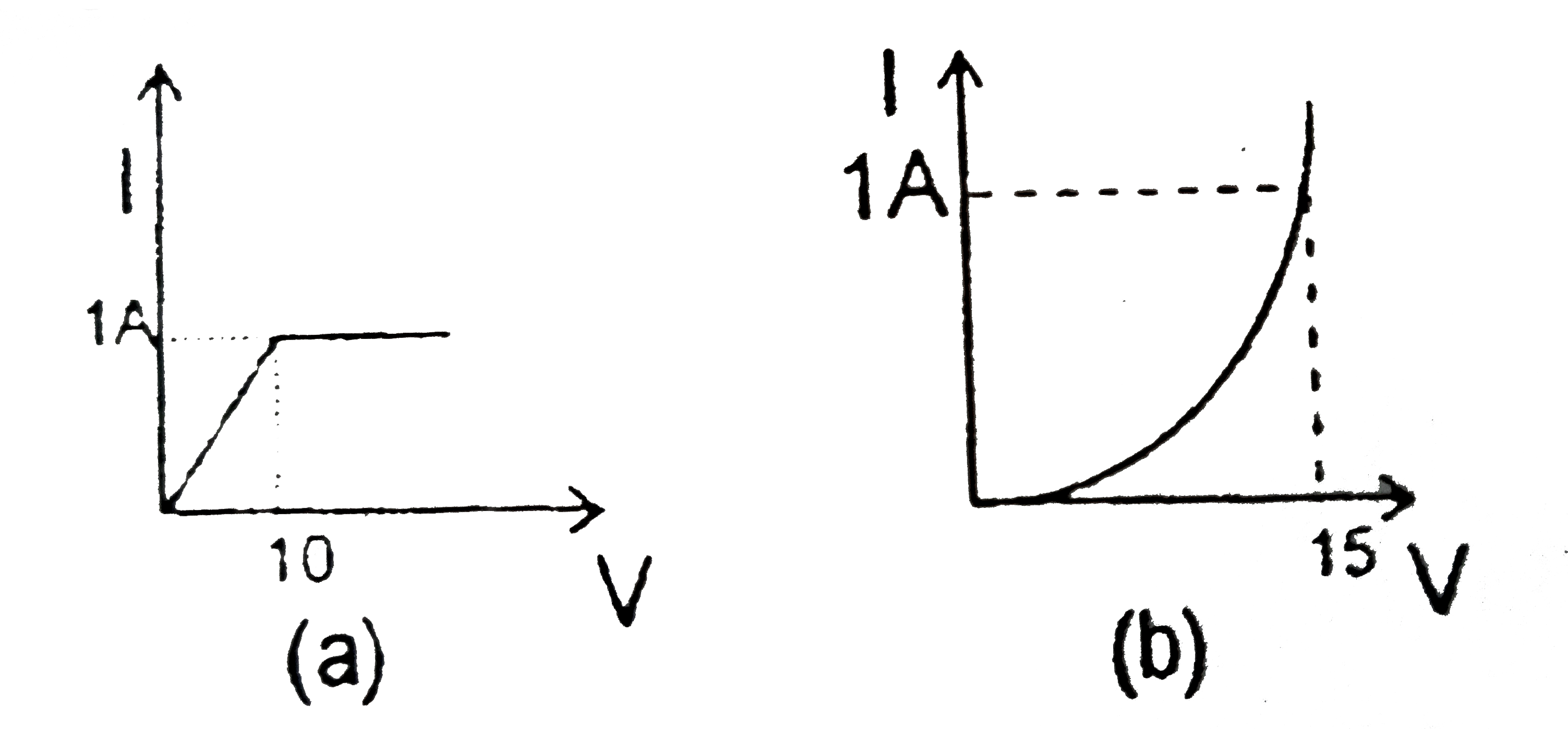
Current-voltage characteristics of two elements A and B are as shown in Figs. (a) and (b)

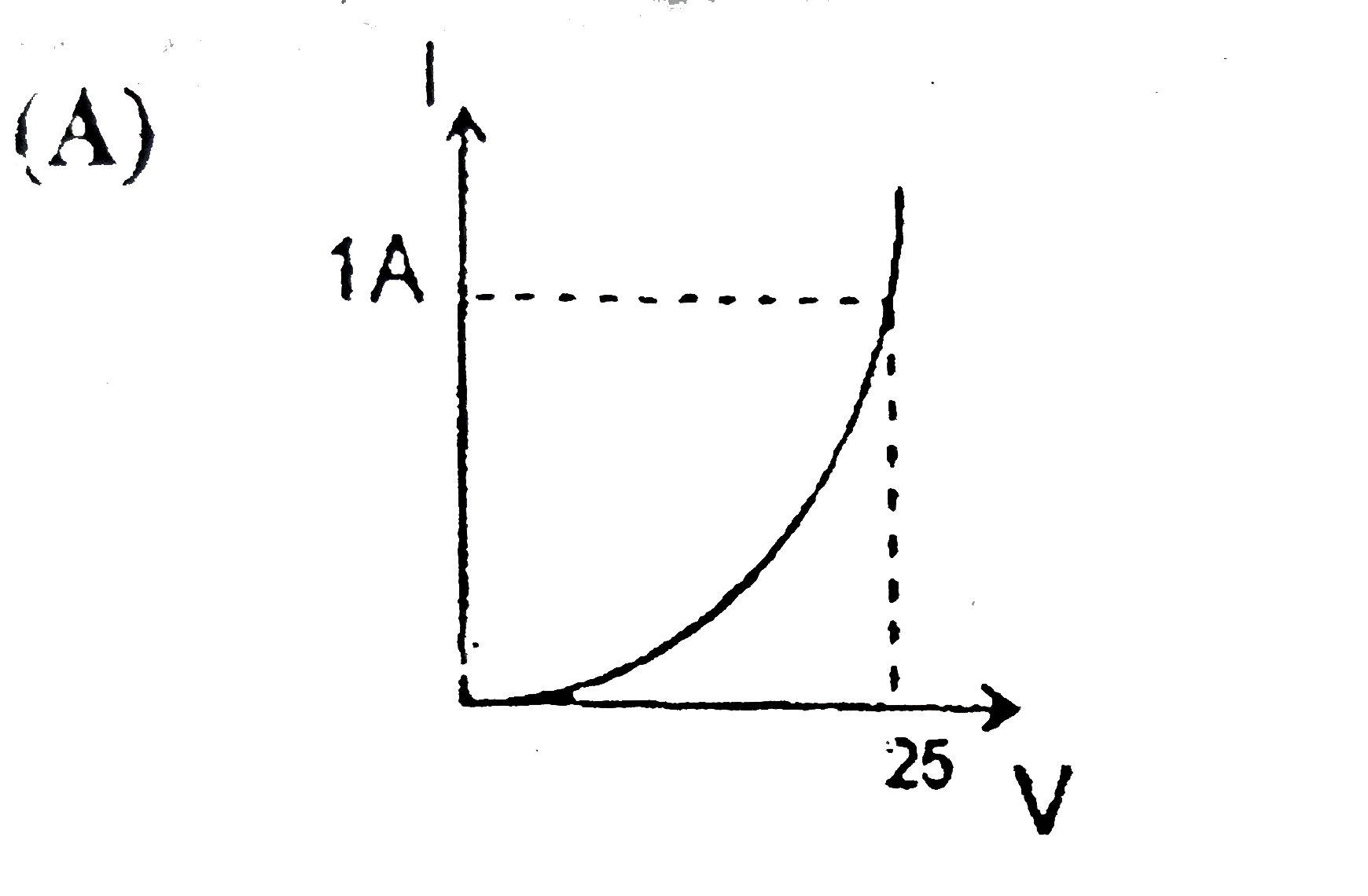
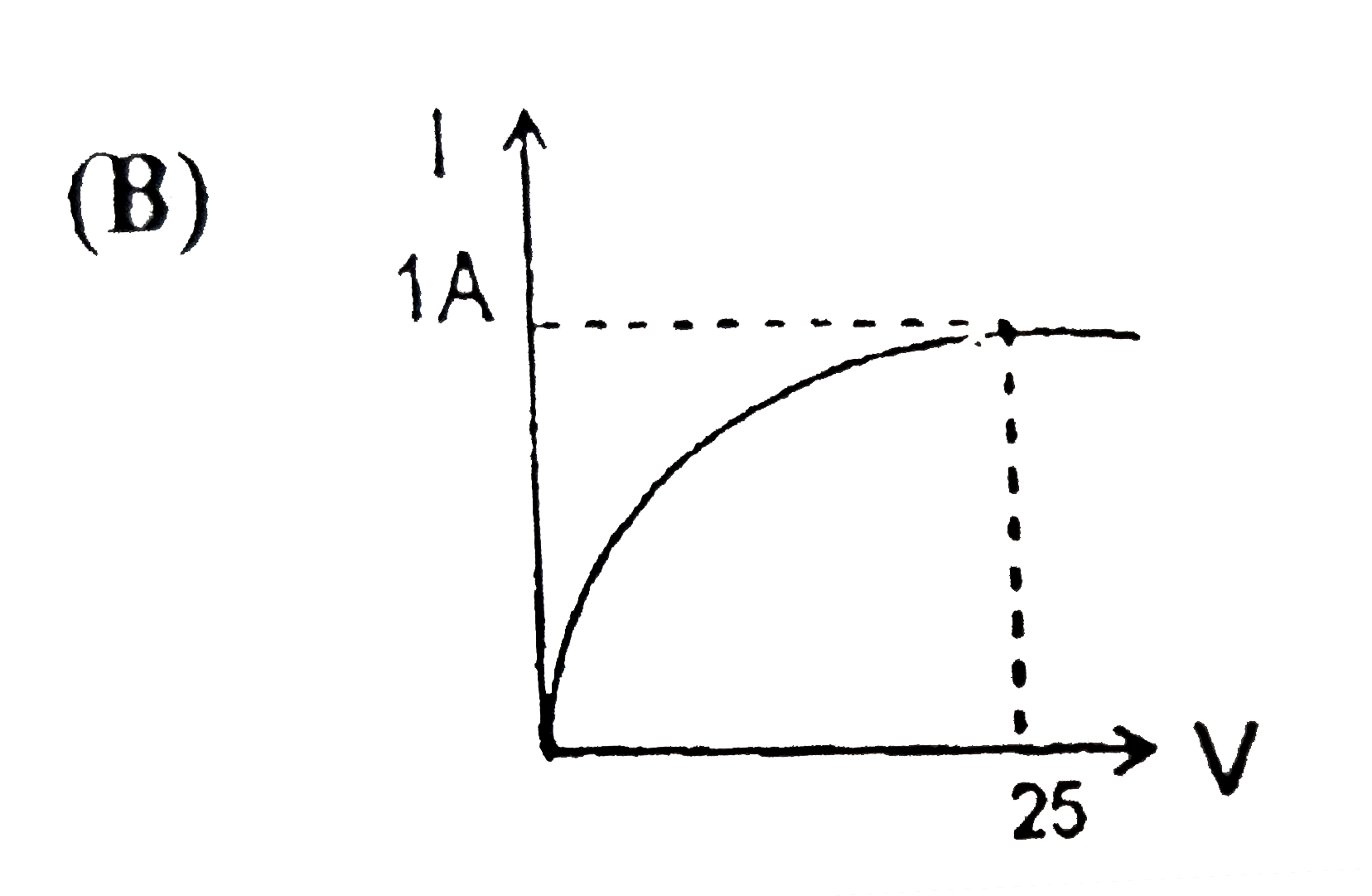
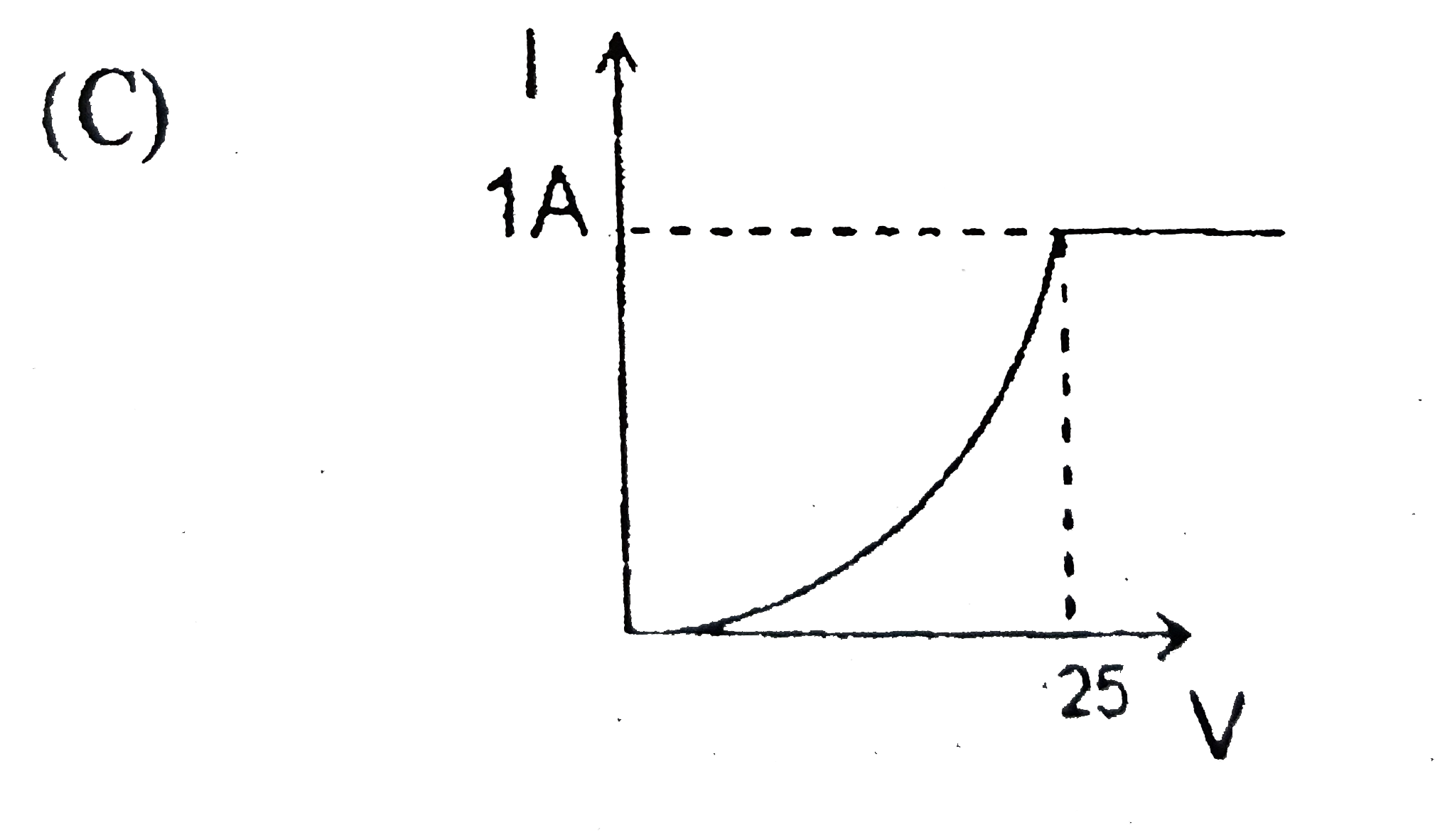
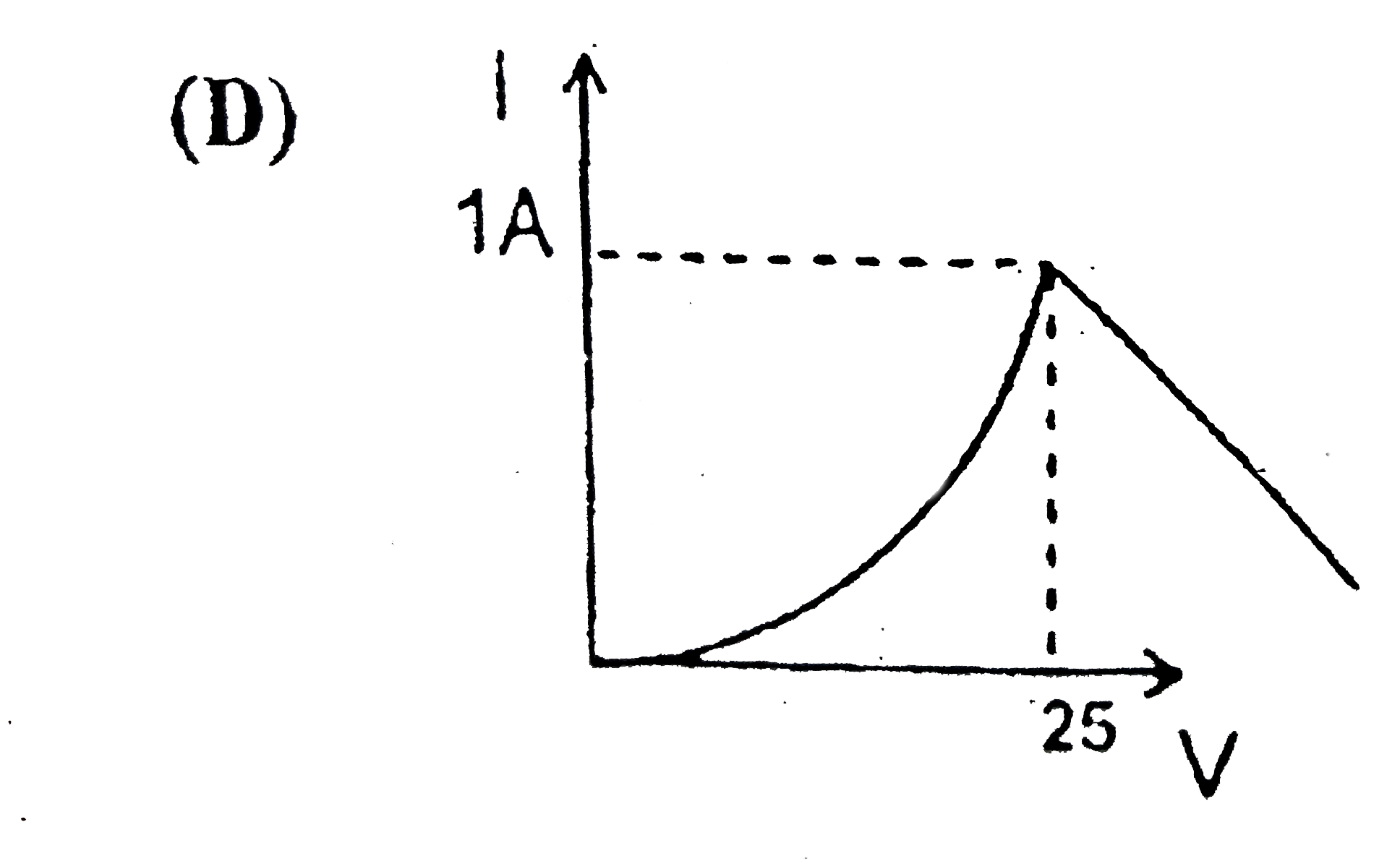
Which of the following graphs represents current voltage characteristics for their series combinations ?

A

B

C

D

Text Solution

Verified by Experts

In element `A`, the resistance remains constant upto the potential drop of `10V`. Further increase in the voltage does not increase this current (which is constant at `1A`). This means that the ratio `V//R_(A)=` constant and this resistance `R_(A)` increases linearly with voltage.
In element `B`, the resistance decreases gradually upto `15V` and afterwards the resistance `R_(B)` increases linearly with voltage.
When both `A` and `B` are in series, the current in the circuit will increase non linearly upto `1A` when the total voltage drop across `A` and `B` becomes `10+15=25V`.
Further increase in this voltage does not bring about any change in the current as shown in solution `(C )`. The voltage drop across `A` will go on increasing while that across `B` remain fixed at `15V`.
Promotional Banner

Similar Questions

Explore conceptually related problems

Current-voltage characteristics of two elements A and B are as shown below in Figs. (a) and (b). (a) Which of the following graphs represents current voltage characteristics for their series combinations ?

Which of the following represents voltage ?

Which of the following represents the characteristics of the entomophilous flower ?

Which of the following are the characteristics of isotopes of an element ?

Which of the following combinations of phyla and characteristics is incorrect?

Which of the shown graphs may represent the reactance of a series L-C combination?

The voltage across a pure inductor is represented by the following diagram. Which one of the following diagrams will represent the current

Five resistors are connected between points A and B as shown in fig. A current of 10A flows from A to B. which of the following is correct?

Which of the following is NOT a characteristic of the transition elements in the series from scandium to zinc?

Which of the following is NOT a characteristic of the transition elements in the series from scandium to zinc?
