Home
Class 12
PHYSICS
A graph of the x-component of the electr...

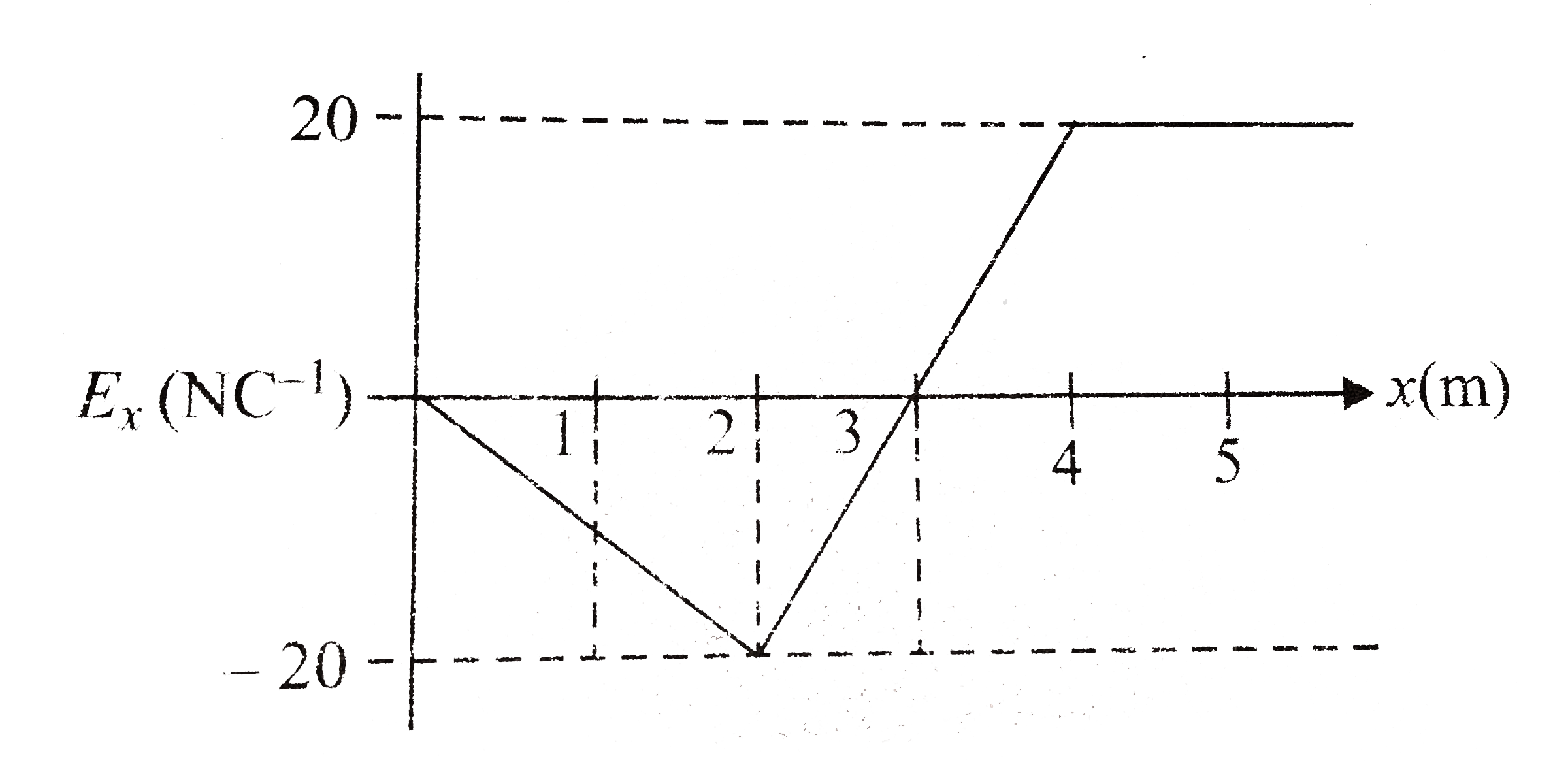
A graph of the x-component of the electric field as a function of x in a region of space is shown in figure. The `y- and z-components ` of the electric field are zero in this region. If the electric potential is 10 V at the origin, then the potential at x = 2.0 m is

A

10 V

B

20 V

C

30 V

D

40 V

Text Solution

Verified by Experts

Promotional Banner

Similar Questions

Explore conceptually related problems

A graph of the x-component of the electric field as a function of x in a region of space is shown in the figure. They y and z-components of the electric field are zero in this region. The electric potential at the origin is 10 V. The value of x for which potential is zero is

A graph of the x-component of the electric field as a function of x in a region of space is shown in the figure. They y and z-components of the electric field are zero in this region. The electric potential at the origin is 10 V. The greatest positive value of electric potential for points of the x-axis for which 0lexle6m is

If electric linces of force in a region are represented as shown in the figure, then one can conclude that, electric field is

The flux of electric field through the circular region of radius r as shown in the figure is

The electric field and the electric potential at a point are E and V respectively.

In a certain region of space, the electric field is zero. From this, we can conclude that the electric potential in this region is:

The field lines corresponding to an electric filed is shown in the figure then ( E denotes electric field and V denotes electric potential)

An electron traveling in a uniform electric field passes from a region of potential V_1 to a region of higher potential V_2 . Then

The figure gives the electric potential V as a function of distance through five regions on x-axis. Which of the following is true for the electric E in these regions ?

An electric field vec E=20y hat j exist in space . The potential at (5 m, 5 m) is taken to be zero. The potential at origin is

