Home
Class 12
CHEMISTRY
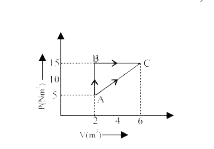
The given figure shows a change of state...

The given figure shows a change of state A to state C by two paths ABC and AC for an ideal gas. Calculate the

(a) Path along which workk done is least.
(b) Internal energy at C if the internal energy of gas at A is 10 J and amount of heat supplied to change its state to C through the path AC is 200 J
(c) Amount of heat supplied to the gas to go from A to B, if internal energy of gas at state B is 10 J.

Text Solution

Verified by Experts

(i) `+3262.88` cal
(ii) 9900 bar mL
(iii) `W_("rev") = -287.88` cal.
Promotional Banner

Similar Questions

Explore conceptually related problems

The given figure shown a change of state A to state C by two paths ABC and AC for an ideal gas. Calculate the : (a) Path along which work done is least. (b) Internal energy at C if the internal energy of gas at A is 10 J and amount of heat supplied to change its state to C through the path AC is 200 J . (c) Amount of heat supplied ot the gas to go from A to B, if internal energy of gas at state B is 10 J .

The given figure shows a change of state A to state C by two paths ABC and AC for an ideal gas. Calculate. a. The path along which work done is least. b. The internal energy at C if the internal energy of gas at A is 10J and amount of heat supplied to change its state to C through the path AC is 200J . c. The amount of heat supplied to the gas to go from A to B , if internal energy of gas at state B is 10J .

In the given figure, an ideal gas changes it state from A to state C by two paths ABC and AC . (i) Find the path along which work done is the least. (ii) The internal energy of the gas at A to 10J and the amount of heat supplied to change its state to C through the path AC is 200J . Calculate the internal energy at C . (iii) The internal energy of the gas at state B is 30J . Find the amount of heat supplied to the gas to go from A to B .

In the given figure an ideal gas changes its state from A to state C by two paths ABC and AC . (i) Find the path along which work done is the least. (ii) The internal energy of gas at A and B is 10J and 20 J respectively amount of heat supplied to change its state to C through the path AC is 200J . Calculate the internal energy at C . (iii) How much is the heat involved in the process ABC and ADC ?

In the given figure, an ideal gas changes its state from state state C by two paths ABC and AC. The internal energy of gas at A is 10 J and the amount of heat supplied to change its state to C through path AC is 200 J.Calculate the internal energy of gas at C

Figure shows an ideal gas changing its state A to state C by two different path ABC and AC . The internal energy of the gas at A is 10 J and the amount of heat supplied to change its state to C through the path AC is 200 J . Find the internal energy at C .

In the given graph, an ideal gas changes its state from A to C by two paths ABC and AC. (a) Find the path along which work done is less. (b) The internal energy of gas at A is 10J and the amount of heat supplied in path AC is 200J. Calculate the internal energy of gas at C. (c) The internal energy of gas at state B is 20J. Find the amount of heat supplied to the gas to go from A to B.

In the given figure, an ideal gas changes its state from A to state C by two paths ABC and AC. Along which path the work done by the gas is least.

In the given figure, an ideal gas changes its state from state state C by two paths ABC and AC. How much is the heat involved in the process ABC and ADC ? The internal energy of gas at A and B is 10 J and 20 J respectively

In the given an ideal gas can change its state from A to C by two paths ABC or AC . Then
