Home
Class 12
CHEMISTRY
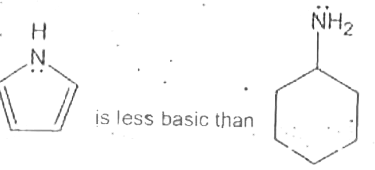
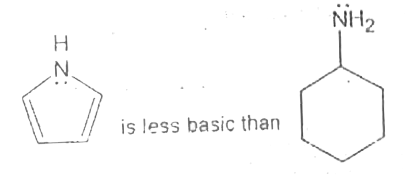
Statement-1: Statement-2:...

Statement-1:
Statement-2:

A

Statement-1 is true, statement-2 is true, Statement-2 is a correct explanation for statement-1

B

Statement-1 is true, statement-2 is true, Statement-2 is NOT a correct explanation for Statement-1

C

Statement-1 is true, statement-2 is false

D

Statement-1 is false, statement-2 is false

Text Solution

Verified by Experts

Promotional Banner

Similar Questions

Explore conceptually related problems

Statement-1: and Statement-2: Conjugate base of phenol is resonance stabilized

Statement-1: And Statement-2: Lone pair electrons on nitrogen in compound (I) does not participate in resonance.

a. Statement- 1 and Statement- 2 are true, and state-ment- 2 is the correct explanation of Statement- 1. b. Statement- 1 and Statement- 2 are true but Statement- 2 is not the correct explanation of Statement- 1. c. Statement- 1 is true and Statement- 2 is false. d. Statement- 1 is false and Statement- 2 is true. e. Statement- 1 is false and Statement- 2 is false. Statement- 1: Compound (I) is formed not (II). and Statement- 2: Due to the reduction of central ring, 3 four-membered anti-aromatic rings become stable to from (I). In (II), due to the reduction of terminal ring, only one anti-aromatic ring can be stabilised.

Statement 1. |x^2-4|+|sinx|=|x^2+sinx-4|, if xepsilon [2,pi] , Statement 2. |x|+|y|=|x+y|, if xyle0 (A) Both Statement 1 and Statement 2 are true and Statement 2 is the correct explanation of Statement 1 (B) Both Statement 1 and Statement 2 are true and Statement 2 is not the correct explanatioin of Statement 1 (C) Statement 1 is true but Statement 2 is false. (D) Statement 1 is false but Stastement 2 is true

Statement 1. The general solutions of e^(1- 1/sqrt(2)). (e^(sinx)+e^(cosx))=2 is x= (4m+1) pi/4, mepsilon I , Statement. A.M. geG.M. (A) Both Statement 1 and Statement 2 are true and Statement 2 is the correct explanation of Statement 1 (B) Both Statement 1 and Statement 2 are true and Statement 2 is not the correct explanatioin of Statement 1 (C) Statement 1 is true but Statement 2 is false. (D) Statement 1 is false but Statement 2 is true

Each question has four choices a,b,c and d out of which only one is correct. Each question contains Statement 1 and Statement 2. Make your answer as: If both the statements are true and Statement 2 is the correct explanation of statement 1. If both the statements are True but Statement 2 is not the correct explanation of Statement 1. If Statement 1 is True and Statement 2 is False. If Statement 1 is False and Statement 2 is True. Statement 1: The minimum value of 27^(cos2x)81^(sin2x) is 1/(243) Statement 2: The minimum value of acostheta+bsinthetai s-sqrt(a^2+b^2)

Each question has four choices a,b,c and d out of which only one is correct. Each question contains Statement 1 and Statement 2. Make your answer as: If both the statements are true and Statement 2 is the correct explanation of statement 1. If both the statements are True but Statement 2 is not the correct explanation of Statement 1. If Statement 1 is True and Statement 2 is False. If Statement 1 is False and Statement 2 is True. Statement 1: In a triangle, the least value of the sum of cosines of its angles is unity. Statement 2: cosA+cosB+cosC=1+4sinA/2sinB/2sinC/2,ifA , B , C are the angles of a triangle.

Each question has four choices a,b,c and d out of which only one is correct. Each question contains Statement 1 and Statement 2. Make your answer as: If both the statements are true and Statement 2 is the correct explanation of statement 1. If both the statements are True but Statement 2 is not the correct explanation of Statement 1. If Statement 1 is True and Statement 2 is False. If Statement 1 is False and Statement 2 is True. If A+B+C=pi, then Statement 1: cos^2A+cos^2B+cos^2C has its minimum value 3/4dot Statement 2: Maximum value of cosAcosBcosC is 1/8

Each question has four choices a,b,c and d out of which only one is correct. Each question contains Statement 1 and Statement 2. Make your answer as: If both the statements are true and Statement 2 is the correct explanation of statement 1. If both the statements are True but Statement 2 is not the correct explanation of Statement 1. If Statement 1 is True and Statement 2 is False. If Statement 1 is False and Statement 2 is True. Statement 1: The maximum value of sinsqrt(2)x+sina x cannot be 2 (a is positive rational number) Statement 2: (sqrt(2))/a is irrational.

Each question has four choices a,b,c and d out of which only one is correct. Each question contains Statement 1 and Statement 2. Make your answer as: a) If both the statements are true and Statement 2 is the correct explanation of statement 1. b) If both the statements are True but Statement 2 is not the correct explanation of Statement 1. c) If Statement 1 is True and Statement 2 is False. d) If Statement 1 is False and Statement 2 is True. Statement 1: If A ,B ,C are the angles of a triangle such that angle A is obtuse, then tanBt a n C > 1. Statement 2: In any triangle, tanA=(tanB+tanC)/(tanBtanC-1)

