
Home
Class 12
CHEMISTRY
The organic halide that does not under g...

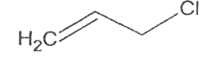
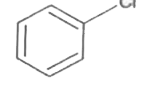
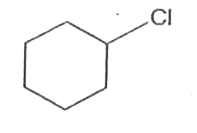
The organic halide that does not under go any substitution reaction is

A

B

C

D

Text Solution

AI Generated Solution

The correct Answer is:

To determine which organic halide does not undergo any substitution reaction, we need to analyze the structures provided and understand the concept of substitution reactions. ### Step-by-Step Solution: 1. **Understanding Substitution Reactions**: - Substitution reactions involve the replacement of one atom or group in a molecule with another atom or group. Common types include nucleophilic substitution (Sn1 and Sn2) and electrophilic aromatic substitution (SnAr). 2. **Identifying the Structures**: - We have several organic halides to consider: - A primary alkyl halide (e.g., CH2-CH(CH2Cl)). - An alkene with a chlorine atom (e.g., CH2=CH-CH2Cl). - An aromatic compound with a chlorine atom (e.g., benzene with Cl). - A cycloalkane with a chlorine atom (e.g., cyclohexane with Cl). 3. **Analyzing Each Structure**: - **Primary Alkyl Halide**: This can undergo substitution reactions because it does not have significant resonance stabilization. - **Alkene with Cl**: The presence of a double bond can lead to resonance, but it can still undergo substitution reactions. - **Aromatic Compound**: The chlorine on an aromatic ring is part of a resonance-stabilized system. This makes it less likely to undergo substitution reactions due to the stability provided by resonance. - **Cycloalkane with Cl**: This structure does not have resonance stabilization, so it can undergo substitution reactions. 4. **Conclusion**: - The organic halide that does not undergo any substitution reaction is the **aromatic compound** (benzene with Cl). The resonance stabilization in the aromatic system makes it resistant to substitution. ### Final Answer: The organic halide that does not undergo any substitution reaction is the aromatic compound (benzene with Cl).
Promotional Banner

Similar Questions

Explore conceptually related problems

Assertion: Vinyl halides do not undergo substitution reaction. Reason: Although the cation is stablished by loosely bound pi -electron cloud, it least occurs due to high bond strength.

Aryl halides do not undergo uncleophilic substitution reactions under ordinary conditions because (1) Approach of nucleophile is retarded (2) Carbon carrying halogen atom is sp^(3) hybridised (3) The substrate molecule is destabilised due to resonance (4) Partial double bond character between carbon and halogen

What do you understand by the term substitution reactions ?

The ether that undergoes electrophilic substitution reactions is

Assertion: Aryl halides undergo nucleophilic substitution reactions with ease. Reason:The carbon halogen bond in aryl halides has partial double bonds character.

Read the given passage and answer the questions number 1 to 5 that follow: The substitution reaction of alkyl halide mainly occurs by S_N 1 and S_N 2 mechanism. Whatever mechanism alkyl halides follow for the substitution reaction to occur, the polarity of the carbon halogen bond is responsible for these substitution reactions. The rate of S_N 1 reactions are governed by the stability of carbocation whereas for S_N 2 reactions steric factor is the deciding factor. If the starting material is a chiral compound, we may end up with an inverted product or racemic mixture depending upon the type of mechanism followed by alkyl halide. Cleavage of ethers with HI also governed by steric factor and stability of carbocation, which indicates that in organic chemistry, these two major factors help us in deciding the kind of product formed 1. Predict the stereochemistry of the product formed if an optically active alkyl halide undergoes substitution reaction by S_N 1 mechanism. 2. Name the instrument used for measuring the angle by which the plane polarised light is rotated. 3. Predict the major product formed when 2-Bromopentane reacts with alcoholic KOH. 4. Give one use of CHI_3 5. Write the structures of the products formed when anisole is treated with HI.

Nucleophide substitution reaction is slowest with :

Give three examples of electrophilic substitution reactions.

From which of the following sequences does the reactivity of alkyl halides in the nucleophilic substitution reaction follows :
