Home
Class 12
PHYSICS
The gravitational field in a region is g...

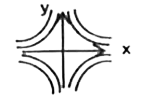
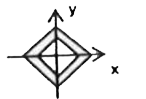
The gravitational field in a region is given by `vecE=(yhati+ xhatj)` N/kg, where x and y are in metres. The equipotential lines are plotted as

A

B

C

D

Text Solution

AI Generated Solution

The correct Answer is:

To find the equipotential lines for the given gravitational field \(\vec{E} = (y \hat{i} + x \hat{j})\) N/kg, we need to understand that equipotential lines are the lines along which the potential energy is constant. ### Step-by-Step Solution: 1. **Understand the Gravitational Field**: The gravitational field is given as \(\vec{E} = (y \hat{i} + x \hat{j})\). This means that the gravitational field has components in both the x and y directions, which depend on the coordinates \(x\) and \(y\). 2. **Relate Gravitational Field to Potential**: The gravitational potential \(V\) is related to the gravitational field \(\vec{E}\) by the equation: \[ \vec{E} = -\nabla V \] This means that the components of the gravitational field can be expressed as: \[ E_x = -\frac{\partial V}{\partial x} \quad \text{and} \quad E_y = -\frac{\partial V}{\partial y} \] 3. **Set Up the Equations**: From the given field, we have: \[ E_x = y \quad \text{and} \quad E_y = x \] Therefore, we can write: \[ -\frac{\partial V}{\partial x} = y \quad \text{(1)} \] \[ -\frac{\partial V}{\partial y} = x \quad \text{(2)} \] 4. **Integrate Equation (1)**: To find \(V\), we can integrate equation (1) with respect to \(x\): \[ V = -\int y \, dx = -yx + f(y) \] where \(f(y)\) is an arbitrary function of \(y\). 5. **Differentiate with respect to \(y\)**: Now, we differentiate \(V\) with respect to \(y\) and set it equal to equation (2): \[ \frac{\partial V}{\partial y} = -x + f'(y) \] Setting this equal to \(-x\) gives: \[ -x + f'(y) = -x \] This implies that \(f'(y) = 0\), so \(f(y)\) is a constant. Thus, we can write: \[ V = -yx + C \] where \(C\) is a constant. 6. **Equipotential Lines**: The equipotential lines are given by setting \(V\) to a constant value \(V_0\): \[ -yx + C = V_0 \] Rearranging gives: \[ yx = C - V_0 \] This equation represents hyperbolas in the \(xy\)-plane. ### Final Result: The equipotential lines are given by the equation: \[ yx = \text{constant} \]
Promotional Banner

Similar Questions

Explore conceptually related problems

Electrostatic field in a region is given by , vecE= (yzhati + zxhatj + xyhatk)V/m , where x,y and z are in m. If electric potential at origin is zero, then potential at (1m,1m, 1m) is

The gravitational field in a region is given by vec(E) = (5hat(i) + 12 hat(j))N//Kg . The change in gravitational potential energy if a particle of mass 1 kg is taken from the origin to the point (12m, 5m).

The gravitational field in a region is given by vecg=(5hati+12hatj)"N kg"^(-1) . The change in the gravitational potential energy of a particle of mass 2kg when it is taken from the origin to a point (7m, -3m) is

The gravitational field in a region is given by E = (2 hati + 3 hatj) N//kg . Find the work done by the gravitational filed when a particle of mass 1 kg is moved on the line 3y+ 2X = 5 from (1 m,1m) to (-2 m, 3m) .

The gravitational field in a region is given by vecE = (3hati- 4hatj) N kg^(-1) . Find out the work done (in joule) in displacing a particle by 1 m along the line 4y = 3x + 9 .

The gravitational field in a region is given by vecE = (3hati- 4hatj) N kg^(-1) . Find out the work done (in joule) in displacing a particle by 1 m along the line 4y = 3x + 9 .

The gravitational field in a in region is given by vecg = (4hati + vecj) N//kg . What done by this field is zero when the particle is moved along the line :

The gravitational field in a region is given by vec(E) = (4hat(i) + 3hat(j)) N//Kg . The gravitational potential at the points (3m, 0) and (0, 4m). If the potential at the origin is taken to be zero.

The gravitational field in a region is given by vec(g)=(2hat(i)+3hat(j)) N/kg. The work done in moving a particle of mass 1 kg from (1, 1) to (2, (1)/(3)) along the line 3y + 2x = 5 is

The gravitational field in a region is given by vecE=-(20Nkg^(-1))(hati+hatj) . Find the gravitational potential at the origin (0,0) in J kg^(-1)
