

Home
Class 11
PHYSICS
The potential energy of a partical verie...

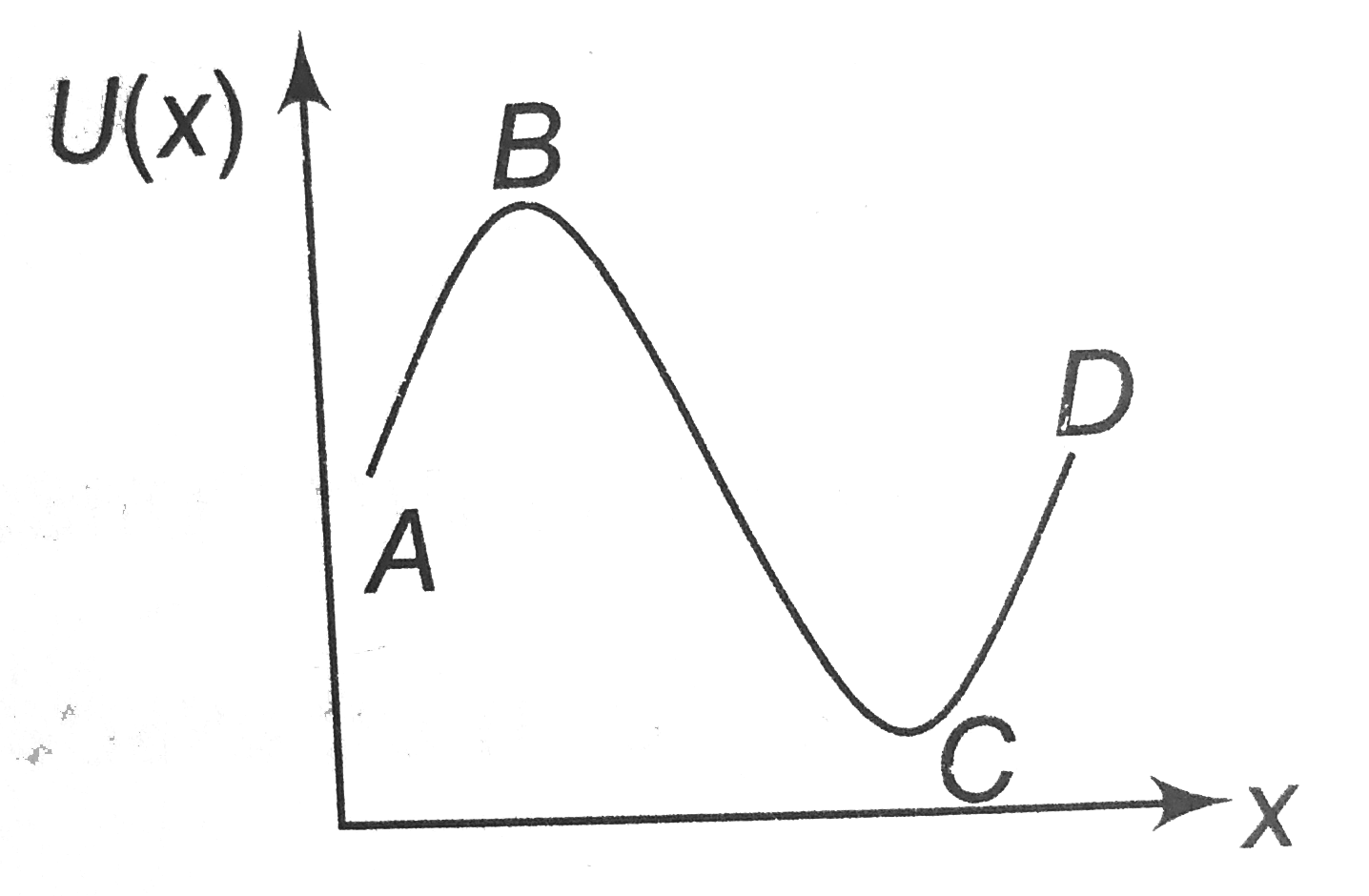
The potential energy of a partical veries with distance `x` as shown in the graph.

The force acting on the partical is zero at

Promotional Banner

Similar Questions

Explore conceptually related problems

The potential energy of a particle varies with distance x as shown in the graph. The force acting on the particle is zero at

force F on a partical moving in a straight line veries with distance d as shown in the figure. The work done on the partical during its displacement of 12 m is

force F on a partical moving in a straight line veries with distance d as shown in the figure. The work done on the partical during its displacement of 12 m is

The displacement time graph of a particle executing S.H.M as shown in the figure. The corresponding force-time graph of the partical will be

The potential energy of a body is given by U = A - Bx^(2) (where x is the displacement). The magnitude of force acting on the partical is

The potential energy of a body is given by U = A - Bx^(2) (where x is the displacement). The magnitude of force acting on the partical is

Assertion: The change in kinetic energy of a partical is equal to the work done on it by the net force. Reason: Change in kinetic energy of partical is equal to the work done in case of a system of one partical.

The potential energy of a partical is SHM is 2 xx 10^(-4) J at the extreme positions. What will be its potential energy when the particle is midway between the mean and extreme position ?

A partical of mass 0.2 kg undergoes SHM according to the equation x (t) = 3 sin (pi t + pi//4) . i. What is the total energy of the partical if potential energy of zero at mean position ? ii. What are the kinetic and potential energies of partical at time t = 1 s ? iii. At what time instants is the particals energies purely kinetic?