Home
Class 12
PHYSICS
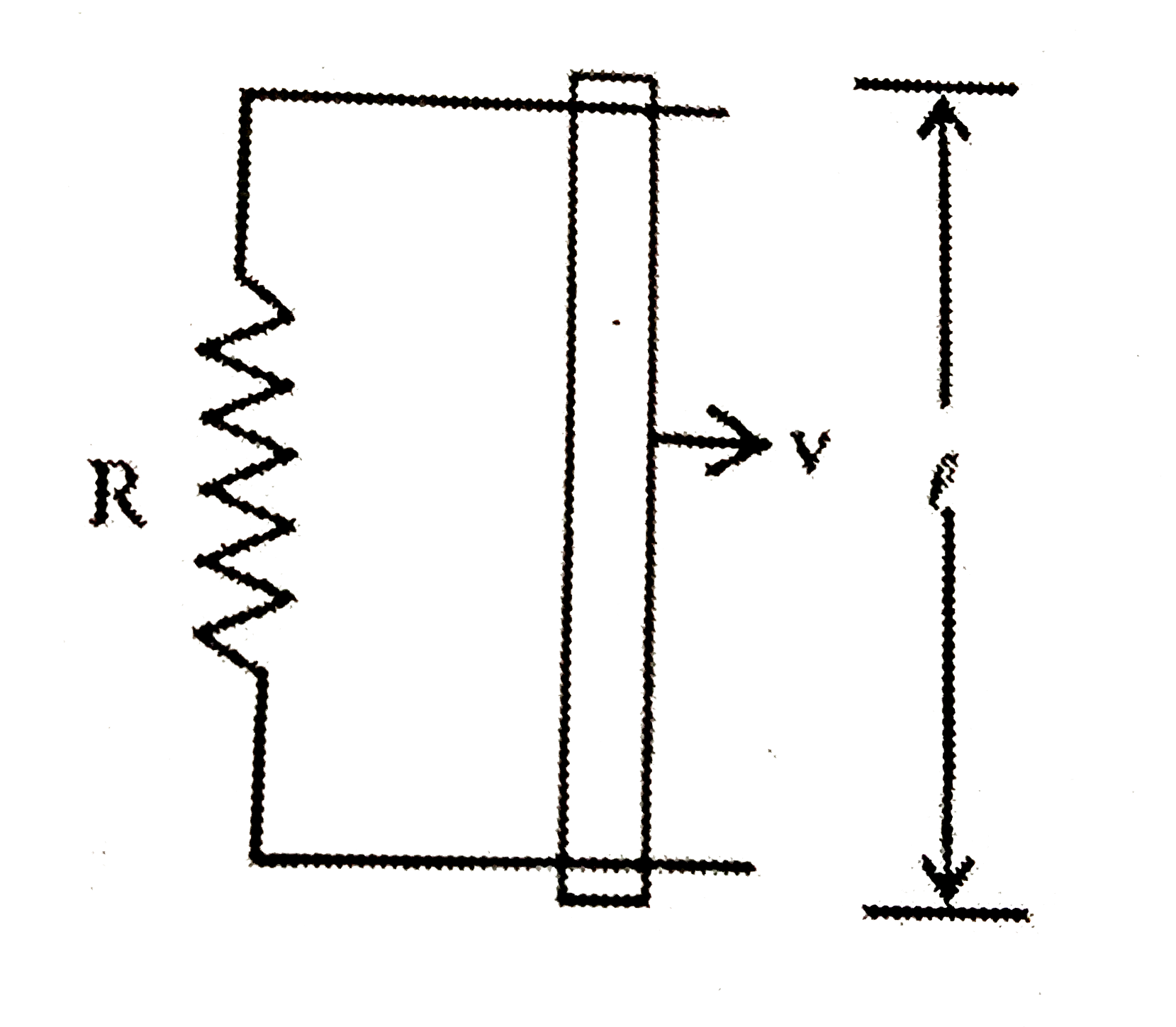
A conducting rod of resistence r moves u...

A conducting rod of resistence r moves uniformely with a constant speed v. If the rod keeps moving uniformly, then the amount of force required is -

A

`(vB^(2)l^(2))/(R )`

B

`(2vB^(2)l^(2))/((R+r ))`

C

`(vB^(2)l^(2))/((R +r))`

D

zero

Text Solution

Verified by Experts

The correct Answer is:

C

`F=I l B`
`=(vB l)/((R +r))lB`
`=(vB^(2)l^(2))/((R+r))`
Promotional Banner

Similar Questions

Explore conceptually related problems

A conducting rod of resistance r moves uniformly with a constant speed v in a uniform magnetic field. If the rod keeps moving uniformly, then the amount of force required is

In the figure shown as uniform magnetic field |B|=0.5T is perpendicular to the plane of circuit. The sliding rod of length l=0.25 m moves uniformly with constant speed v=4ms^-1 . If the resistance of the sllides is 2Omega , then the current flowing through the sliding rod is

A wire is bent in the form of a V shape and placed in a horizontal plane.There exists a uniform magnetic field B perpendicular to the plane of the wire. A uniform conducting rod starts sliding over the V shaped wire with a constant speed v as shown in the figure. If the wire no resistance, the current in rod wil

A conducting rod, with a resistor of resistance R. is pulled with constant speed v on a smooth conducting rail as shown in figure. A constant magnetic field vecB is directed into the page. If the speed of the bar is doubled, by what factor does the rate of heat dissipation across the resistance R change?

A particle is moving with a constant speed along a straight line path. A force is not required to

A conducting rod AB of lemgth 2 l moves through a uniform magnetic field B. The rod makes an angle theta with the vertical while it falls with a uniform linear velocity v. The potential difference between the two ends of the rod is Bv^(2)l .

A small conducting rod of length l, moves with a uniform velocity v in a uniform magnetic field B as shown in fig __
