

Home
Class 11
BIOLOGY
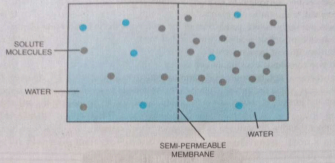
Look into given figure and answer the fo...

Look into given figure and answer the following,

If one chamber has a`psi` of - 2000 kPa,and the other - 1000 k P a which is the chamber that has the higher `psi`?

Promotional Banner

Topper's Solved these Questions

  • THE LIVING WORLD

    MODERN PUBLICATION|Exercise EXAMPLE|70 Videos

Similar Questions

Explore conceptually related problems

Look into given figure and answer the following, Solution of which chamber has a lower solute potential?

Look into given figure and answer the following, Solution of which chamber has a lower solute potential?

Look into given figure and answer the following, In which direction will osmosis occur?

Look into given figure and answer the following, Which solution has a higher solute potential?

Look into given figure and answer the following, At equilibrium which chamber will have lower water potential?

Refer to the figures given below and answer the question that follows : Give one example of an animal that has evolved along with Tasmanlan wolf.

Read the given passage and answers following questions : Emulsion: It is a colloidal mixture in which both the dispersed phase and the dispersion medium are liquids. The two or more liquids present in the mixture are generally immiscible in nature. Example: Milk. Gel: It is a colloid in which the dispersed phase i.e. liquid has combined with the dispersion medium i.e. solid to produce a semisolid material. Example: jellies. Answer the following questions : Which type of nature dispersed phase and medium exist?

Read the given passage and answers following questions : Emulsion: It is a colloidal mixture in which both the dispersed phase and the dispersion medium are liquids. The two or more liquids present in the mixture are generally immiscible in nature. Example: Milk. Gel: It is a colloid in which the dispersed phase i.e. liquid has combined with the dispersion medium i.e. solid to produce a semisolid material. Example: jellies. Answer the following questions : Which type of material formed when dispersed phase and dispersion medium combined ?

Read the given passage and answers following questions : Emulsion: It is a colloidal mixture in which both the dispersed phase and the dispersion medium are liquids. The two or more liquids present in the mixture are generally immiscible in nature. Example: Milk. Gel: It is a colloid in which the dispersed phase i.e. liquid has combined with the dispersion medium i.e. solid to produce a semisolid material. Example: jellies. Answer the following questions : What is colloidal mixture ?

MODERN PUBLICATION-TRANSPORT IN PLANTS-EXERCISE
  1. Look into given figure and answer the following, Which solution has a...

    Text Solution

    |

  2. Look into given figure and answer the following, At equilibrium which...

    Text Solution

    |

  3. Look into given figure and answer the following, If one chamber has a...

    Text Solution

    |

  4. What is root pressure?

    Text Solution

    |

  5. Give advantages of transipiration.

    Text Solution

    |

  6. what are two kinds of interaction of water molecules that allow water ...

    Text Solution

    |

  7. How do potassium ions (K^+). regulate the opening and closing of stoma...

    Text Solution

    |

  8. What is guttation?Name the pore through which guttation occur.What doe...

    Text Solution

    |

  9. What are antitranspirants?Give example.How do they reduce transpiratio...

    Text Solution

    |

  10. Define respiration.Give its advantages and disadvantages.

    Text Solution

    |

  11. Discuuss Dixon's theory of ascent of sap.

    Text Solution

    |

  12. Describe K^+ ion theory for opening and closing of stomata.

    Text Solution

    |

  13. Discuuss Dixon's theory of ascent of sap.

    Text Solution

    |

  14. Define Arterial Blood Pressure?

    Text Solution

    |

  15. Give an account of factors affecting transpiration.

    Text Solution

    |

  16. What is imbibition?Which are the various conditions necessary for the ...

    Text Solution

    |

  17. Define plasmolysis .What change will occur,when erythrocytes are place...

    Text Solution

    |

  18. Describe osmosis as a special case of diffusion.

    Text Solution

    |

  19. Describe the theories related to translocation of water. Give a brief ...

    Text Solution

    |

  20. Describe the factors which affect the rate of absorption of water.

    Text Solution

    |