


Topper's Solved these Questions
BASIC GEOMETRICAL IDEAS
NAND LAL PUBLICATION|Exercise THINK DISCUSS AND WRITE |1 VideosBASIC GEOMETRICAL IDEAS
NAND LAL PUBLICATION|Exercise EXERCISE 4.1 |20 VideosBASIC GEOMETRICAL IDEAS
NAND LAL PUBLICATION|Exercise TRY THESE|5 VideosALGEBRA
NAND LAL PUBLICATION|Exercise SAMPLE PAPER FOR PRACTICE |26 VideosDECIMALS
NAND LAL PUBLICATION|Exercise TRY THESE |13 Videos
Similar Questions
Explore conceptually related problems
NAND LAL PUBLICATION-BASIC GEOMETRICAL IDEAS -DO THIS
- Take a sheet of paper. Make two folds (and crease them).to represent i...
Text Solution
|
- Take a sheet of paper. Make two folds (and crease them).to represent i...
Text Solution
|
- Try to form a polygon with (1)Five matchsticks, (2) Four matchstick...
Text Solution
|
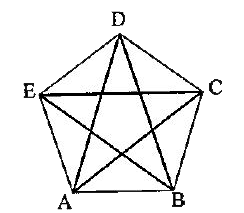
- In the figure bar(AC), bar(AD), bar(BD), bar(BE) and (CE) are diagonal...
Text Solution
|
- Draw an octagon ABCDEFGH and name all the sides, adjacent sides and ve...
Text Solution
|