


Topper's Solved these Questions
COMPARING QUANTITIES
NAND LAL PUBLICATION|Exercise Think, Discuss and Write|2 VideosCOMPARING QUANTITIES
NAND LAL PUBLICATION|Exercise EXERCISE 8.1|9 VideosALGEBRAIC EXPRESSIONS AND IDENTITIES
NAND LAL PUBLICATION|Exercise SAMPLE PAPER FOR PRACTICE |27 VideosCUBES AND CUBE ROOTS
NAND LAL PUBLICATION|Exercise Sample Paper For Practice |18 Videos
Similar Questions
Explore conceptually related problems
NAND LAL PUBLICATION-COMPARING QUANTITIES-SOLUTION TO SAMPLE PAPER
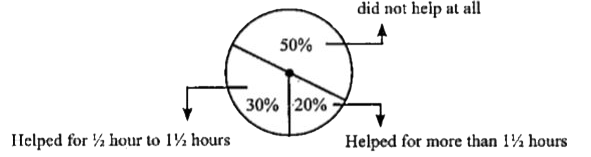
- In a primary school, the parents were asked about the number of hours ...
Text Solution
|
- State whether the following statements are true or false. Sale tax i...
Text Solution
|
- State whether the following statements are true or false. Overhead e...
Text Solution
|
- State whether the following statements are true or false. If S.P. is...
Text Solution
|
- Fill in the blanks. The deduction made on the marked price is called...
Text Solution
|
- Fill in the blanks. Profit % or Loss % is always calculated on
Text Solution
|
- Fill in the blanks. In compound interest principal every year.
Text Solution
|
- Fill in the blanks. Additional expenses made while buying/selling th...
Text Solution
|
- What happens to the time period and the rate when. The interest is c...
Text Solution
|
- What happens to the time period and the rate when. The interest is c...
Text Solution
|
- An article was solf for Rs. 2400. He was also charged 2.40 VAT. Find t...
Text Solution
|
- The time interval of 4 minutes 20 second is read as 4 minutes 22 secon...
Text Solution
|
- Manish sold a mobile phone at a profit 10%. Had it been sold for Rs. 1...
Text Solution
|
- The difference between two S.P. s of a chair at profit of 6% and 7% is...
Text Solution
|
- Find the amount and the compound interest on Rs. 10,000 compound annua...
Text Solution
|