

Home
Class 9
MATHS
DeltaABC and DeltaDBC are two isosceles ...

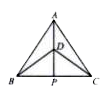
`DeltaABC and DeltaDBC` are two isosceles triangles on the same base BC and vertices A and D are on the same side of BC (see figure). If AD is extended to BP intersect BC at P, show that

`DeltaABD~=DeltaACD`

Promotional Banner

Topper's Solved these Questions

  • TRIANGLES

    MTG IIT JEE FOUNDATION|Exercise NCERT SECTION (Exercise 7.4)|6 Videos
  • TRIANGLES

    MTG IIT JEE FOUNDATION|Exercise NCERT SECTION (Exercise 7.5)|4 Videos
  • TRIANGLES

    MTG IIT JEE FOUNDATION|Exercise NCERT SECTION (Exercise 7.2)|9 Videos
  • STATISTICS

    MTG IIT JEE FOUNDATION|Exercise Olympiad/HOTS Corner |20 Videos

Similar Questions

Explore conceptually related problems

DeltaABC and DeltaDBC are two isosceles triangles on the same base BC and vertices A and D are on the same side of BC (see figure). If AD is extended to BP intersect BC at P, show that DeltaABP~=DeltaACP

DeltaABC and DeltaDBC are two isosceles triangles on the same base BC and vertices A and D are on the same side of BC (see figure). If AD is extended to intersect BC at P, show that : (i) DeltaABD cong DeltaACD (ii) DeltaABP cong DeltaACP (iii) AP bisects angleA as well as angleD (iv) AP is the perpendicular bisector of BC.

DeltaA B C and DeltaD B C are two isosceles triangles on the same base BC and vertices A and D are on the same side of BC (see Fig. 7.39). If AD is extended to intersect BC at P, show that (i) \ DeltaA B D~=DeltaA C D (ii) DeltaA B P~=DeltaACP (iii) AP bisects ∠ A as well as ∠ D (iv) AP is the perpendicular bisector of BC

DeltaABC and DeltaDBC are two isosceles triangles on the same base BC and vertices A and D are on the same side of BC (see figure). If AD is extended to BP intersect BC at P, show that AP bisects angleA as well as angleD .

Delta ABC and Delta DBC are two isosceles triangles on the same base BC and vertices A and D are on the same side of BC. If AD is extended to intersect BC at E show that

DeltaABC and DeltaDBC are two isosceles triangles on the same base BC and vertices A and D are on the same side of BC. If AD is extended to intersect BC at E, show that (i) DeltaABD ~=DeltaACD (ii) DeltaABE~=DeltaACE (iii) AE bisects angleA as well as angleD (iv) AE is the perpendicualr bisector of BC.

△ABC and △DBC are two isosceles triangles on the same base BC and vertices A and D are on the same side of BC. If AD is extended to intersect BC at P, show that (i) △ABD≅△ACD (ii) △ABP≅△ACP (iii) AP bisects ∠A as well as △D . (iv) AP is the perpendicular bisector of BC.

A B C\ a n d\ D B C are two isosceles triangles on the same bas B C and vertices A\ a n d\ D are on the same side of B C . If A D is extended to intersect B C at P , show that A B D\ ~= A C D (ii) A B P\ ~= A C P

A B C\ a n d\ D B C are two isosceles triangles on the same bas B C and vertices A\ a n d\ D are on the same side of B C . If A D is extended to intersect B C at P , show that A P bisects "\ "/_A as well as /_D A P is the perpendicular bisector of B C

ABC and DBC are two isosceles triangles on the same base BC (see Fig. 7.33). Show that /_A B D\ =/_A C D