

Home
Class 7
MATHS
Dice are cubes with dots on each face. O...

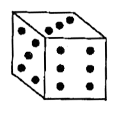
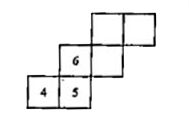
Dice are cubes with dots on each face. Oppsite faces of a die always have a total or seven dots on them. Following are two nets to make dice (cuber) the number Inserted in each square. Indicate the number of dots in that box insert suitable number in the blank squaes.

Promotional Banner

Topper's Solved these Questions

  • VISUALISING SOLID SHAPES

    SWAN PUBLICATION|Exercise Exercise 15.2|15 Videos
  • VISUALISING SOLID SHAPES

    SWAN PUBLICATION|Exercise Exercise 15.3|26 Videos
  • TRIANGLES

    SWAN PUBLICATION|Exercise Other Important Questions (True or false)|6 Videos

Similar Questions

Explore conceptually related problems

Dice are cubes with dots on each face. Opposite faces of a die always have a total of seven dots on them. Here are two nets to make dice (cubes), the numbers inserted in each square indicate the number of dots in that box Insert suitable numbers in the blanks, remembering that the number on the opposite faces should total to 7

In a single throw of two dice, find: P (a number > 4 on each die ).

A die has two faces each with number ‘1’, three faces each with number ‘2’ and one face with number ‘3’. If die is rolled once, determine P(2)

In a simultaneous throw of two dice if A denotes the event ‘a total of 11' and B denotes the event ‘an odd number on each die’, then find : P(A) .

In a simultaneous throw of two dice if A denotes the event ‘a total of 11' and B denotes the event ‘an odd number on each die’, then find : P(A or B).

A die has two faces each with number ‘1’, three faces each with number ‘2’ and one face with number '3’. If die is rolled once, determine : P(1 or 3) .

A die has two faces each with number ‘1’, three faces each with number ‘2’ and one face with number '3’. If die is rolled once, determine : P (not 3).