A
B
C
D
Text Solution
Verified by Experts
The correct Answer is:
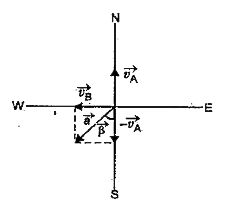



Similar Questions
Explore conceptually related problems
Recommended Questions
- A car travelling at 36 kmh^(-1) due North turns West in 5 seconds and...
Text Solution
|
- A truck travelling due to north at 20m s^(-1) turns west and travels a...
Text Solution
|
- A car travelling at 36 km//h speeds upto 72 km//h in 5 seconds. What i...
Text Solution
|
- A cr travelling at 36 km h^(-1) due North turns West in 5 secpmds a...
Text Solution
|
- A car moving at a constant speed of 36 kmph moves north wards for 20 m...
Text Solution
|
- A car travels from A to B at 20 kmh^(-1) and form B to A at 40 kmh^(-1...
Text Solution
|
- A car covers the first half of the distance between two places at a sp...
Text Solution
|
- एकसमान त्वरण से एक कार 5 सेकंड में 18 किमी/घण्टा से 36 किमी/घण्टा क...
Text Solution
|
- एक कार 54 किमी/घंटा कि चाल से उत्तर दिशा में चल रही है |5 सेकंड के ...
Text Solution
|