Home
Class 12
CHEMISTRY
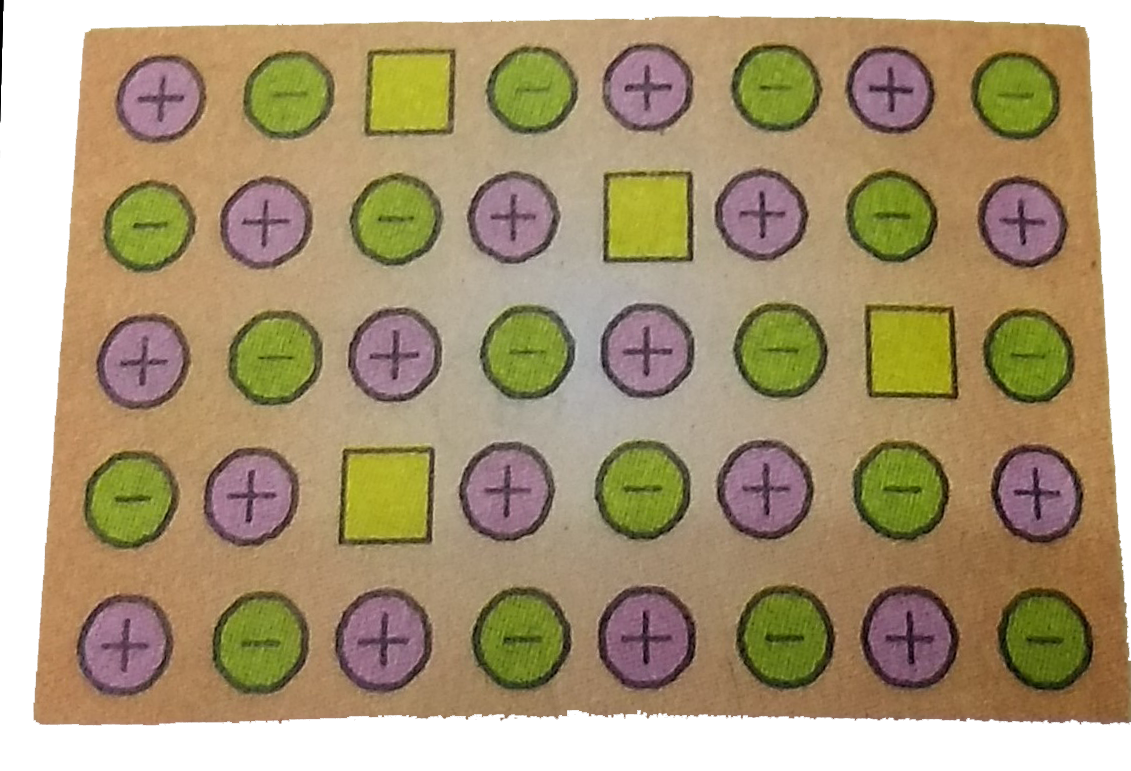
Examine the illustration of a portion of...

Examine the illustration of a portion of the deffective crystal and answer the following question :
(a) What are these type of vacancy defects called ?
(b) How is the density of a crystal affected by these defects ?
(c) Name one ionic compound which can show this type of defect in the crystalline state.
(d) How is the stoichiometry of the compound affected ?

Text Solution

Verified by Experts

The density of crystals decreases because certain ions are missing from the lattice.
Promotional Banner

Similar Questions

Explore conceptually related problems

Consider the figure of a defective crystal : (a) Name the defect shown by this diagram. (b) What is the effect of this defect on the solid ? (c) Name as ionic compound which can show this type of defect.

What is an ideal crystal ? Name the types of the defects which arise in a crystal.

What are vacancy and interstitial defects? How do these defects affect the density of a non-ionic crystal?

What type of defect can arise when a solid is heated? Which physical property is affected by it and in what way?

Explain Frenkel defect in ionic crystals. What type of compounds exhibit this defect ?

Which of the following defects in a non-ionic crystal causes increase or decrease in density of the crystal? (1) Vacancy defect (2) Interstital defect.

What type of defect can arise when a solid is heated? Which physical property is affected by it, in what way?

What is Frenkel defect? What type of ionic solids are likely to develop this defect? Why does the presence of Frenkel defect in a crystal not affect the density of the crystal?

What is Schottky defect? Is it a stoichiometric or non-stoichiometric defect? What type of ionic crystals are likely to show this type of defect? Does the presence of this defect in a crystal increase or decrease the density of the crystal? Explain.

Following is the graph of y = f' (x) , given that f(c) = 0. Analyse the graph and answer the following questions. (a) How many times the graph of y = f(x) will intersect the x - axis? (b) Discuss the type of roots of the equation f (x) = 0, a le x le b . (c) How many points of inflection the graph of y = f(x), a le x le b , has? ,(d) Find the points of local maxima/minima of y = f(x), a le x le b , , (e) f"(x)=0 has how many roots?
