Home
Class 10
MATHS
Polynomials are everywhere. They play a ...

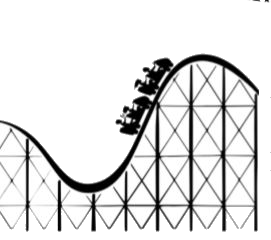
Polynomials are everywhere. They play a key role in the study of algebra, in analysis and on the whole many mathematical problems involving them. Since, polynomials are used to describe curves of various types engineers use polynomials to graph the curves of roller coasters.

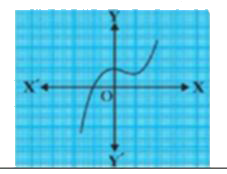
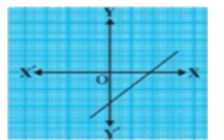
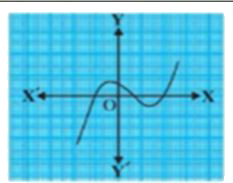
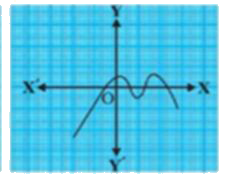
The Roller Coasters are represented by the following graphs y=p(x). Which Roller Coaster has more than three distinct zeroes?

A

B

C

D

Text Solution

Verified by Experts

Promotional Banner

Topper's Solved these Questions

  • SAMPLE PAPER 2022

    CBSE MODEL PAPER|Exercise SECTION B|40 Videos
  • SAMPLE PAPER (MATHEMATICS STANDARD)

    CBSE MODEL PAPER|Exercise PART - A|15 Videos
  • SAMPLE PAPER 2022 TERM II

    CBSE MODEL PAPER|Exercise SECTION C|10 Videos

Similar Questions

Explore conceptually related problems

Polynomials are everywhere. They play a key role in the study of algebra, in analysis and on the whole many mathematical problems involving them. Since, polynomials are used to describe curves of various types engineers use polynomials to graph the curves of roller coasters. If the Roller Coaster is represented by the following graph y=p(x) , then name the type of the polynomial it traces.

ROLLER COASTER POLYNOMIALS Polynomials are everywhere. They play a key role in the study of algebra, in analysis and on the whole many mathematical problems involving them. Since, polynomials are used to describe curves of various types engineers use polynomials to graph the curves of roller coasters. If the Roller Coaster is represented by the following graph y = p(x), then name the type of the polynomial it traces.

Polynomials are everywhere. They play a key role in the study of algebra, in analysis and on the whole many mathematical problems involving them. Since, polynomials are used to describe curves of various types engineers use polynomials to graph the curves of roller coasters. If the path traced by the Roller Coaster is represented by the above graph y=p(x), find the number of zeroes?

ROLLER COASTER POLYNOMIALS Polynomials are everywhere. They play a key role in the study of algebra, in analysis and on the whole many mathematical problems involving them. Since, polynomials are used to describe curves of various types engineers use polynomials to graph the curves of roller coasters. If the path traced by the Roller Coaster is represented by the above graph y = p(x), find the number of zeroes ?

Polynomials are everywhere. They play a key role in the study of algebra, in analysis and on the whole many mathematical problems involving them. Since, polynomials are used to describe curves of various types engineers use polynomials to graph the curves of roller coasters. If the Roller Coaster is represented by the cubic polynomial t (x) = px ^(3) + qx ^(2) + r x + s, then which of the following is always true

The graph of a polynomial function is a smooth continuous curve. By looking at graph, we can find the number of zeros of the polynomial. Graphs are the geometrical meaning of the polynomials. They help us to understand their type, nature of its zeroes and coefficients of its various terms. Which of the above graph represents quadratic polynomials?

In one-dimensional kinematics, a particle can move strictly along a straight line. The description of motion of the particle can be done in two ways: (i) mathematical equation and (ii) graphs. The choice of a particular method for solving a problem often depends upon the type and nature of problem, for example the graphical method provides more physical insight One dimensional motion is categorised into 1. motion with constant velocity 2. motion with constant acceleration, and 3. accelerated and de-accelerated motion If you represent inotion (1) by the graph on position time and velocity-time coordinates, the graphs may look like as given below. One very interesting case comes up, when a particle is thrown at a certain angle from the horizontal, the particle travels in the medium along a curved path, known as parabola. - The trajectory of the parabola written in the mathematical equation is given by y=xtantheta-(1)/(2)(gx^(2))/((v_0costheta))^(2) Ineglect resistance of medium and its motion where Vs and are the initial velocity of the projectile and the projection angle at the point of projection measured with the + x axis. There are some applications which we have seen in our life, like in many game shows, the theory of the projectile is always used An air gun is aimed at an elevated target, which is released in a free fall by some mechanism as the bullet leaves the nozzle. Irrespective of falling speed of object, the bullet will always hit the target. QThe graph shows the psition of a hard ball with respect to time .The hard ball hits and rebounds on the hard surface .Ehich of the following graph represent the correct variation with repect to time?
