Home
Class 12
CHEMISTRY
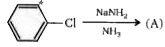
Two benzyne intermediates are likely to ...

Two benzyne intermediates are likely to be formed equally. Reaction with amide ion can occur in two different directions with each benzyne, giving three possible products. They are formed in a 1:2:1 ratio. Asterisk (*) refers to `""^14 C` .
Product major, product (A) is :

A

B

C

D

Text Solution

Verified by Experts

The correct Answer is:

B

Promotional Banner

Topper's Solved these Questions

  • AROMATIC COMPOUNDS

    MS CHOUHAN|Exercise LEVEL-2|11 Videos
  • AROMATIC COMPOUNDS

    MS CHOUHAN|Exercise LEVEL-2 (COMPREHENSION)|16 Videos
  • AMINES

    MS CHOUHAN|Exercise Level-2|1 Videos
  • BIOMOLECULES

    MS CHOUHAN|Exercise LEVEL - 2|5 Videos

Similar Questions

Explore conceptually related problems

In the reaction : (CH_(3))_(2)C = CH_(2) + HOC1 , the major product is :

The same enzyme catalyzed reaction showed two different kinetic patterns as shown in the graph. Y-axis indicates product formed and X-axis indicates time. Mark the correct interpretation.

Addition of water to alkynes occurs in acidic medium and in the presence of Hg^(2+) ions as a catalyst . Which of the following products will be formed on addition of water to but -1- yne under these conditions ?

An organic compound A is widely used as a preservative in pickles and has a molecular formula C_(2)H_(4)O_(2) . This compound reacts with ethanol to form a sweet smelling compound B. (i) Identify the compound A. (ii) Write the chemical equation for its reaction with ethanol. (iii) Name the products formed. (iv) Name the process involved in the reaction. (v) How can we get back the compou A from B.

Addition of HCI to 3,3-dimethyl-1-butene yields two products, one of which has a rearranged carbon skeleton. Among the following carbocations, select the possible intermediates in that reaction ?

The point of intersection of two tangents to the hyperbola x^2/a^2-y^2/b^2=1 , the product of whose slopes is c^2 , lies on the curve.

Di-tert-glycols rearrange in the presence of acid to give alpa -tertiary ketones. The trivial name of the simplest glycol of this type is pinacol, and this type of reaction therefore is named pinacol rearrangement (in this specific case, the reaction is called a pinacol-pinacolone rearrangement). The rearrangement involves 4 steps. one of the hydroxyl groups is protonated in the first step. A molecule of water is eliminated in the second step and a tertiary carbocation is formed. The carbocation rearranges in the third step into a more stable carboxonium ion via a [1,2] rearrangement. In the last step, the carboxonium ion is deprotonated and the product ketone is obtained. How many products obtained in above reaction?

