Home
Class 12
CHEMISTRY
Taking into account the stability of var...

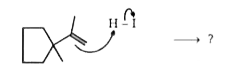
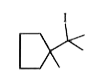
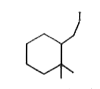
Taking into account the stability of various cycloalkanes and carbocations, as well as the rules governing mechanisms of carbocation rearrangements, what is the most likely product of this reaction ?

A

B

C

D

Text Solution

Verified by Experts

The correct Answer is:

B

Ring expansion take place.
Promotional Banner

Topper's Solved these Questions

  • HYDROCARBONS (ALKENES)

    MS CHOUHAN|Exercise LEVEL-2|22 Videos
  • HYDROCARBONS (ALKANES)

    MS CHOUHAN|Exercise LEVEL - 2|11 Videos
  • HYDROCARBONS (ALKYNES)

    MS CHOUHAN|Exercise Level -1|32 Videos

Similar Questions

Explore conceptually related problems

Taking into account the stability of various carbocations and, as well as the rules governing mechanisms of carbocation rearrangements, which reaction is most likely to occur during the given reaction ?

Surprisingly, the reaction shown below goes through classical carbocation. What is the major product of this reaction ?

Which of the following bromides is the major product of the reaction shown below, assuming that there are no carbocation rearrangement ?

Di-tert-glycols rearrange in the presence of acid to give alpa -tertiary ketones. The trivial name of the simplest glycol of this type is pinacol, and this type of reaction therefore is named pinacol rearrangement (in this specific case, the reaction is called a pinacol-pinacolone rearrangement). The rearrangement involves 4 steps. one of the hydroxyl groups is protonated in the first step. A molecule of water is eliminated in the second step and a tertiary carbocation is formed. The carbocation rearranges in the third step into a more stable carboxonium ion via a [1,2] rearrangement. In the last step, the carboxonium ion is deprotonated and the product ketone is obtained. How many products obtained in above reaction?

Di-tert-glycols rearrange in the presence of acid to give alpa -tertiary ketones. The trivial name of the simplest glycol of this type is pinacol, and this type of reaction therefore is named pinacol rearrangement (in this specific case, the reaction is called a pinacol-pinacolone rearrangement). The rearrangement involves 4 steps. one of the hydroxyl groups is protonated in the first step. A molecule of water is eliminated in the second step and a tertiary carbocation is formed. The carbocation rearranges in the third step into a more stable carboxonium ion via a [1,2] rearrangement. In the last step, the carboxonium ion is deprotonated and the product ketone is obtained. What is R.D.S. of pinacol-pinacolone rearrangement?

Addition of HCI to 3,3-dimethyl-1-butene yields two products, one of which has a rearranged carbon skeleton. Among the following carbocations, select the possible intermediates in that reaction ?

Di-tert-glycols rearrange in the presence of acid to give alpa -tertiary ketones. The trivial name of the simplest glycol of this type is pinacol, and this type of reaction therefore is named pinacol rearrangement (in this specific case, the reaction is called a pinacol-pinacolone rearrangement). The rearrangement involves 4 steps. one of the hydroxyl groups is protonated in the first step. A molecule of water is eliminated in the second step and a tertiary carbocation is formed. The carbocation rearranges in the third step into a more stable carboxonium ion via a [1,2] rearrangement. In the last step, the carboxonium ion is deprotonated and the product ketone is obtained.

Di-tert-glycols rearrange in the presence of acid to give alpa -tertiary ketones. The trivial name of the simplest glycol of this type is pinacol, and this type of reaction therefore is named pinacol rearrangement (in this specific case, the reaction is called a pinacol-pinacolone rearrangement). The rearrangement involves 4 steps. one of the hydroxyl groups is protonated in the first step. A molecule of water is eliminated in the second step and a tertiary carbocation is formed. The carbocation rearranges in the third step into a more stable carboxonium ion via a [1,2] rearrangement. In the last step, the carboxonium ion is deprotonated and the product ketone is obtained.

Vladimir Markovnikov rule : Alkenes undergo electrophilic addition reactions. It is triggered by the acid acting as a electrophile toward t-electrons of the double bond. Markovnikov's rule states that when an unsymmetrically substituted alkene reacts with a hydrogen halide, the hydrogen atom adds to the carbon that has the greater number of hydrogen, e.g., In which of following reactions carbocation rearrangement is possible ?

What is the decreasing order of stability (most stable rarr least stable) of the following carbocations ?

MS CHOUHAN-HYDROCARBONS (ALKENES)-LEVEL-2
  1. Taking into account the stability of various cycloalkanes and carbocat...

    Text Solution

    |

  2. In each reagent box write a letter designating the best reagent and co...

    Text Solution

    |

  3. Propene (CH3 – CH = CH2) can be transformed to compounds (a to j) list...

    Text Solution

    |

  4. In each reaction box write a single letter designating the best reagen...

    Text Solution

    |

  5. Match the reagents a-j with products A-J. There is one best product fo...

    Text Solution

    |

  6. Match the column :

    Text Solution

    |

  7. Match the column I with column II and with column III (Matrix).

    Text Solution

    |

  8. Match the column I and II.

    Text Solution

    |

  9. Sum of molecular mass of A, B, C, D (i.e. A+B + C + D) is equal to :

    Text Solution

    |

  10. underset("(all isomers) ")(C2FClBrl) underset(Ni) overset(H2)to (A)(ex...

    Text Solution

    |

  11. How many products are formed by sum of P,Q,R,S ?

    Text Solution

    |

  12. Vladimir Markovnikov rule : Alkenes undergo electrophilic addition rea...

    Text Solution

    |

  13. Vladimir Markovnikov rule : Alkenes undergo electrophilic addition rea...

    Text Solution

    |

  14. Vladimir Markovnikov rule : Alkenes undergo electrophilic addition rea...

    Text Solution

    |

  15. Vladimir Markovnikov rule : Alkenes undergo electrophilic addition rea...

    Text Solution

    |

  16. Vladimir Markovnikov rule : Alkenes undergo electrophilic addition rea...

    Text Solution

    |

  17. Vladimir Markovnikov rule : Alkenes undergo electrophilic addition rea...

    Text Solution

    |

  18. CH3 - CH2-CH=CH2+CH2 OH overset(H^(o+))to CH3-CH2- underset(OCH3) un...

    Text Solution

    |

  19. CH3 - CH2-CH=CH2+CH2 OH overset(H^(o+))to CH3-CH2- underset(OCH3) un...

    Text Solution

    |

  20. CH3 - CH2-CH=CH2+CH2 OH overset(H^(o+))to CH3-CH2- underset(OCH3) un...

    Text Solution

    |

  21. CH3 - CH2-CH=CH2+CH2 OH overset(H^(o+))to CH3-CH2- underset(OCH3) un...

    Text Solution

    |

