


Topper's Solved these Questions
Similar Questions
Explore conceptually related problems
BAL BHARTI-LAW OF MOTION-Use your brain power
- Use your brain power: Every morning, Swaralee walks round the edge ...
Text Solution
|
- If a car, starting from point P, goes to point Q (see figure) and then...
Text Solution
|
- Use your brain power: Amar, Akbar and Anthony are travelling in diff...
Text Solution
|
- Use your brain power: Amar, Akbar and Anthony are travelling in diff...
Text Solution
|
- Use your brain power: Amar, Akbar and Anthony are travelling in diff...
Text Solution
|
- If the velocity changes by equal amounts in equal time intervals, the ...
Text Solution
|
- If the velocity changes by equal amounts in equal time intervals, the ...
Text Solution
|
- In the distance-time graph above, what does the slope of the straight ...
Text Solution
|
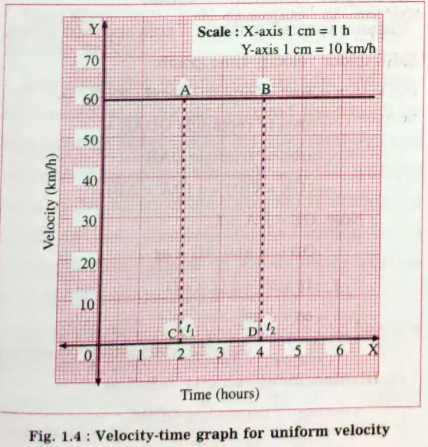
- Answer the following questions: A train is moving with a uniform velo...
Text Solution
|
- Answer the following questions: A train is moving with a uniform velo...
Text Solution
|
- Use your brain power: Why is there a thick bed of sand for a high jum...
Text Solution
|
- Use your brain power: While hitting a ball with a bat, the speed of t...
Text Solution
|
- Answer the following questions: When a bullet is fired from a gun, th...
Text Solution
|
- Use your brain power: Mechanism of firing of a rocket. How will you ...
Text Solution
|