

Home
Class 10
BIOLOGY
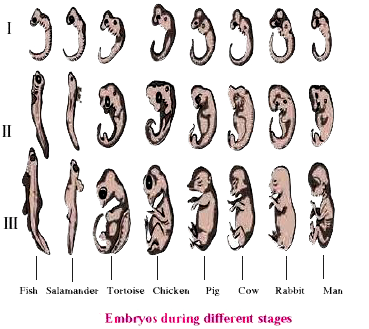
Carefully observe the stages of embryoni...

Carefully observe the stages of embryonic development of some animals shown in fig.

Promotional Banner

Topper's Solved these Questions

  • HEREDITY AND EVOLUTION

    BAL BHARTI|Exercise EXERCISE|6 Videos
  • HEREDITY AND EVOLUTION

    BAL BHARTI|Exercise EXERCISE (Answer the following questions.)|6 Videos
  • HEREDITY AND EVOLUTION

    BAL BHARTI|Exercise Can you tell?|4 Videos
  • ENVIROMENTAL MANAGEMENT

    BAL BHARTI|Exercise USE YOUR BRAIN POWER |1 Videos
  • INTRODUCTION TO MICROBIOLOGY

    BAL BHARTI|Exercise Exercise ( Answer the following)|13 Videos

Similar Questions

Explore conceptually related problems

Carefully observe your classmate's earlobes.

Explain the stages of development of eggs in cockroach.

Stem cells are present in the blastocyst stage of embryonic development.

Carefully observe the following figure: Name the tehcnique shown in the figure and the scientist who demonstrated this technique for the first time.

comptete the paragraph by choosing he appropriate words given in the bracket : (degenerated, red bone marrow, adipose connective tissue, blastocyst, umbilical cord, Differentiation) ...... Of stem cells form can form various issues in the body. Stem cells are present in the .......... by which the foetus is joined to the uterus of the mother. Stem cells are also present in the ........ Stage of embryonic development. Stem cells are present in............and............ of adult human beings. It has become possible to produce different types of tissues and the ............ part of any organ with the help of these stem cells.

Starting with the zygote, draw the diagrams of the different stages of embryo developments in a dicot.

Explain the three stages of prophase-I of meiosis shown in the diagrams given below .

Observe the figure and answer the question Identify the animal.

Carefully observe the given diagram and answer the following questions. What type of organ is shown in the given diagram?

Carefully observe the given diagram and answer the following questions. Mention any other two examples of such organs in humans.