

Home
Class 12
BIOLOGY
The following is the illustration of the...

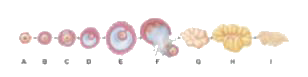
The following is the illustration of the sequence of ovarian events (a-i) in a human female.

Identify the figure that illustrates ovulation and mention the stage of oogenesis it represents.

Promotional Banner

Similar Questions

Explore conceptually related problems

The following is the illustration of the sequence of ovarian events (a-i) in a human female. (a) Identify the figure that illustrates ovulation and mention the stage of oogenesis it represents. (b) Name the ovarian hormone and the pituitary hormone that have caused the above mentioned events. (c) Explain the changes that occurs in the uterus simultaneously in anticipation. (d) Write the difference between C and H.

The following is the illustration of the sequence of ovarian events (a-i) in a human female. Write the difference between C and H.

The following is the illustration of the sequence of ovarian events (a-i) in a human female. Explain the changes that occurs in the uterus simultaneously in anticipation.

The following is the illustration of the sequence of ovarian events (a-i) in a human female. Name the ovarian hormone and the pituitary hormone that have caused the above-mentioned events.

Identify the correct sequence of reproductive events in human beings.

Which of the following events is not associated with ovulation in human female?

Following is the figure of a saggital section of a human brain.Match the labelled parts with the respective statements given below and select the correct option. (i)Consists of fibre tracts that interconnect left and right hemispheres (ii)Secretes a hormone melatonin (iii)Alcohol interferes with the function of this part (iv)Contains centres which control respiration , cardiovascular reflexes and gastric secretions.

At what stage of life is oogenesis initiated in a human female? When does the oocyte complete oogenesis?

Which of the following is the correct sequence of events in the origin of life ? I.Formation of protobionts II. Synthesis of organic monomers III. Synthesis of organic IV.Formation of DNA - based genetic systems