

Home
Class 12
BIOLOGY
The following is the illustration of the...

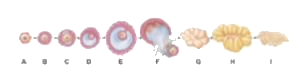
The following is the illustration of the sequence of ovarian events (a-i) in a human female.

Name the ovarian hormone and the pituitary hormone that have caused the above-mentioned events.

Promotional Banner

Similar Questions

Explore conceptually related problems

The following is the illustration of the sequence of ovarian events (a-i) in a human female. Write the difference between C and H.

The following is the illustration of the sequence of ovarian events (a-i) in a human female. (a) Identify the figure that illustrates ovulation and mention the stage of oogenesis it represents. (b) Name the ovarian hormone and the pituitary hormone that have caused the above mentioned events. (c) Explain the changes that occurs in the uterus simultaneously in anticipation. (d) Write the difference between C and H.

The following is the illustration of the sequence of ovarian events (a-i) in a human female. Explain the changes that occurs in the uterus simultaneously in anticipation.

The following is the illustration of the sequence of ovarian events (a-i) in a human female. Identify the figure that illustrates ovulation and mention the stage of oogenesis it represents.

Which of the following events is not associated with ovulation in human female?

Which of the following is the correct sequence of events in the origin of life ? I.Formation of protobionts II. Synthesis of organic monomers III. Synthesis of organic IV.Formation of DNA - based genetic systems

Following is a list of the events (in a random order) that lead to the formation of an auditory impulse. (i)Vibration is transferred from the malleus to the incus to the stapes. (ii)Basilar membrane moves up and down. (iii)Nerve impulse is transmitted in cochlear nerve to auditory cortex of brain for impulse analysis and recognitions. (iv)Sound waves pass through ear canal. (v)Stereocilia of hair cells of organ of Corti rub against tectorical membrane. (vi)Sound waves cause ear drum to vibrate. (vii)Nerve impulse is generated (viii)Vibrations move from fluid of vestibular canal to the fluid of tympanic canal. (ix)Membrane at oval window vibrates. Which of the following options represents these events in a correct order ?

Study carefully the following stages of life cycle of malarial parasite i.e., Plasmodium. Arrange these stages in the correct sequence and select the correct answer. 1. Sporozoites leave the blood stream and enter the liver cells of man. 2. Sporozoites present in the salivary glands of female Anopheles mosquito are injected into the blood stream of man. 3. The parasite reproduces asexually in RBCs, resulting in bursting of RBCs and causing the cycles of fever, relased parasites infect new RBCs. 4. The parasite reproduces asexually in liver cells, ultimately causing the rupturing of cells. 5. Two types of gametocytes i.e., microgametocytes and macrogametocytes develop in the RBCs. 6. Female Anopheleles mosquito takes up the gametocytes with blood meal of an infected person. 7. Mature infective stage of the parasite i.e., sporozoites escape from intestine and migrate to the mosquito's salivary glands. 8. Fertilisation and developmental stages of the parasite take place in mosquito's stomach.

A plant hormone was first discovered in Japan when rice plant were sufferring from Bakanae disease caused by Gibberella fujikoroi. Based on this information answer the following questions. (i) Identify the hormone involved in this process. (ii) Which property of this hormone causes the disease? (iii) Give two functions of this hormone.