

Home
Class 12
BIOLOGY
a) Identify the figure given below b) ...

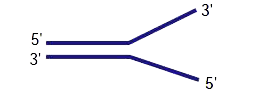
a) Identify the figure given below
b) Redraw the structure as a replicating fork and label the parts

c) Write the source of energy for this replication and name the enzyme involved in this process.
d) Mention the differences in the synthesis of protein, based on the polarity of the two template strands.

Promotional Banner

Similar Questions

Explore conceptually related problems

Given below are some events of eukaryotic replication. Name the enzymes involved in the process. (a) Unwinding of DNA (b) Joining of Okazaki fragments (c ) Addition of nucleotides to new strand (d) Correcting the rapair

A_(3)-_(5)B C_(5)-_(3)D AB and CD represent two strands of a DNA molecule. When this molecule undergoes replication, a replication fork is formed between A and C in the above. i. Name the template strands for replication. ii. Using which strand as the template, will there be continuous synthesis of a complementary DNA strand? iii. Complementary to which strand will Okazaki segments get synthesised. iv. What are template strands and Okazaki pieces? v. In which direction is a new strand synthesised?

The following is the illustration of the sequence of ovarian events (a-i) in a human female. (a) Identify the figure that illustrates ovulation and mention the stage of oogenesis it represents. (b) Name the ovarian hormone and the pituitary hormone that have caused the above mentioned events. (c) Explain the changes that occurs in the uterus simultaneously in anticipation. (d) Write the difference between C and H.

The figure given below is that of a nucleosome. a. Name the parts labelled as (i) and (ii). b. How many histone units constitute the main core of the nucleosome? c. Histones are considered as basic proteins. Why?

The picture given below is an organelle of plant cell . Identify the picture and answer then questions . (a) Name the organelle . (b) Mention the role of the organelle in the cell . (c) How do you call the stack of coin like structures present on it ? (d) Whether is shows semi - autonomy ?If yes how ? If no , why ?

In the given figure of human tooth, some parts are labelled as A,B,C and D identify these parts and match them with their description given below. (i) Contains mineral matter, mainly calcium 70% mineral matter, mainly calcium (iii) Hardest material in the body (iv) Connects root to the jawbone

Given below are some famous numbers associated with electromagnetic radiations in different contexts in physics. State the part of the electromagnetic spectrum to which each belongs. a. 21 cm (wavelength emitted by atomic hydrogen in interstellar space). b. 1057 MHz (frequency of radiation arising from two close energy levels in hydrogen , known as Lamb shift). c. 2.7 K [temperature associated with the isotropic radiation filling all space - thought to be a relic of the 'big-bang' origin of the universe]. d. 5890 Å-5896 Å [double lines of sodium] e. 14.4 keV [energy of particular transition in ""^(57)Fe nucleus associated with a famous high resolution spectroscopic method (Moss bauer spectroscopy)].