Home
Class 10
MATHS
The below pictures are few natural examp...

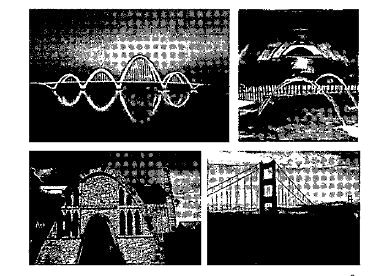
The below pictures are few natural examples of parabolic shape which is represented by a quadratic polynomial. A parabolic arc is an arc in the shape of a parabola. In structures, their curve represents an efficient method of load, and so can be found in bridges and the architecture in a variety of forms
If `alpha` and `1/(alpha)` are the zeroes of the quadratic polynomial `2x^(2)-x+8k` then k is

A

4

B

`(-1)/4`

C

`1/4`

D

`2`

Text Solution

Verified by Experts

The correct Answer is:

C
Promotional Banner

Similar Questions

Explore conceptually related problems

The below pictures are few natural examples of parabolic shape which is represented by a quadratic polynomial. A parabolic arc is an arc in the shape of a parabola. In structures, their curve represents an efficient method of load, and so can be found in bridges and the architecture in a variety of forms The graph of x^(2)+1

The below picture are few natural examples of parabolic shape which is represented by a quadratic polynomial. A parabolic arch is an arch in the shape of a parabola. In structures, their curve represents an efficient method of load, and so can be found in bridges and in architecture in a variety of forms. If a and 1/a are the zeroes of the qudratic polynomial 2x^2 - x +8k then k is

The below picture are few natural examples of parabolic shape which is represented by a quadratic polynomial. A parabolic arch is an arch in the shape of a parabola. In structures, their curve represents an efficient method of load, and so can be found in bridges and in architecture in a variety of forms. The graph of x^2+1=0

The below pictures are few natural examples of parabolic shape which is represented by a quadratic polynomial. A parabolic arc is an arc in the shape of a parabola. In structures, their curve represents an efficient method of load, and so can be found in bridges and the architechture in a variety of forms. In the standard form of quadratic polynomial ax^(2)+bx+c where a,b and c are

The below picture are few natural examples of parabolic shape which is represented by a quadratic polynomial. A parabolic arch is an arch in the shape of a parabola. In structures, their curve represents an efficient method of load, and so can be found in bridges and in architecture in a variety of forms. In the standard form of quadratic polynomial, ax^(2)+bx+c a,b and c are

The below pictures are few natural examples of parabolic shape which is represented by a quadratic polynomial. A parabolic arc is an arc in the shape of a parabola. In structures, their curve represents an efficient method of load, and so can be found in bridges and the architechture in a variety of forms. If the zeroes of the quadratic polynomial are equal, where the discriminant D=b^(2)-4ac , then

The below pictures are few natural examples of parabolic shape which is represented by a quadratic polynomial. A parabolic arc is an arc in the shape of a parabola. In structures, their curve represents an efficient method of load, and so can be found in bridges and the architecture in a variety of forms. If the sum of the roots is -p and the product of the roots is (-1)/p then the quadratic polynomial is

The below picture are few natural examples of parabolic shape which is represented by a quadratic polynomial. A parabolic arch is an arch in the shape of a parabola. In structures, their curve represents an efficient method of load, and so can be found in bridges and in architecture in a variety of forms. If the roots of the quadratic polynomial are equal, where the discriminant D = b^2 - 4ac, then

The below picture are few natural examples of parabolic shape which is represented by a quadratic polynomial. A parabolic arch is an arch in the shape of a parabola. In structures, their curve represents an efficient method of load, and so can be found in bridges and in architecture in a variety of forms. If the sum of the roots is -p and product of the roots is -1/p , then the quadratic polynomial is

If one of the zeroes of the quadratic polynomial (k-1)x^(2)+kx+1 is -3 ,then the value of k is
