

Home
Class 12
BIOLOGY
ADDITIONAL QUESTIONS : The diagram repre...

ADDITIONAL QUESTIONS :
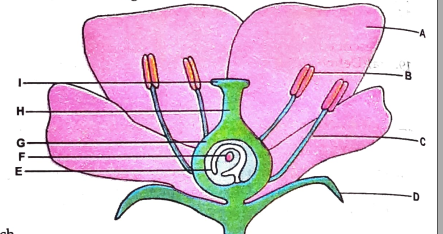
The diagram represents a flower. Label the parts and answer the following :

(a) Give the letter of the structure which : (i) becomes the fruit wall, (ii) becomes the testa (seed coat), (iii) produces pollen grains.
(b) Explain two ways, shown in the diagram, in which this flower is adapted for insect pollination.

Promotional Banner

Similar Questions

Explore conceptually related problems

ADDITIONAL QUESTIONS : The diagram below shows a germinating pollen grain and a mature ovule from an insect-pollinated flower. Some parts have been labelled. Give the letter of the nucleus which fuses with a male nucleus to form each of the following : (i) The zygote (ii) The endosperm

Long Answer Questions Five mark Each QUESTIONS FROM CBSE BOARD EXAMINATIONS : (a) Draw a diagrammatic sectional view of a mature anatropous ovule and label the following parts in it: (i) that develops into seed coat. (ii) that develops into an embryo after fertilization. (iii) that develops into an endosperm in an albuminous seed. (iv) through which the pollen tube gains entry into the embryo sac. (v) that attaches the ovule to the placenta (b) Describe the characteristic features of wind pollinated flowers.

Long Answer Questions Five mark Each QUESTIONS FROM CBSE BOARD EXAMINATIONS : A flower of tomato plant following the process of sexual reproduction produces 240 viable seeds. Answer the following questions giving reasons: (a) What is the minimum number of pollen grains that must have been involved in the pollination of its pistil? (b) What would have been the minimum number of ovules present in the ovary? (c) How many megaspore mother cells were involved? (d) What is the minimum number of microspore mother cells involved in the above case? (e) How many male gametes were involved in this case?

Long Answer Questions Five mark Each QUESTIONS FROM CBSE BOARD EXAMINATIONS : Fertilization is essential for production of seed, but in some angiosperms seeds develop without fertilization. (i) Give an example of an angiosperm that produces seeds without fertilization. Name the process. (ii) Explain the two ways by which seeds develop without fertilization.